
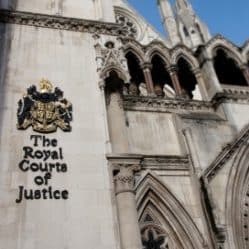

The High Court has dismissed a counterclaim by a law firm accused of tactical silence.
- Denning Sotomayor, led by Sadhana Soni, faced accusations of ‘warehousing’ the counterclaim.
- Master Davison found the firm in breach of the overriding legal objective.
- The delay in pursuing the counterclaim was deemed an abuse of process.
- The ruling emphasised the importance of timely litigation and transparency.
The High Court has dismissed a counterclaim initiated by the law firm Denning Sotomayor, following accusations of intentionally remaining silent to gain a tactical advantage in ongoing litigation. The firm was accused of ‘tactical warehousing’ by maintaining silence until a claim against it was fully resolved.
Master Davison noted the ‘inference of tactical warehousing’ was not convincingly countered by the firm’s actions. The firm paid security costs to the court and sought to amend its counterclaim six years ago but took no further action for a significant period.
In a case dating back to 2017, Western Avenue Properties Ltd and Kalpesh Patel sought an interim injunction to prevent Sadhana Soni, who previously served as their in-house lawyer, from representing a specific client due to confidentiality obligations.
Soni and her firm counterclaimed for unpaid fees. Western Avenue was successful in securing £40,000 for costs, which was deposited in court in August 2018. However, activity on the case stalled for almost five years until action resumed in 2023.
The court highlighted that the defendants applied to strike out the claim due to this lack of progress, which was agreed upon before a hearing in December. The discharge of the injunction led to the claimants agreeing to indemnify the defendants’ costs.
The order did not address the counterclaim, leading the claimants to seek its dismissal. Master Davison criticised the defendants for lacking a valid explanation for the protracted delay. He suspected that both parties viewed the claim and counterclaim as ‘on hold,’ but believed the defendants intentionally chose not to pursue the counterclaim to avoid provoking further action from the claimants.
He inferred that the defendants had only a conditional intention to pursue the counterclaim, contingent on the revival of the original claim. The judge described the delay as an ‘abuse of process’, noting it compelled the conclusion that Denning Sotomayor never genuinely intended to pursue the counterclaim.
The judge acknowledged that while the claimants could have moved earlier to dismiss the counterclaim, this did not absolve the defendants of their strategic silence. He concluded that the scale of the delay itself implied prejudice against the claimants.
The court’s decision underscores the critical importance of diligence and transparency in legal proceedings.
