
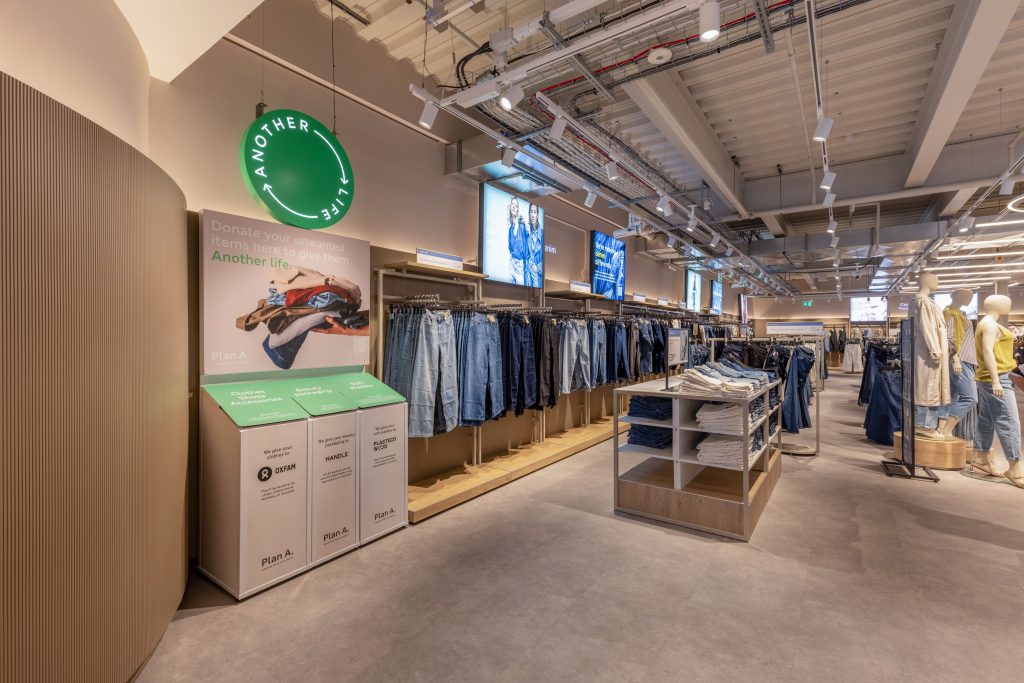

Marks & Spencer has taken a significant step towards sustainability by launching a new repair service in collaboration with Sojo, a London-based clothing alterations provider.
This initiative is part of a broader commitment to circular fashion, allowing customers to easily access repair services and extend the life of their garments. The service is available through an online hub, offering convenient solutions to common clothing issues.
Marks & Spencer’s collaboration with Sojo represents an innovative stride in the realm of circular fashion. Customers can now access a range of repair services, including zip replacements and knitwear mending, through an online platform. This ease of access aims to encourage more sustainable consumer habits, aligning with M&S’s broader environmental goals. By adopting such measures, the retailer seeks to minimise textile waste and promote the reuse of garments.
Customers can expect a seamless process where clothing items are sent for repair and returned within seven to ten days. This efficiency, combined with competitive pricing, positions the service as a convenient option for consumers looking to maintain their wardrobe without excessive spending.
The Plan A Accelerator Fund underpins these efforts, with a £1 million investment aimed at reducing textile waste and enhancing the use of recycled materials. These efforts are pivotal in M&S’s strategy to achieve net zero emissions by 2040.
The collaboration with Sojo is not just about repairs; it’s a call to action for industry-wide change towards more sustainable practices. Josephine Phillips, CEO of Sojo, highlighted the importance of having a brand like M&S support their Pledge to Repair, enhancing the visibility and impact of their campaign.
Through this initiative, customers receive not just a service but participate in a movement towards a more circular economy. As consumers become increasingly eco-conscious, services like this gain traction.
M&S’s approach integrates both consumer convenience and environmental responsibility, ensuring that ease of access does not come at the expense of sustainability.
As this repair service unfolds, it will be critical to monitor its impact on both consumer habits and the broader fashion industry. The success of ‘M&S fixed by Sojo’ could influence other retailers to adopt similar practices, thereby amplifying the movement towards circular fashion.
Marks & Spencer’s partnership with Sojo signifies a proactive move towards more sustainable retail practices.
By providing accessible repair services, M&S not only supports circular fashion but also sets a standard for other retailers to follow in reducing textile waste and promoting environmental sustainability.
