

JLR’s Halewood factory undergoes a significant transformation.
- The factory in Merseyside is set to become a future-focused EV production hub.
- A £500 million investment will introduce cutting-edge technology and sustainability measures.
- JLR’s Reimagine Strategy aims to electrify all brands by 2030.
- Halewood will soon feature advanced digital and autonomous tech for production.
Jaguar Land Rover (JLR) is undertaking a bold transformation of its 61-year-old Halewood factory in Merseyside, with a vision to establish it as a cutting-edge electric vehicle (EV) production hub. The company has announced a substantial £500 million investment focused on state-of-the-art technology and sustainability initiatives. This transformation aligns with JLR’s ambitious Reimagine Strategy, launched in 2021, which aims to electrify all its brands by 2030 and achieve net-zero carbon emissions across its supply chain, products, and operations by 2039.
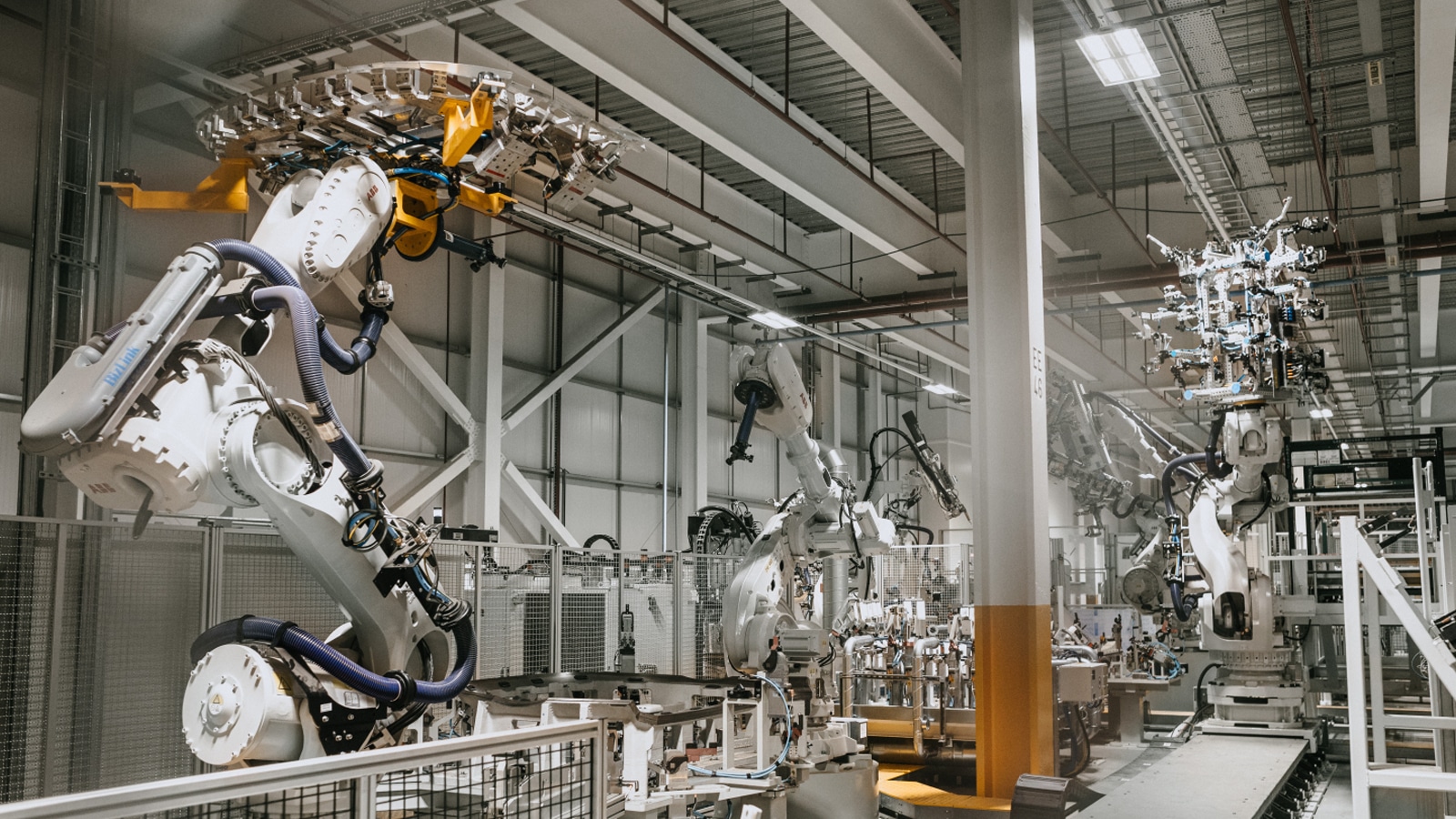
The Halewood factory, historically known for producing renowned vehicles like the Range Rover Evoque and Discovery Sport, will be equipped with 750 autonomous robots, ADAS calibration rigs, laser alignment technology, and cloud-based digital plant management systems. This technological advancement signifies a significant leap from the factory’s origins as the home of the Ford Anglia.
Barbara Bergmeier, JLR’s Executive Director of Industrial Operations, underscores the importance of this development, stating that Halewood will become JLR’s first all-electric production facility. She attributes this milestone to the dedicated efforts of their teams and suppliers in integrating the necessary technology to produce world-class luxury electric vehicles. “Halewood has been the heart and soul of JLR in the Northwest of England for well over two decades,” Bergmeier noted.
In pursuit of its net-zero goals, JLR plans to install 18,000 photovoltaic panels at the Halewood site, which will generate 8,600 GWh of energy, covering 10% of the facility’s energy needs. By harnessing a combination of renewable energy sources, fuel switching, and energy-efficient products, JLR aims to remove 40,000 tonnes of CO2e from the industrial footprint of the Halewood plant.
This substantial investment reinforces JLR’s commitment to leading the automotive industry’s shift towards sustainable and innovative electric vehicle production.
