
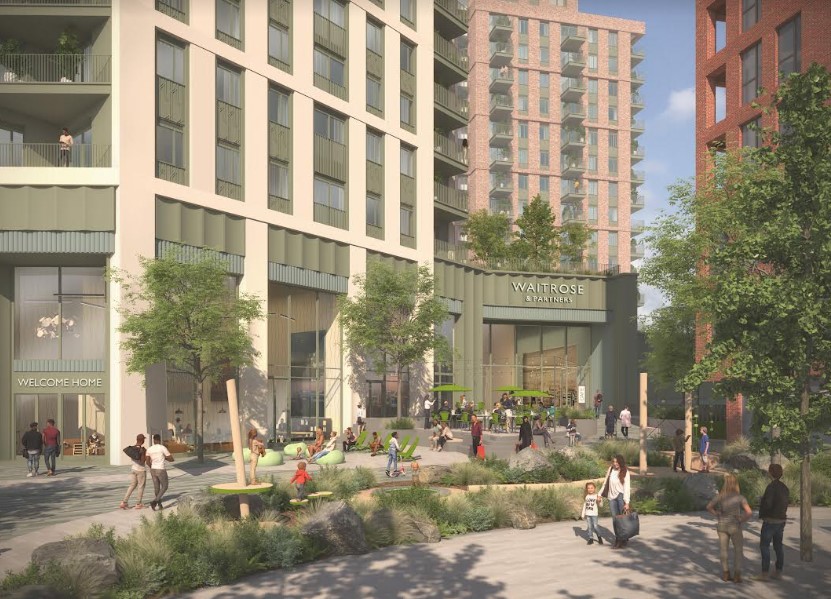

The John Lewis Partnership has secured pivotal consent for a progressive rental housing initiative. This project, set in Bromley, London, marks a significant stride in their housing scheme ambitions.
Planned atop a Waitrose store, the development epitomises urban housing advancement, harmonising retail with residential life. This evolution promises modernised amenities and a vibrant community within the bustling London Borough of Bromley.
The London Borough of Bromley’s approval marks a transformative moment for John Lewis. The project includes 353 newly constructed rental homes and a revamped Waitrose store. This decision follows extensive planning, reflecting local governance’s commitment to urban development.
Katherine Russell, John Lewis’s build-to-rent director, conveyed her enthusiasm about the approval, highlighting their commitment to community enhancement and modern retail integration. This project, according to Russell, positions Waitrose as a community cornerstone.
The approval in Bromley is not just a win for John Lewis but reflects a broader trend towards integrating retail and residential spaces—evidence of evolving urban planning ideologies.
John Lewis has reiterated their position, stating that only a portion of homes will be designated as affordable. While criticisms persist, the company’s assurance of no more than 80% market rent for affordable units aims to mitigate some public unease.
This initiative reflects a shift in how retail giants are redefining their roles in urban environments, emphasising the significance of mixed-use developments in sustaining business growth and community ties.
This project is expected to invigorate the local economy, provide modern living options, and reinforce John Lewis as a trailblazer in the retail sector’s evolution towards integrated urban solutions.
With this approval, the development phase can commence, promising numerous opportunities for local enhancement. John Lewis’s commitment to delivering quality housing and retail spaces is poised to redefine how communities and businesses coexist.
As John Lewis forges ahead with this approved initiative, the prospects for transformative community and retail experiences are promising. By weaving residential and retail elements, the project exemplifies modern urban living, potentially setting new standards for future developments.
