
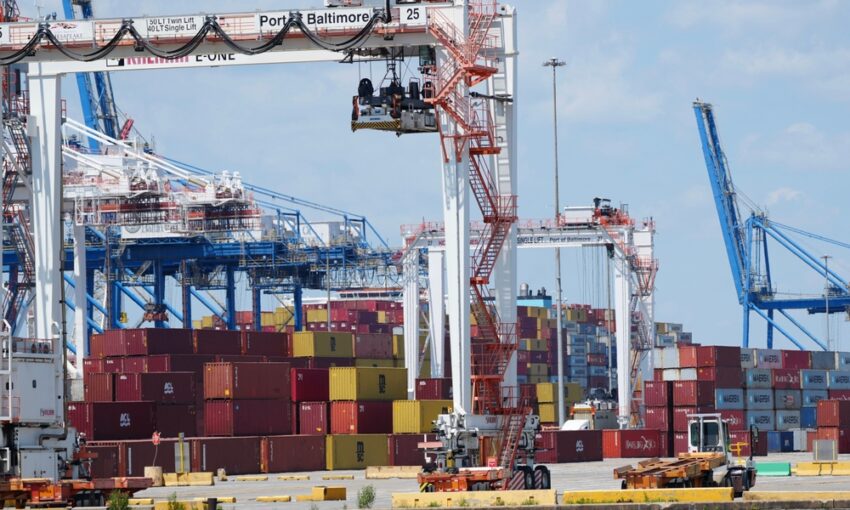

After enduring a strike that brought operations to a halt at numerous ports from Maine to Texas, US dockworkers return to work following a significant wage settlement. This resolution signals a 62% wage rise over six years for the workers, impacting major ports and the broader economy.
The Strike’s Widespread Impact
The strike initiated on October 1, leading to severe operational disruptions at 36 ports along the eastern and Gulf coasts. Key economic hubs such as New York, Baltimore, and Houston were notably affected, stalling container traffic and triggering supply chain concerns.
Economic analysts from JP Morgan have estimated the daily economic toll of the strike at up to $5 billion. The substantial disruptions underscored the vital role dockworkers play in maintaining the flow of goods through these essential ports. The quick resolution was urged to avert further economic damage.
Union’s Firm Stand and Negotiations
The dockworkers, represented by the International Longshoremen’s Association (ILA), emphasized their indispensable role in the shipping industry. The union’s last strike before this one was in 1977, highlighting the gravity of their concerns.
ILA members were firm in their demands, initially rejecting a 50% wage increase offer before securing the final 62% rise. The union’s move to suspend the strike until January, while indicating further negotiations on issues like automation, demonstrates a strategic approach.
Political and Economic Reactions
President Joe Biden and Vice-President Kamala Harris both lauded the agreement. Biden highlighted the necessity of fair wages and the strength of collective bargaining in fostering productive economic partnerships.
Vice-President Harris echoed sentiments of support about the critical nature of fair compensation for the dockworkers, acknowledging their integral contribution to the national economy. The administration’s involvement underscored the strike’s significance in a wider economic context.
The attention drawn by the strike has prompted discussions among political and economic circles about sustainable wage policies and labor rights.
Automation: The Next Battlefront
The ILA’s resistance to automation stems from fears of significant job losses, a theme recurrent in the shipping sector’s ongoing evolution. President Harold Daggett’s outspoken opposition reflects the union’s determination.
His statement, “We’re going to show these greedy bastards you can’t survive without us,” captures the union’s resolve to safeguard employment. The upcoming bargaining sessions will likely focus heavily on technological impacts and job security.
The automation debate remains contentious, with potential compromises yet to be determined. The union’s strategic positioning will play a crucial role in shaping these discussions.
Economic Stakes and Worker Salaries
The wage increase has brought attention to the earnings of dockworkers, with many already receiving six-figure salaries. In particular, at the New York-New Jersey port, over half of the workers reportedly earn more than $150,000 annually, and some earn upwards of $250,000.
The union’s president, Harold Daggett, is noted for drawing more than $900,000 last year, reflecting the substantial earnings potential within the profession. Daggett’s lifestyle, featuring luxury items like a Bentley and a yacht, highlights the significant financial stakes involved.
Implications for Future Negotiations
While the wage agreement averted an immediate crisis, it has set the stage for future negotiations that require careful handling by all parties. Automation remains a key concern, as technological advancements increasingly permeate the sector.
The need to balance evolving industry practices with job preservation will be a focal point, requiring innovative solutions from unions and employers alike to forge lasting agreements.
As the industry contemplates its future trajectory, the recent agreement offers a blueprint for negotiation strategies and outcomes.
An Uncertain Path Forward
The dockworkers’ tentative agreement illustrates the complexities involved in balancing economic advancement and worker rights. The upcoming talks will require meticulous negotiation to ensure both are adequately addressed.
The dockworkers’ successful negotiation for a 62% wage increase marks a pivotal turn in labor relations. However, the looming discussions on automation point to continuing challenges as the industry evolves.
