
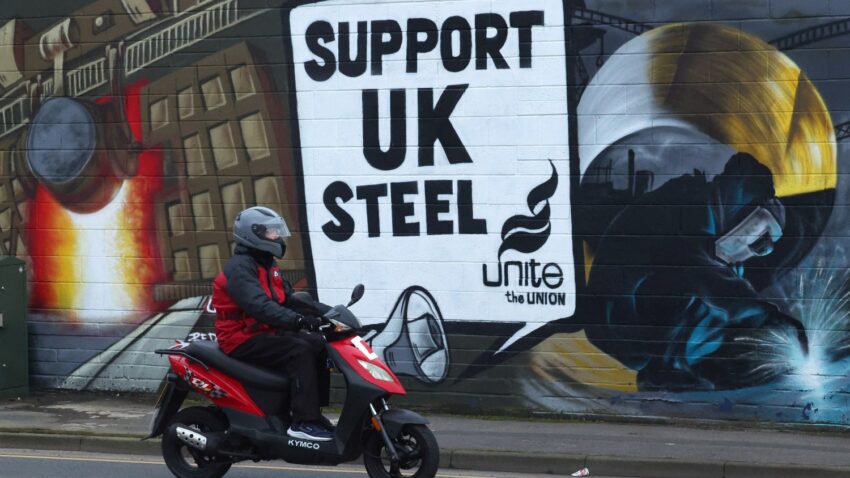

British Steel stands on the brink of a substantial government bailout, with talks reaching a crucial stage. As Labour takes decisive steps to end disputes with the plant’s owner, Jingye, the company’s future hangs in balance.
The strategic move aims to transition British Steel’s operations from traditional methods to cutting-edge technology, setting the stage for a greener and more sustainable future for the UK’s steel industry.
Labour’s recent determination to resolve the longstanding tensions with British Steel’s owner, Jingye, reflects broader industrial strategy ambitions. The party’s focus is on ensuring the survival and modernisation of the Scunthorpe plant, a key player in the UK’s steel sector. As one of only two UK manufacturers of strategically vital ‘virgin steel’, the company is an industry linchpin.
The bailout includes plans to replace traditional blast furnaces with electric arc furnace (EAF) technology, aiming for a 75% reduction in carbon emissions. However, this shift raises concerns over potential job losses. Unions fear up to 2,000 positions could be impacted due to the reduced manpower needs of EAF production.
Union backing for the bailout is contingent upon retaining blast furnace operations until the electric arc systems are operational. Strengthened commitments from Jingye to safeguard jobs and preserve core operations are essential for achieving a balance between environmental goals and economic necessities.
Carbon capture investments offer a pathway to meet environmental targets without compromising operational capacities. The broader strategy includes ensuring the transition fosters ongoing economic viability within the steel sector.
Drawing parallels between Tata and British Steel underscores the shared challenges in modernising without destabilising existing economic structures. Both companies’ strategies reflect a broader industry trend towards sustainability.
Labour’s approach integrates green initiatives with economic strategies, aiming to not only enhance the environmental credentials of steel production but also protect the interests of the workforce.
British Steel’s future is contingent upon successful negotiations and strategic alignment with governmental goals. The bailout represents a pivotal moment for the company, balancing between technological advancements and economic realities.
The British Steel bailout is a defining component of Labour’s industrial strategy, aiming to secure the future of the UK’s steel industry. By navigating financial complexities and employment concerns, the government sets the groundwork for a sustainable transformation that aligns with both environmental objectives and economic imperatives.
