

In an innovative stride towards sustainability, One Stop has collaborated with Veolia to revolutionise recycling at its stores. This partnership signifies a substantial step in responsible resource management, particularly in reducing plastic waste.
Strategic Partnership with Veolia
One Stop, a well-known convenience retailer, has embarked on a promising collaboration with Veolia, a global leader in resource management. This partnership aims to recycle a significant volume of own-label milk bottles, enhancing the sustainability of One Stop’s operations. This initiative marks a pivotal moment in their sustainability strategy, tackling plastic waste head-on.
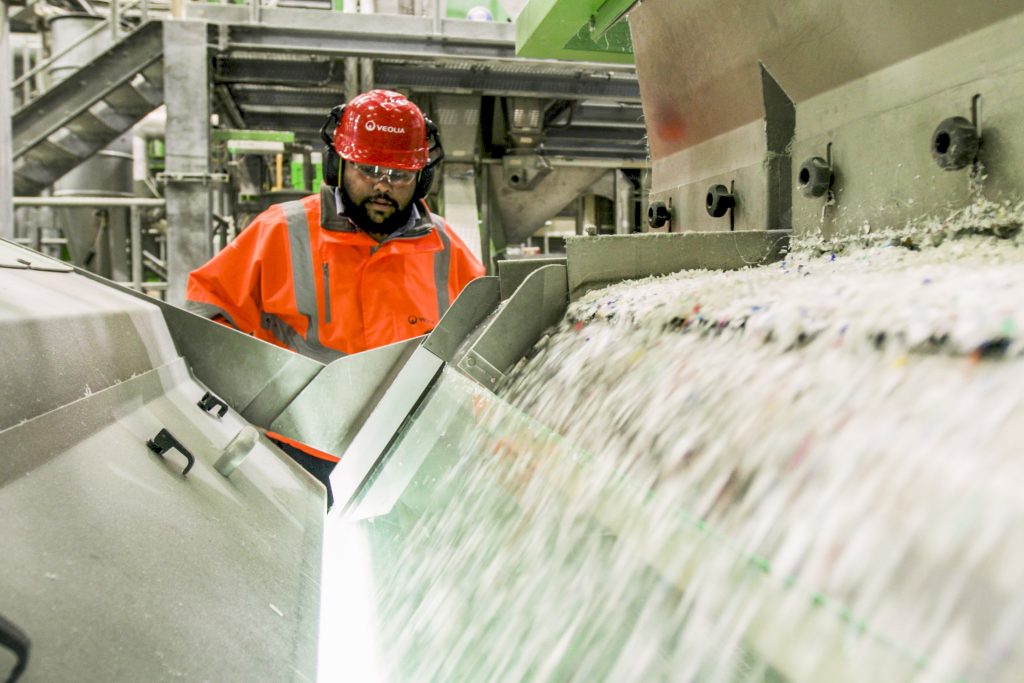
Each week, Veolia collects over 380,000 milk bottles from One Stop’s distribution centres. These bottles, gathered from vending machines and staff refreshments, are transported to Veolia’s Dagenham Plastic Facility. At the facility, they undergo a meticulous process of washing, shredding, and transforming into reusable pellets, ready to be reformed into new milk bottles.
Closed-Loop Recycling and Carbon Reduction
Veolia’s approach exemplifies a ‘closed-loop’ recycling system. This innovative process significantly curtails the need for raw materials in bottle production, thereby conserving resources and reducing environmental footprints. By reusing materials from old milk bottles, the initiative saves approximately 67% of carbon emissions typically generated by new bottle manufacturing.
Simon Futcher, Veolia’s Commercial Business Development Director, expressed delight in collaborating with One Stop. He emphasised how the partnership underscores Veolia’s commitment to ecological transformation, leveraging their expertise to foster sustainability in routine business operations.
Advancements in Recycling Technology
Veolia’s advanced recycling technology enables the efficient conversion of used bottles into new products. This technological breakthrough aligns with broader global efforts to promote sustainable practices and reduce reliance on virgin plastic materials.
One Stop is taking additional strides in sustainability. Beyond transitioning to clear, recyclable bottle lids, they are collaborating with Whywaste, a Swedish food tech company, to minimise food waste. These efforts reflect their comprehensive approach to achieving net-zero emissions by 2050.
By integrating modern recycling processes, One Stop illustrates the potential of technology in environmental conservation. Their collaboration with Veolia sets a benchmark for other retailers aiming to adopt similar sustainable practices.
Commitment to Net-Zero Goals
One Stop’s commitment to sustainability forms a crucial part of its long-term strategy to achieve net-zero emissions by 2050. This ambition is supported by various initiatives, including innovative recycling partnerships and waste reduction strategies.
Amriene Kalsi, One Stop’s Sustainability Manager, highlighted the partnership with Veolia as a vital step towards enhancing their recycling capabilities. She noted that such initiatives are not only important for environmental conservation but also imperative for meeting company targets.
Industry Implications and Broader Impact
The collaboration between One Stop and Veolia has broader implications for the industry, potentially influencing other retailers to adopt more sustainable practices. This partnership serves as a catalyst for industry-wide change toward more responsible resource management.
The ability to replace traditional bottle manufacturing processes with recycled materials demonstrates a practical application of sustainable practices in the retail sector. Such initiatives could set a precedent for larger systemic changes across industries.
As sustainability becomes increasingly recognised as a business imperative, partnerships like these offer valuable insights into how corporations can integrate environmental responsibility into their core operations.
Future Prospects and Challenges
Moving forward, the success of this recycling programme could inspire further innovations in sustainability strategies across the retail industry. However, challenges such as scaling up operations and ensuring consistent supply chain efficiency remain.
The initiative’s success hinges on continuous collaboration between One Stop and Veolia, highlighting the importance of strong partnerships in achieving sustainability goals. As both entities work towards larger environmental targets, their efforts will serve as a model for others in the sector.
Concluding Thoughts
The One Stop and Veolia partnership exemplifies the powerful impact of collaborative efforts in advancing sustainability. By focusing on closed-loop recycling, they are charting a path towards a more sustainable future.
In conclusion, One Stop’s collaboration with Veolia heralds a significant advancement in sustainability within the retail sector. By embracing closed-loop recycling, they effectively reduce their environmental footprint, setting a new standard for the industry.
