
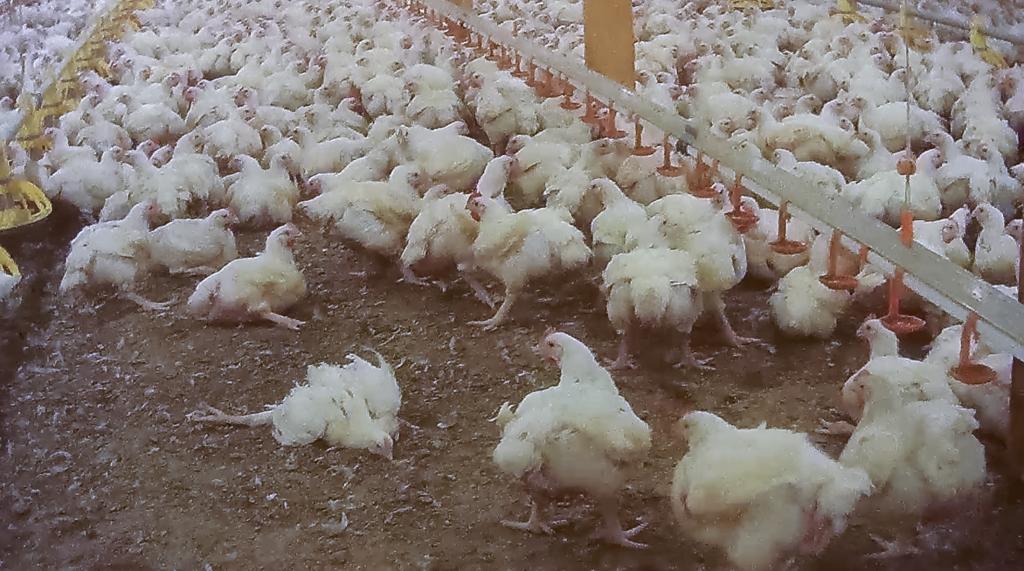

Recent undercover footage has sparked concern over the welfare of chickens at farms supplying Co-op. The images portray alarming conditions.
Activists are urging Co-op to rethink its chicken sourcing policies amid claims of poor animal welfare on farms supplying them.
Animal rights group, Open Cages, conducted an undercover investigation revealing the dire conditions in which chickens are kept on farms supplying Co-op. Hidden cameras captured footage of birds suffering from various health issues, collapsing under their own weight, and even dying prematurely. The investigation highlights the breeding of so-called ‘Frankenchickens’, animals genetically programmed to grow faster than their bodies can healthily sustain.
In an effort to address these concerns, animal activists have advocated for the implementation of the Better Chicken Commitment (BCC). This welfare policy aims to replace fast-growing breeds with healthier and slower-growing chickens. Despite overwhelming support from Co-op members, who voted in favour of adopting BCC, the board has declined its full implementation, citing cost concerns. Nevertheless, Co-op agreed to modify its practices by providing chickens with more space to improve welfare conditions.
Co-op maintains that their poultry products meet high welfare standards, as verified by Red Tractor or RSPCA Assured certifications. A spokesperson stated, “Ensuring the animals in our supply chain are looked after is a priority for us.” Although Co-op has agreed to increase chicken space by 20%, it continues to sell fast-growing breeds, prioritising economic efficiency over systemic change.
The footage and subsequent disclosures have sparked a range of reactions within the industry. While some retailers appear open to discussing changes in farming practices, others remain resistant, prioritising competitive pricing strategies. This divide echoes broader tensions in the food supply industry between cost-efficiency and ethical standards, fuelling an ongoing debate about animal welfare in intensive farming.
Consumer awareness regarding farming conditions is growing, with many shoppers increasingly concerned about ethical sourcing. This is impacting purchasing decisions, with a noticeable shift towards brands that prioritise animal welfare. Retailers like Co-op are experiencing pressure to reassess their sourcing policies to align with evolving consumer expectations, particularly as awareness campaigns continue to expose uncomfortable truths about conventional farming methods.
Transparency in supply chains is becoming a critical demand from consumers and welfare organisations. In light of Open Cages’ findings, there is increasing pressure on retailers to disclose conditions within their supply chains fully. The call for transparency is not only a moral obligation but also an aspect that can influence consumer trust and loyalty significantly.
As debates continue and consumer demand for ethically sourced products grows, retailers may find themselves at a crossroads. The choices they make regarding animal welfare policies will likely influence both their public image and market position. It remains to be seen how Co-op, and the wider industry, will adapt to these increasing pressures.
The future of poultry farming at Co-op and similar retailers may hinge on adopting more ethical practices.
Continued advocacy and consumer pressure could drive significant changes in supply chain transparency and animal welfare.
