
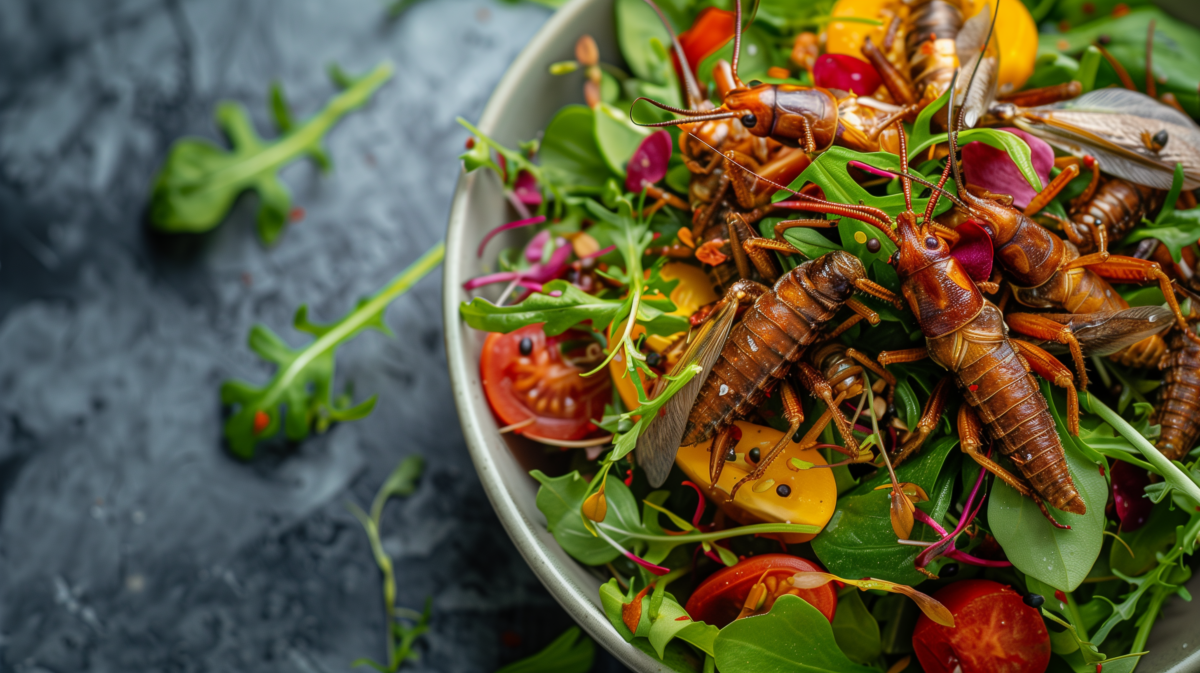

In a groundbreaking revelation, Co-op has outlined predictions for British mealtimes in 2054. The forecast includes unconventional dishes such as cricket salads and lab-grown steaks, promising a shift from classic cuisines.
Utilising AI-generated imagery, the retailer’s ‘responsible retailing report’ examines evolving attitudes towards food ethics and sustainability over the past three decades, highlighting a move towards innovative and eco-friendly food sources.
According to experts from FixOurFood and the University of York, the next three decades will alter traditional UK meals significantly. Urban indoor farming will be prevalent, promoting lab-grown meats like steaks, burgers, and seafood, including tuna and lobster. These proteins, cultivated from animal tissues, are expected to become mainstream.
Climate change is set to influence local agriculture, with avocados and olives potentially being cultivated in Surrey by 2054. This shift will reduce reliance on imports and favour locally sourced produce.
Bob Doherty, director of FixOurFood, remarked on the unpredictability of these advancements: “The last 30 years have seen scientific leaps into more sustainable produce which were unimaginable to most back in 1994.”
Edible insects will become staples on British dinner plates. Doherty adds, “By 2054, British people will have edible insects on their dinner plate, and we may see the crushing up of crickets quicker than wholegrains.”
The report emphasizes consumers’ growing concern for ethical and sustainable food production, with 72% indicating this sentiment. This heightened awareness will drive acceptance and incorporation of innovative food sources.
The use of AI to visualise these future food possibilities signifies a forward-thinking approach to addressing food security and environmental sustainability.
As we look towards 2054, mealtime in the UK is poised for dramatic changes grounded in sustainability and innovation. Embracing new food sources and technologies will be essential in addressing the evolving challenges of climate change and food security.
The Co-op’s report provides a compelling glimpse into a future where British diets are marked by creativity and a commitment to ethical consumption, ensuring both health and environmental benefits.
