
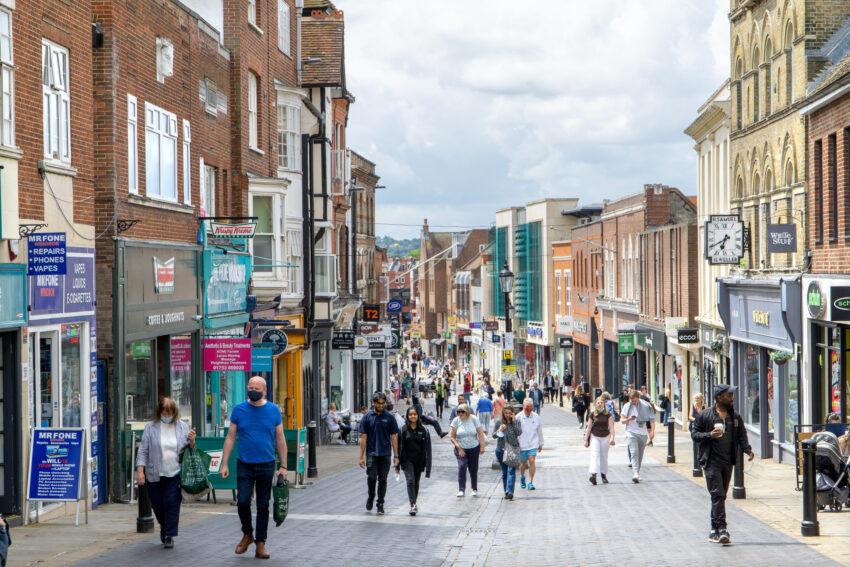

The latest data reveals a surprising trend: retail prices in the UK have declined for the first time in nearly three years. This drop has been driven by significant discounting, particularly in the non-food sector.
The British Retail Consortium (BRC) and NielsenIQ report a 0.3% price fall in August compared to last year, marking a stark contrast to the 0.2% inflation seen in July. This trend, fuelled by discounted summer stock, offers a glimpse of relief amid ongoing economic challenges.
Summer Discounting and Non-Food Sector Impact
Retail analysts have observed a notable shift as prices in the non-food category saw a year-on-year drop of 1.5%. This is the lowest rate since July 2021. The primary driver for this decline has been significant discounting by retailers aiming to offload unsold summer merchandise.
Helen Dickinson, Chief Executive of the BRC, stated, ‘The decline was due to significant discounting by non-food retailers, following a challenging summer marked by poor weather and the ongoing cost of living crisis.’ The retail environment has faced multiple headwinds, compelling retailers to adopt aggressive discounting strategies.
Food Price Inflation Eases
While non-food items are experiencing price drops, food prices have also seen a moderation in their inflation rates. The annual food price inflation slowed to 2% in August, down from 2.3% in July.
Fresh food prices experienced the most significant slowdown, with inflation easing to 1%. This is the lowest rate since December 2020, driven by reduced supplier input costs. Ambient food items, which can be stored at room temperature, saw a slight deceleration in inflation to 3.4% from 3.6%.
Challenges and Future Outlook
Despite these reductions, caution remains. Helen Dickinson warned, ‘The outlook remains uncertain, with climate change impacting global harvests and rising geopolitical tensions potentially leading to renewed inflationary pressures in the coming year.’
Retailers continue to navigate an uncertain landscape, balancing the need for competitive pricing with the challenges presented by external factors. These include unpredictable weather patterns and international trade tensions.
Such uncertainties necessitate a vigilant approach from retailers and policymakers alike, as they work to mitigate potential disruptions to the market.
Retail Sales Rebound in July
In contrast to the discount-driven price drops, retail sales in the UK showed signs of recovery in July. This rebound was supported by increased discounting and higher spending in department stores and on sports equipment.
The Office for National Statistics (ONS) reported a 0.5% rise in the volume of goods purchased between June and July, following a 0.9% contraction the previous month. Liz McKeown, Director of Economic Statistics at the ONS, noted that the rebound was driven by sales in department stores and sports equipment shops.
Impact of Sports Events and Discounting
Department store sales grew by 4%, reflecting consumer response to targeted discounting strategies. Similarly, sports equipment, games, and toy stores saw a 3.5% increase in sales.
The Euros football tournament played a role in boosting sales, as did effective discounting campaigns by retailers.
However, not all sectors benefited equally. Clothing and household goods shops experienced a 0.6% decline in sales, and fuel sales dropped by 1.9%, despite lower pump prices.
Long-term Consumer Spending Trends
Overall, while the quantity of goods purchased last month remains 0.8% below pre-pandemic levels, household spending has increased by 19% since February 2020. This reflects the enduring impact of high inflation on consumer purchasing power.
As consumers adapt to the evolving economic landscape, their spending habits are likely to continue shifting, influenced by factors such as inflation, discounting strategies, and broader economic conditions.
The recent decline in retail prices, driven by heavy discounting, marks a notable shift in the UK retail landscape. While food price inflation has eased, uncertainties remain due to climate change and geopolitical tensions.
Retailers and policymakers must stay vigilant, adapting to both current trends and potential future disruptions to ensure market stability.
