
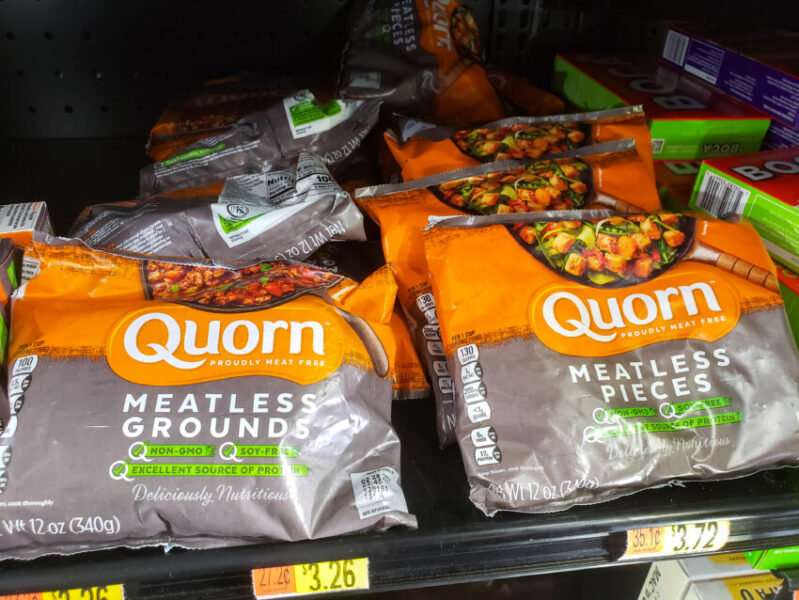

Marlow Foods, the parent company of Quorn, has reported a significant financial loss amounting to £63 million for the last fiscal year. This decline reflects a broader trend in the waning appeal of plant-based products in the market.
CEO Marco Bertacca attributes the financial challenges to elevated inflation rates and the rising cost of raw materials and energy, but remains confident in the future of Quorn’s innovative mycoprotein technology.
Financial Performance and Workforce Reductions
Sales for Marlow Foods fell by 6.9% to £205 million, prompting a restructuring that resulted in nearly 100 job cuts. This aligns with an 8.6% drop in Quorn’s sales across retailers for the same period, which culminated in December 2023.
The company has faced broader market pressures, including heightened inflation and increased costs for both energy and raw materials. Consequently, Marlow Foods’ overall workforce was reduced from 934 to 874 employees last year as part of cost-control measures.
Industry-Wide Challenges
The downturn in the plant-based industry is not isolated to Quorn alone. Companies like Meatless Farm and VBites have also struggled, with some even collapsing into administration.
Market data reveals that sales of chilled meat alternatives fell by 9.7% in the 12 months leading up to May, underlining the sector’s widespread issues.
CEO’s Perspective
CEO Marco Bertacca acknowledged the multiple pressures faced by the company. He stated, ‘Twenty twenty-three was a challenging year where high inflation and interest rates continued to put pressure on consumers and on the cost of producing our great food.’
Despite efforts to keep prices stable, the necessity to remain affordable led to substantial financial losses. The company has been grappling with balancing cost control and quality product delivery.
Bertacca is, however, optimistic about Quorn’s unique advantage—its mycoprotein technology. He elaborated, ‘We truly believe that there’s nothing quite like mycoprotein. Fungi and fermentation can be the protein solution the planet needs.’
Market Trends and Consumer Behaviour
The economic challenges have also influenced consumer behaviour, steering many away from plant-based products, according to market analytics.
Inflation has eroded consumer purchasing power, making it more difficult for companies to justify premium pricing for plant-based alternatives. This shift in consumer demand is also being seen across other food sectors.
Experts suggest that the decline in plant-based product sales is part of a larger trend influenced by economic factors rather than a loss of interest in veganism and sustainability.
Implications for the Plant-Based Sector
The financial struggles experienced by Marlow Foods indicate significant hurdles for the entire plant-based food sector, highlighting the need for adaptation and innovation to maintain market relevance.
As companies endeavour to balance cost and quality, the industry must explore new avenues to appeal to cost-sensitive consumers without compromising on product value.
Future Prospects and Strategic Direction
While the current financial results are concerning, Marlow Foods remains committed to its long-term strategy centred around mycoprotein technology.
New product innovations, coupled with a strategic focus on cost management, could provide a pathway to recovery for Marlow Foods and the broader plant-based market.
Marlow Foods’ challenging fiscal year underscores the broader difficulties faced by the plant-based sector amidst economic pressures.
However, the company’s commitment to innovation and cost-management strategies signal a potential for recovery and sustained market presence.
