
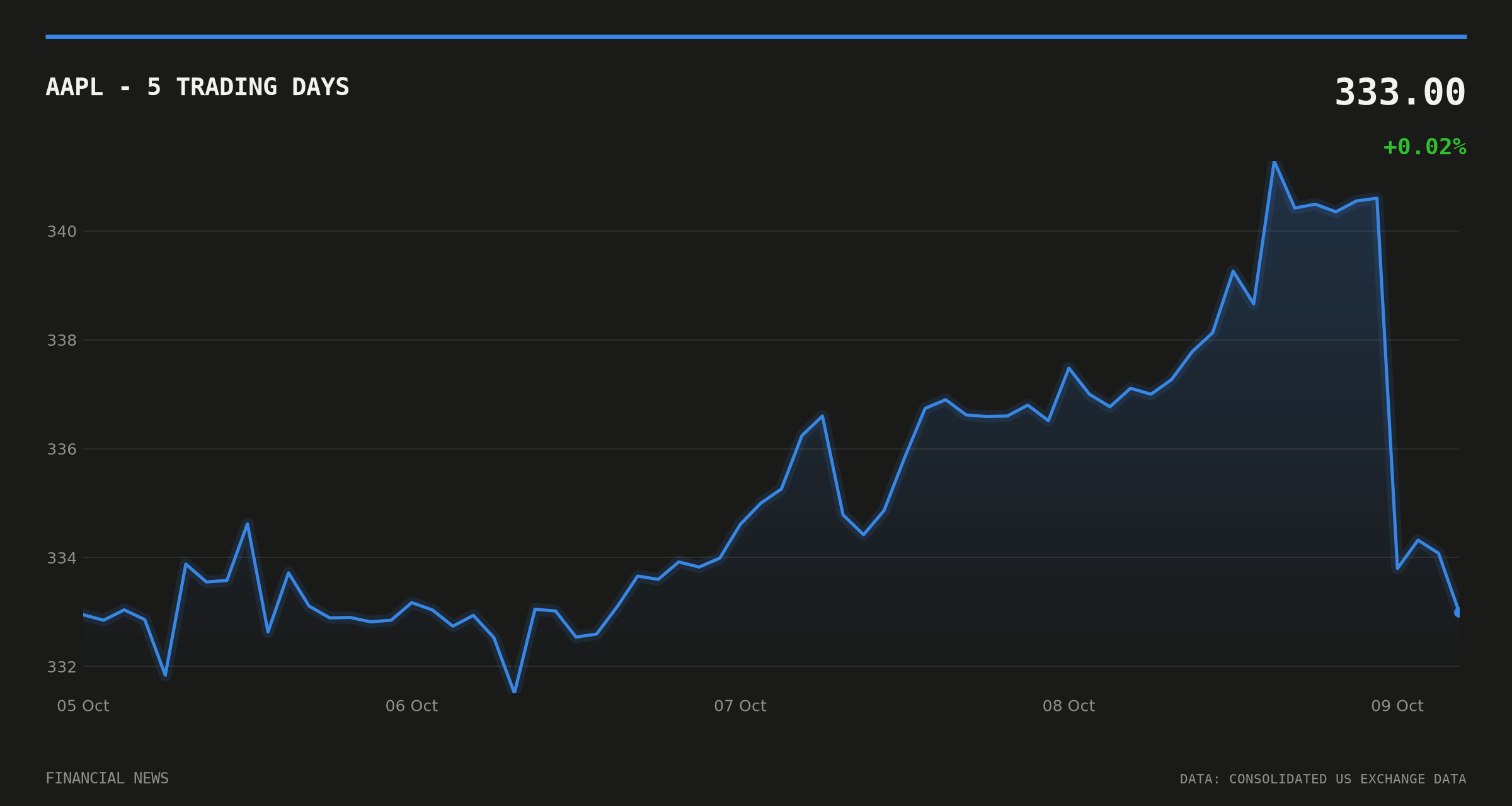

Apple (NASDAQ: AAPL) has told suppliers to cut component orders for the iPhone 18 Pro and Pro Max, as reported by Nikkei Asia, subsequently picked up by Reuters on 9 October 2026.
The cuts amount to at least 15% of October orders versus what Apple originally requested, according to reporting cited by The Standard. Apple shares fell more than 1.6% in premarket trading after the report, Forbes said, and closed down 2.22% on the day, last changing hands at $332.94.
The iPhone 18 Pro order cuts, and the gap in the evidence
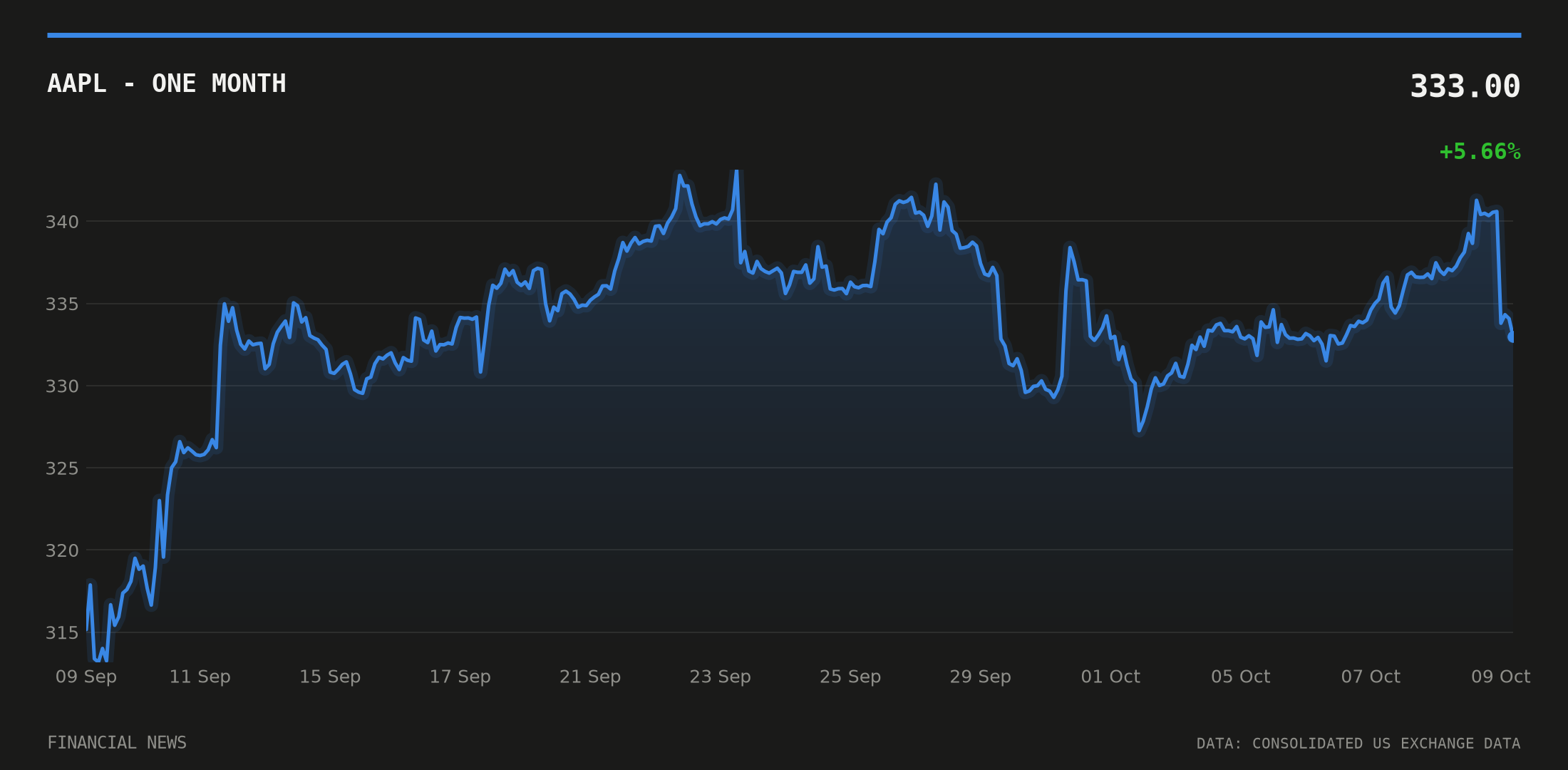
Nikkei’s exclusive attributes the production pullback to softer-than-expected demand, tied to a $100 price rise on the Pro and Pro Max this cycle. The Pro now starts at $1,199 and the Pro Max at $1,299, up from last year’s range, per the same reporting cited by The Standard.
Reuters, in picking up the story, said it could not immediately verify the Nikkei report and that Apple had not responded to a request for comment. That caveat matters: the order-cut figure itself rests on a single outlet’s sourcing, repeated rather than independently confirmed elsewhere.
The demand explanation also runs into contrary sell-through data. GSMArena reported that the iPhone 18 Pro and Pro Max sold roughly 1.3 million units in China in their first week, up 15% from the iPhone 17 Pro series – the opposite of what a soft-demand narrative would predict in Apple’s most closely watched overseas market.
Counterpoint Research has separately flagged that China’s overall weekly smartphone sales have been falling at a double-digit annual rate since July, meaning Apple’s share gains there could reflect a shrinking market rather than disprove softness outright. Apple also restructured this year’s launch, releasing only the premium Pro, Pro Max and a new foldable Duo in September while pushing the standard iPhone 18 and Air models to 2027 – a shift that complicates any like-for-like comparison with prior cycles, Forbes noted.
No filing yet covers the post-launch quarter
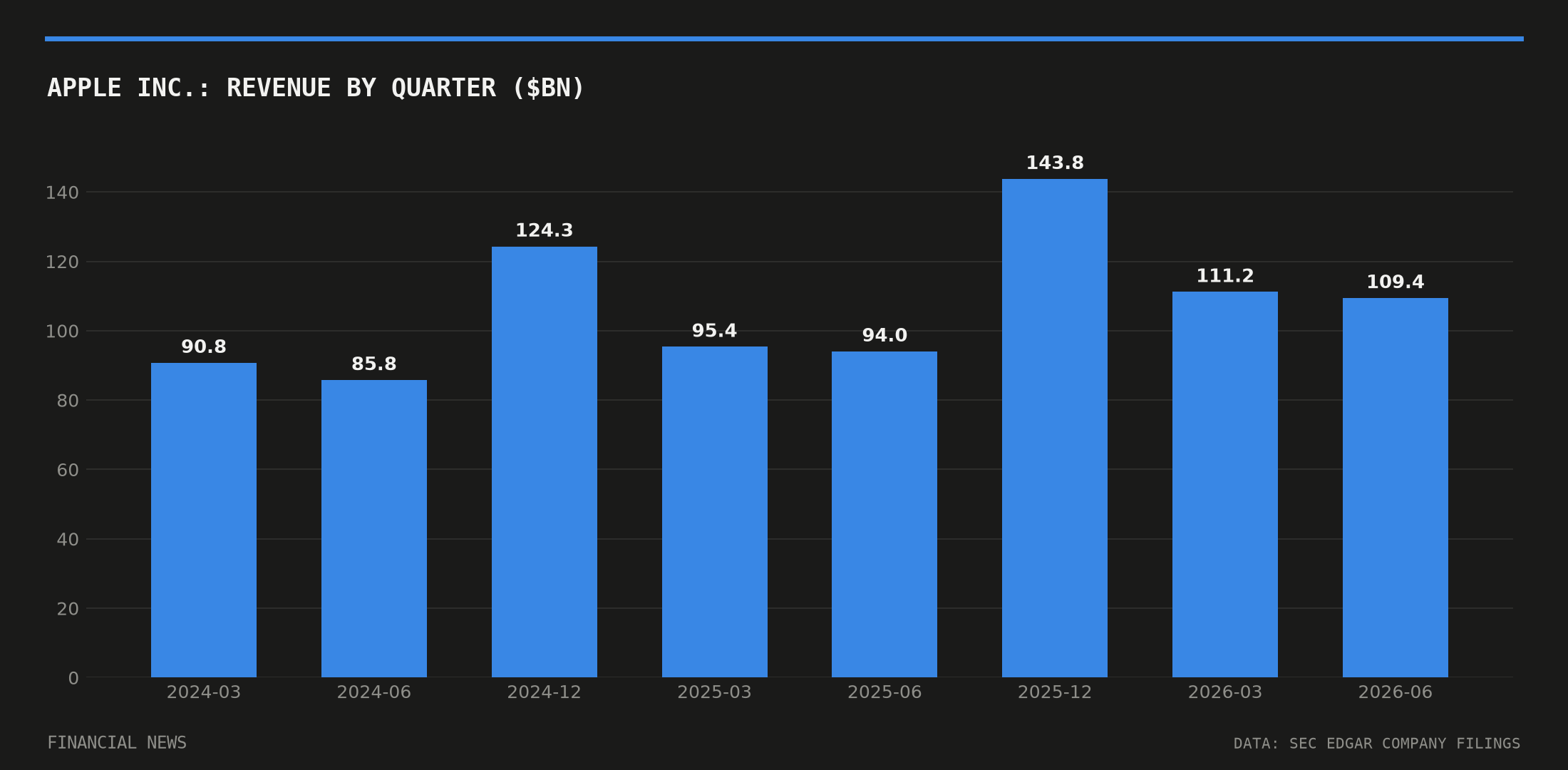
Apple’s most recent 10-Q, filed with the SEC on 31 July 2026, covers the quarter ended 27 June 2026 – before the iPhone 18 Pro’s September launch. Net income for that quarter was $29.79bn, on revenue of $109.4bn, filings show. No subsequent quarterly filing yet captures actual post-launch sales, meaning the order-cut report currently has no corresponding sales data to confirm or refute it.
Apple’s past two reported quarters show how sharply iPhone-season revenue can swing: the fiscal first quarter ended 27 December 2025, which captured the bulk of holiday iPhone 17 sales, produced revenue of $143.76bn and net income of $42.1bn, versus $111.18bn in revenue the following quarter. That seasonal pattern underscores how much weight the market places on supply-chain signals in the gap between launch and the next earnings print.
Supply-chain order-cut reports have a mixed record as a demand indicator. A 2013 Nikkei report of a 50% iPhone order cut drew public pushback from chief executive Tim Cook at the time, and Apple’s subsequent quarterly results showed a 29% year-on-year iPhone sales gain – a reminder that component-order adjustments do not always translate into weaker sell-through.
Insider filings unrelated to the report
Separately, Apple insiders filed a batch of Form 4 disclosures with the SEC this week, including Cook’s sale of 191,753 shares worth roughly $63.8m on 5 October, executed under a trading plan adopted on 28 May 2026, according to MarketBeat. The pre-scheduled 10b5-1 arrangement predates the Nikkei report by more than four months, and other executives including Deirdre O’Brien, John Ternus and Sabih Khan also filed sales the same week, per SEC EDGAR records.
Analyst estimates ahead of launch had already flagged caution. GF Securities’ Jeff Pu reportedly cut his iPhone 18 Pro production forecast to 72 million units before the phone reached shelves, citing lukewarm pre-order wait times – a data point that predates and sits alongside the Nikkei account rather than confirming its demand framing.
What to watch
Apple’s next scheduled 10-Q will be the first SEC filing to cover any part of the post-launch period, giving investors their first primary-source read on whether the component-order trims reflect actual sell-through or inventory caution tied to rising memory-chip costs. Until then, the gap between a well-sourced supply-chain report and first-week China sales data that moved in the opposite direction leaves the demand question open rather than settled.
This article is for information only and is not investment advice or a recommendation to buy or sell any asset. Markets move quickly; figures are correct as sourced at the time of writing. Always do your own research before making financial decisions.
