
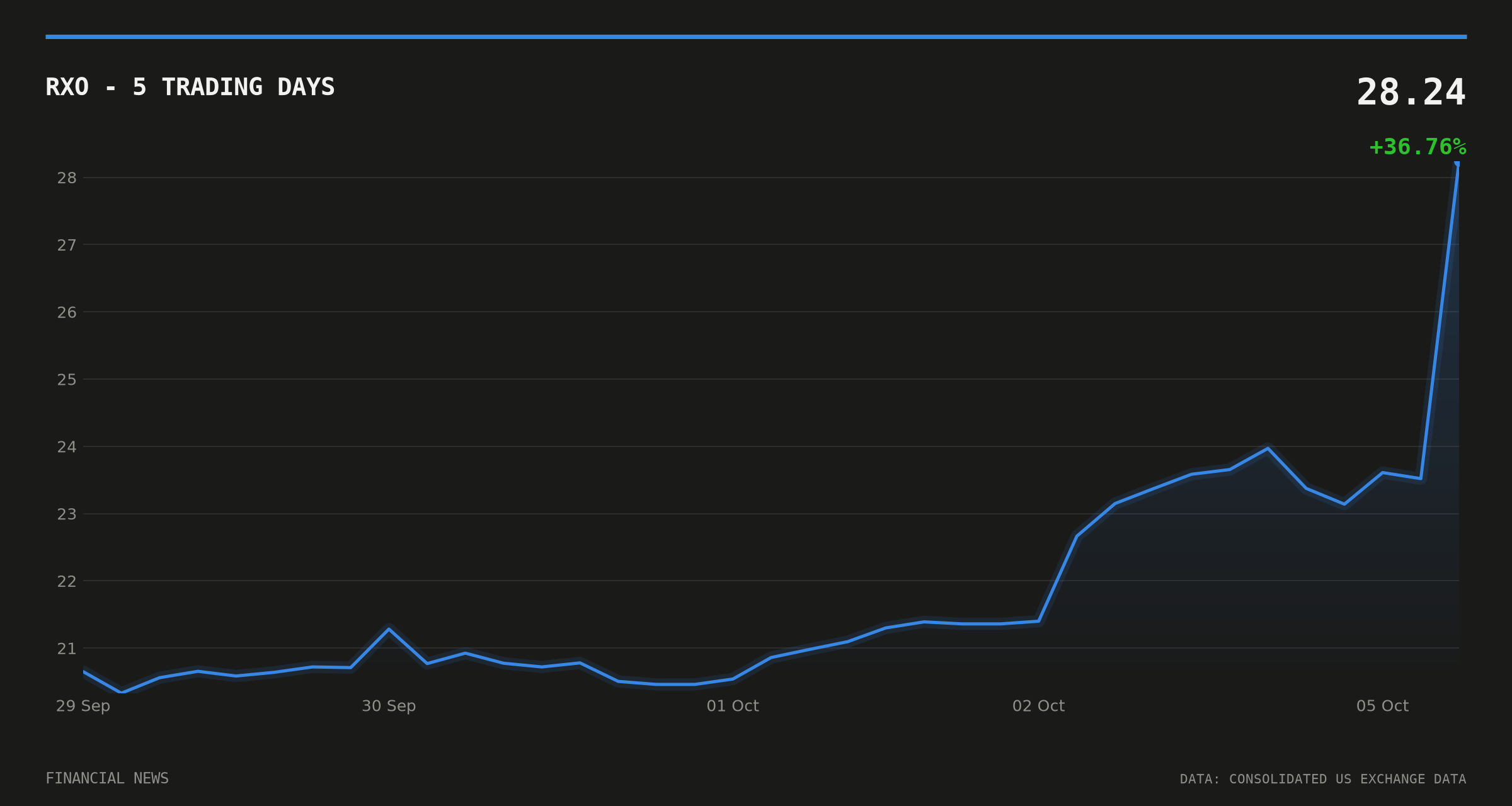

C.H. Robinson Worldwide (NASDAQ: CHRW) agreed on 5 October 2026 to buy RXO (NYSE: RXO) in a cash-and-stock deal worth an implied $5.8bn, the companies said.
RXO shareholders are to receive $17.25 in cash plus 0.0856 C.H. Robinson shares for every RXO share, implying a value of roughly $30.25 a share, according to Investing.com.
The deal creates a combined freight-brokerage group with an enterprise value of more than $25bn, the companies said in the release reproduced by The Loadstar. C.H. Robinson expects to extract about $300m of net run-rate cost synergies within two years of closing, applying what it calls its Lean AI operating model across RXO’s network, according to the same release.
RXO stock jumped 19.14% over the prior 24 hours to $28.10 as of 11:00am UTC on 5 October, still short of the implied $30.25 deal value, consolidated exchange data show. Investing.com had earlier reported a premarket gain of more than 18.5% on the news.
Why C.H. Robinson wants RXO
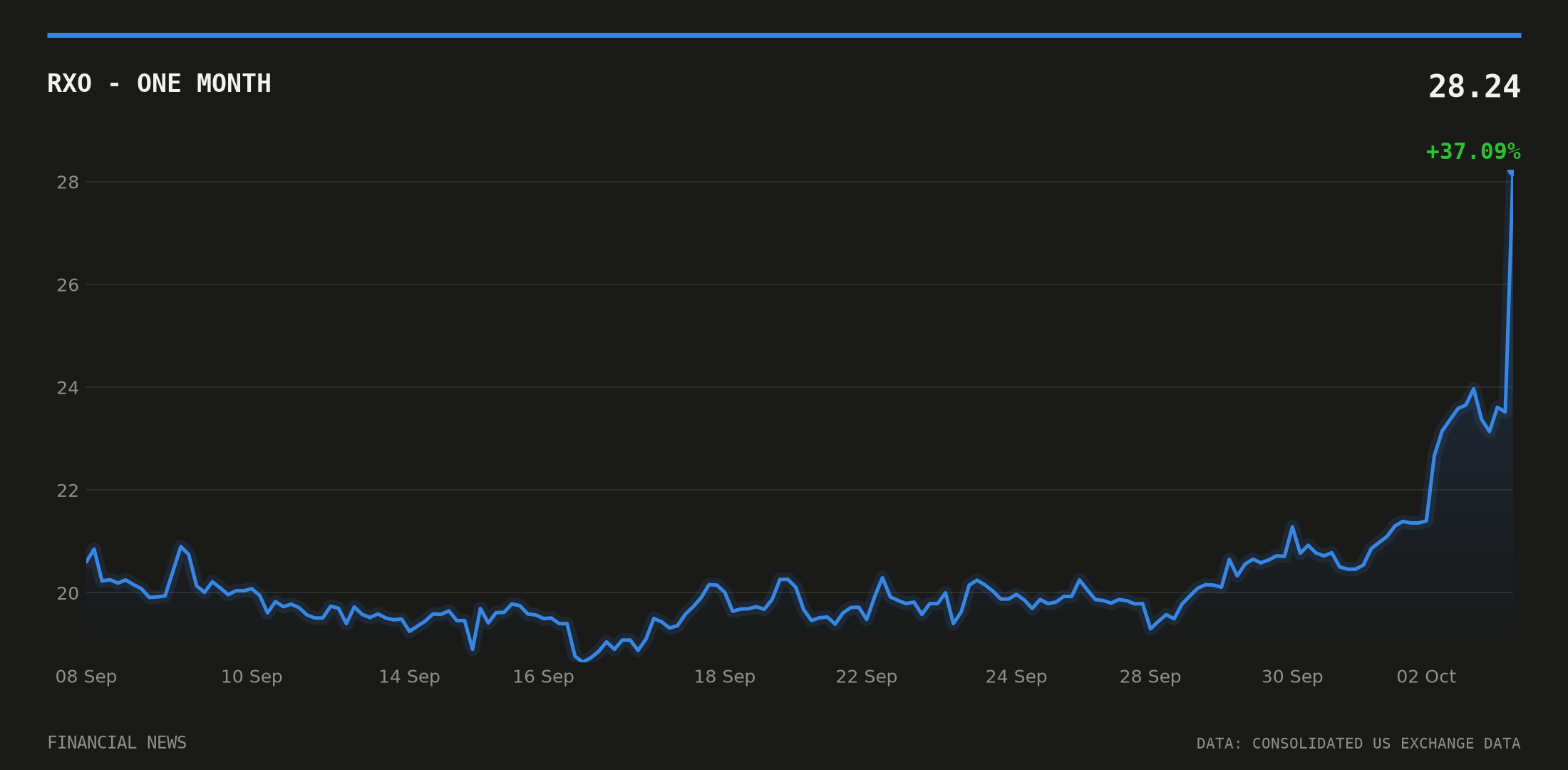
The combination pairs C.H. Robinson’s global forwarding and managed transportation arms with RXO’s strengths in expedited freight and last-mile delivery, the companies said in the announcement. RXO stockholders are expected to own about 11% of the combined group after close and can elect cash, stock, or a mix, according to Seeking Alpha.
Commentary from Newsquawk frames the tie-up within a broader pattern: freight-brokerage consolidation has tended to accelerate during soft-rate, compressed-margin downturns, as larger operators buy capacity and technology rather than build it. RXO was itself spun out of a larger logistics group in 2022, a lineage Newsquawk says has made it a repeated subject of deal speculation since separation.
A buyer paying up for a loss-making target
The price tag lands on a company that has not posted a profitable quarter since early 2024. RXO’s quarterly net losses have run continuously from a $15m loss in the first quarter of 2024 to a $9m loss in the quarter ended 30 June 2026, the most recent period disclosed in its 10-Q filing. Across that span, cumulative losses run to roughly $364m.
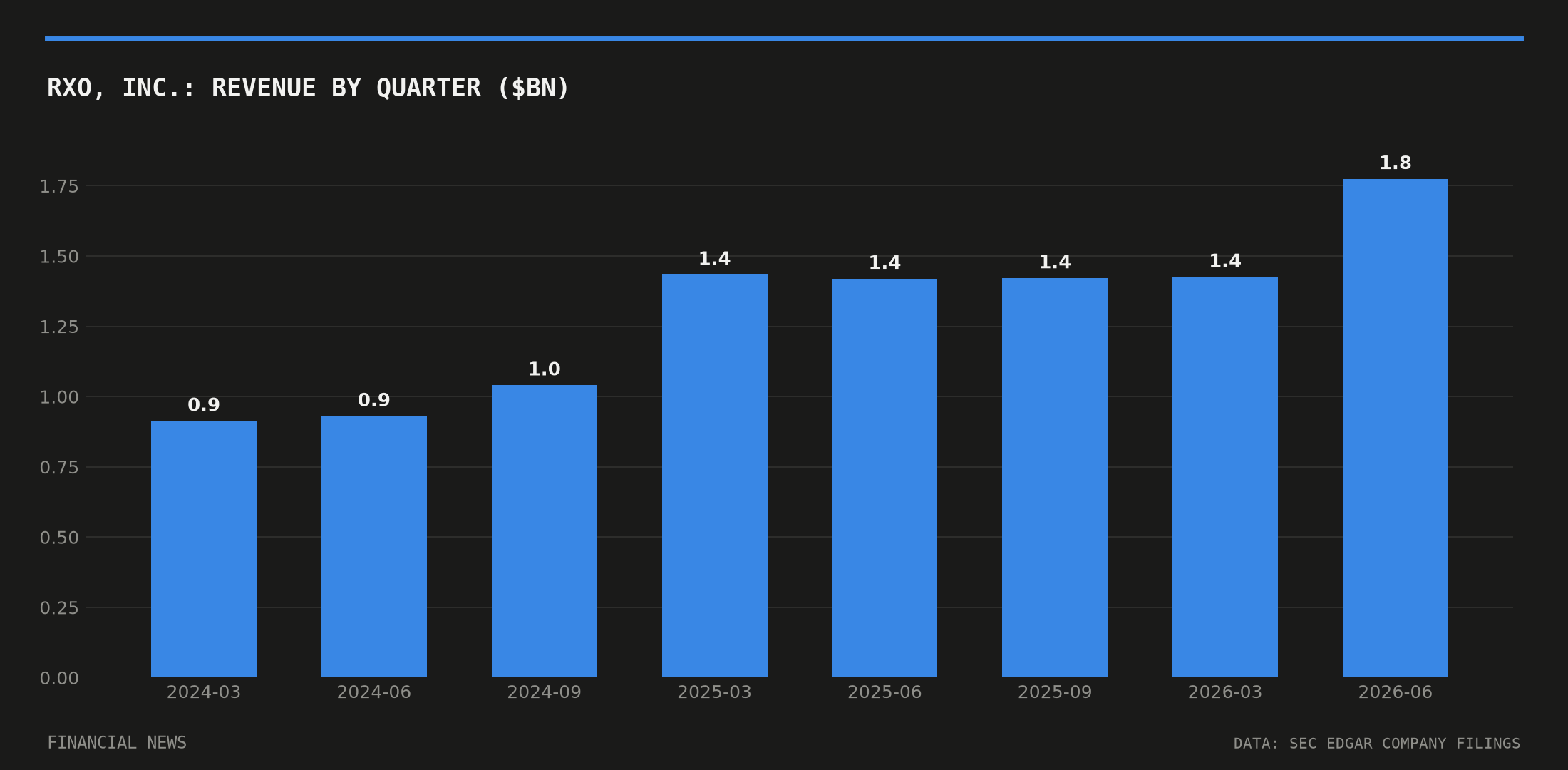
Revenue has moved in the opposite direction. Quarterly sales rose from $913m in the first quarter of 2024 to $1.774bn in the second quarter of 2026, filings with the SEC show. That combination — expanding top line, persistent bottom-line losses — underlines the bet C.H. Robinson is making: that scale and its Lean AI cost programme, not RXO’s current earnings, justify the price.
Trading activity in RXO shares showed signs of positioning ahead of the announcement. FINRA’s daily short-sale volume ratio for the stock climbed to 0.888 on 25 September 2026 and stood at 0.8 on 2 October, having been as low as 0.556 a fortnight earlier, according to FINRA data.
Separately, two C.H. Robinson insiders — Timothy C. Gokey and Mark A. Goodburn — each filed a Form 4 with the SEC on 1 October 2026, four days before the deal was made public, according to EDGAR filings. The filings do not specify transaction size.
A financing backdrop of higher rates
C.H. Robinson is structuring the acquisition against a steeper cost of capital than dealmakers faced in previous cycles. The 10-year Treasury yield stood at 5.24% as of 1 October 2026, with the 2-year at 4.78%, according to Federal Reserve data. Both have eased slightly from the prior reading but remain well above the levels that prevailed when RXO was spun off in 2022.
Shareholders of both companies will need to approve the transaction before it closes, and the deal is subject to customary regulatory clearances. Investors will be watching RXO’s share price for signs the arbitrage spread to the implied $30.25 deal value narrows as the transaction proceeds toward completion.
This article is for information only and is not investment advice or a recommendation to buy or sell any asset. Markets move quickly; figures are correct as sourced at the time of writing. Always do your own research before making financial decisions.
