

Qualcomm (NASDAQ: QCOM) has agreed to pay Huawei Technologies to use its patents, reversing a royalty flow that has run the other way for 25 years. The two companies announced a multi-year patent licensing agreement on 5 October 2026, covering 5G, artificial intelligence, computing and networking technologies.
Huawei said the deal, once completed, would push the total value of its patent licensing agreements above $6.9bn, according to a company statement.
A role reversal 25 years in the making
Huawei made its first licensing payment to Qualcomm in 2001 and has paid the US chipmaker for its cellular standard-essential patents ever since. This is the first time that flow has run the other way: Qualcomm has agreed to pay to licence and acquire patents from Huawei, according to the South China Morning Post.
Nikkei Asia reported the cross-licence covers 5G and AI technologies and still needs US regulatory approval before it can close. The Reuters wire headline that framed the news as Huawei agreeing to license from Qualcomm understates that nuance: both sides describe a broad, two-way cross-licence, but the payment itself now flows from Qualcomm to Huawei.
The agreement also includes Qualcomm’s purchase of certain Huawei US patents covering computing, AI and networking, and marks Huawei’s first patent licensing deal with Qualcomm to cover 5G technologies specifically, according to The Standard. Bloomberg reported that Qualcomm has also agreed to license patents underpinning Huawei’s LogicFolding chipmaking technique, a sign the deal reaches beyond standard telecoms patents into chip-fabrication intellectual property.
Both sides frame it as FRAND
Huawei and Qualcomm both describe the agreement as consistent with fair, reasonable and non-discriminatory licensing principles. John Han, Qualcomm’s technology licensing EVP, said the deal ‘reaffirms industry recognition of Qualcomm’s 5G technology leadership and the success of Qualcomm’s 5G SEP licensing program,’ according to Huawei’s statement.
The deal follows a licensing agreement Huawei struck with HP in August 2026, part of a wider push by the Chinese group to monetise its patent portfolio. Huawei has ramped up research spending since 2019, when US trade restrictions began limiting its access to advanced chips and software, and patent income has become a growing offset.
Qualcomm shares extend gains
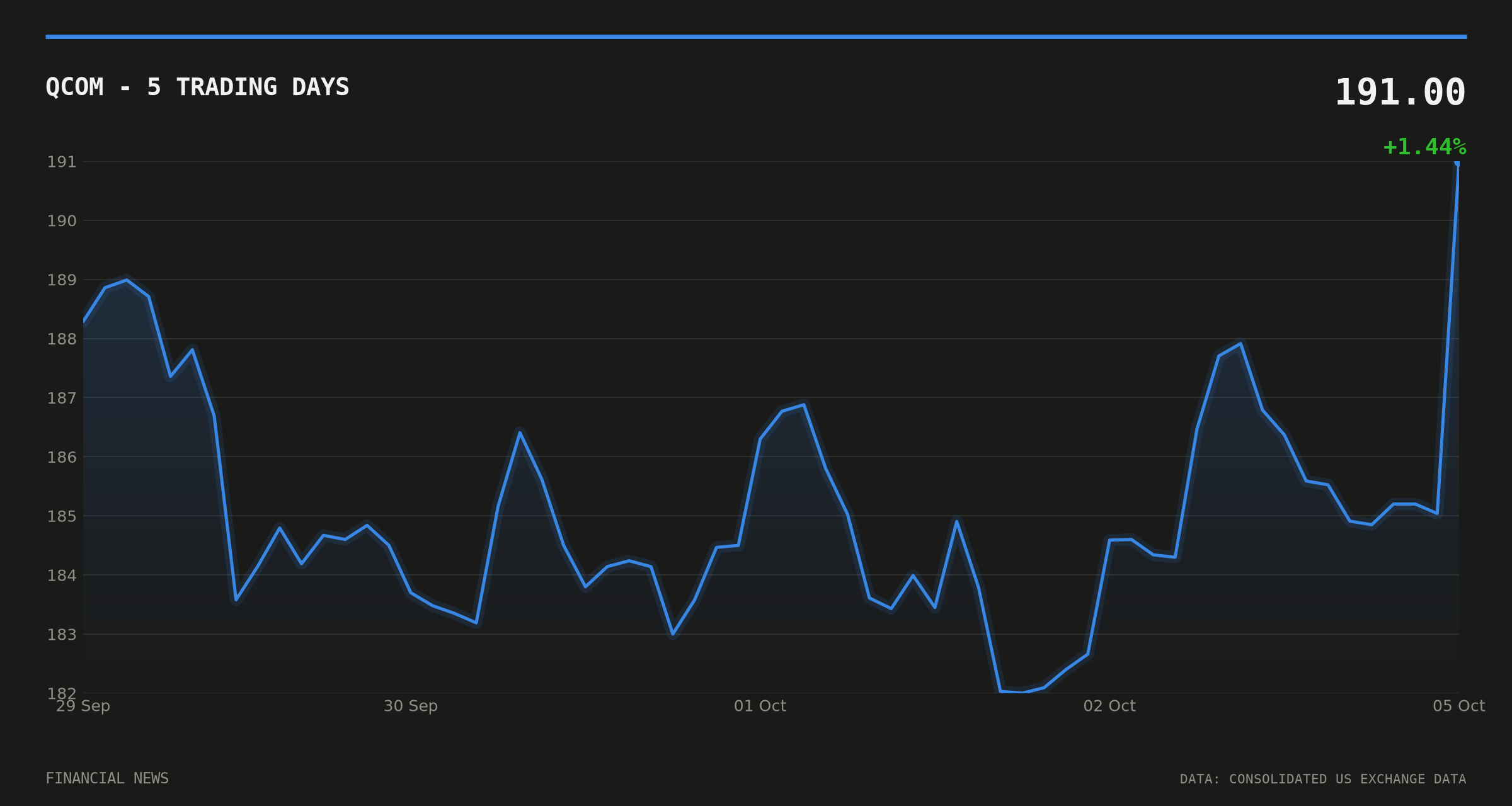
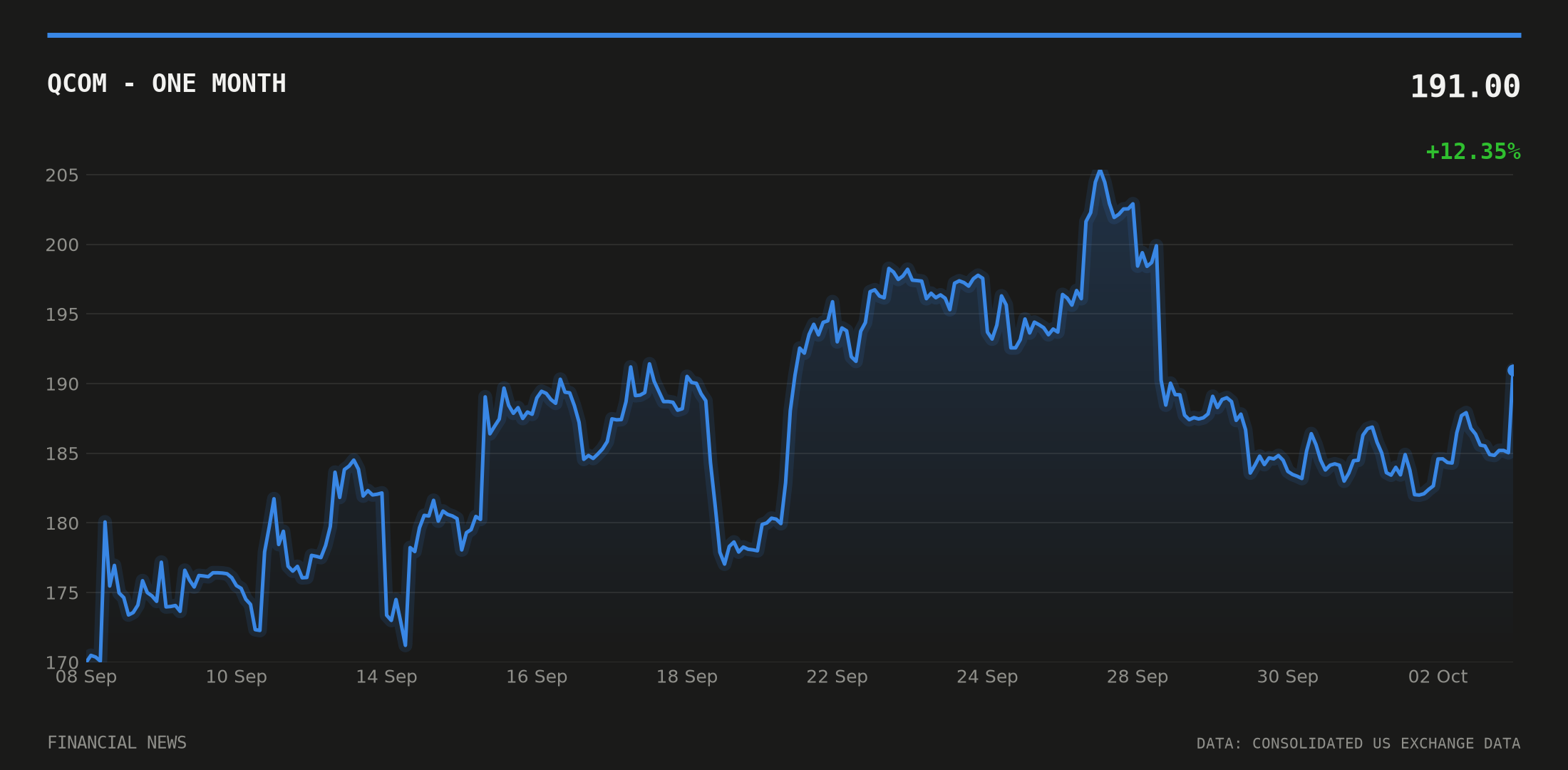
Qualcomm shares traded at $191.35 as of 08:00 UTC on 5 October 2026, up 3.1% on the day and 10.61% over the prior 20 trading days, against a 20-day range of $171.21 to $205.38 on consolidated US exchange data. Trading volume ran below the 20-day average.
The move lands against a backdrop of falling US borrowing costs: the 10-year Treasury yield stood at 5.24% and the 2-year at 4.78% in early October, both down from the prior reading, according to Federal Reserve data.
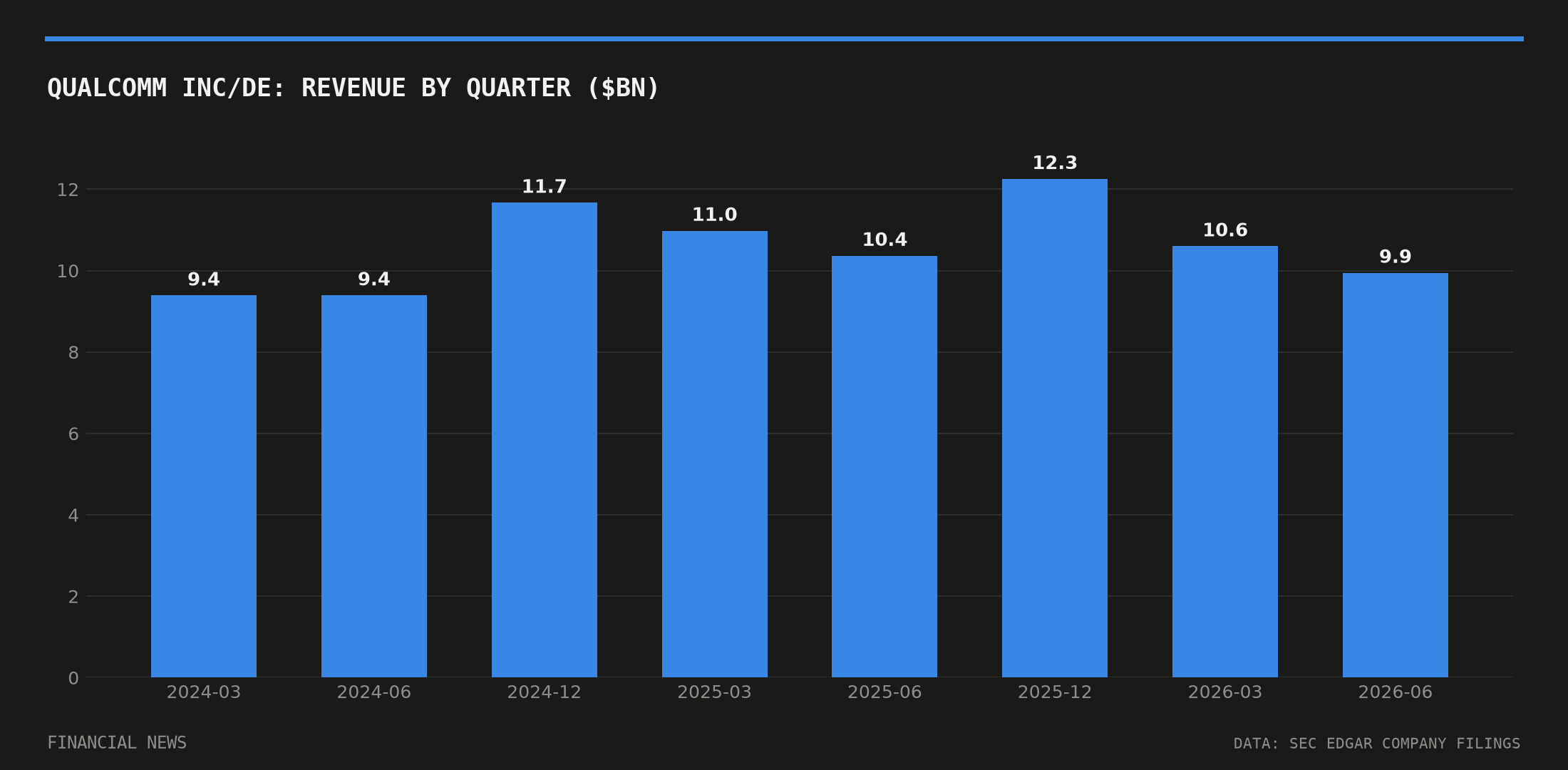
Qualcomm’s underlying business has been choppy. The company reported net income of $2.002bn on revenue of $9.947bn for the fiscal third quarter ended 28 June 2026, down from $7.37bn in net income the previous quarter, according to its 10-Q filing. Diluted earnings per share swung from $6.88 in the second quarter to $1.87 in the third.
No filing yet confirms the deal
No 8-K disclosing the Huawei agreement had surfaced in Qualcomm’s EDGAR filings as of the announcement, and the company’s most recent current report on record related to its earlier acquisition of Modular. A Qualcomm insider, Patricia Y. Grech, filed a Form 4 on 2 October, three days before the announcement, though the filing does not reference the Huawei deal.
Both companies say the transaction will close once the necessary regulatory approvals are secured, without giving a timeline. That clearance process, likely to involve US authorities given the sensitivity of Chinese-American chip dealings, is the next marker investors are watching.
This article is for information only and is not investment advice or a recommendation to buy or sell any asset. Markets move quickly; figures are correct as sourced at the time of writing. Always do your own research before making financial decisions.
