

Meta Platforms (NASDAQ: META) unveiled a smart glasses model without a camera at its Connect developer conference on 23 September 2026. The device adds to, rather than replaces, Meta’s existing camera-equipped eyewear lineup.
Seventy-five advocacy organisations, led by the ACLU, had publicly pressed Meta over plans to add facial recognition to its Ray-Ban and Oakley eyewear before the launch.
Camera-free line joins, not replaces, Ray-Ban push
Reuters had reported ahead of the event that Meta was expected to show a camera-free pair alongside its camera-equipped range, as concern grows over AI devices recording people without consent. The wire’s account matched what Meta ultimately showed.
Independent reporting from The Information, cited by UploadVR, said the camera-free device carries no lens at all but keeps a microphone, speaker and a recording-start button, distinguishing it from Meta’s existing Ray-Ban Meta glasses. MediaPost had circulated the internal codename ‘Luna’ for the model ahead of the conference. TechRadar’s preview of the two-day event listed the camera-less glasses alongside updates to the camera-equipped Ray-Ban Meta line, underlining that Meta is running both product tracks in parallel rather than retreating from cameras altogether.
Shares slip after the keynote
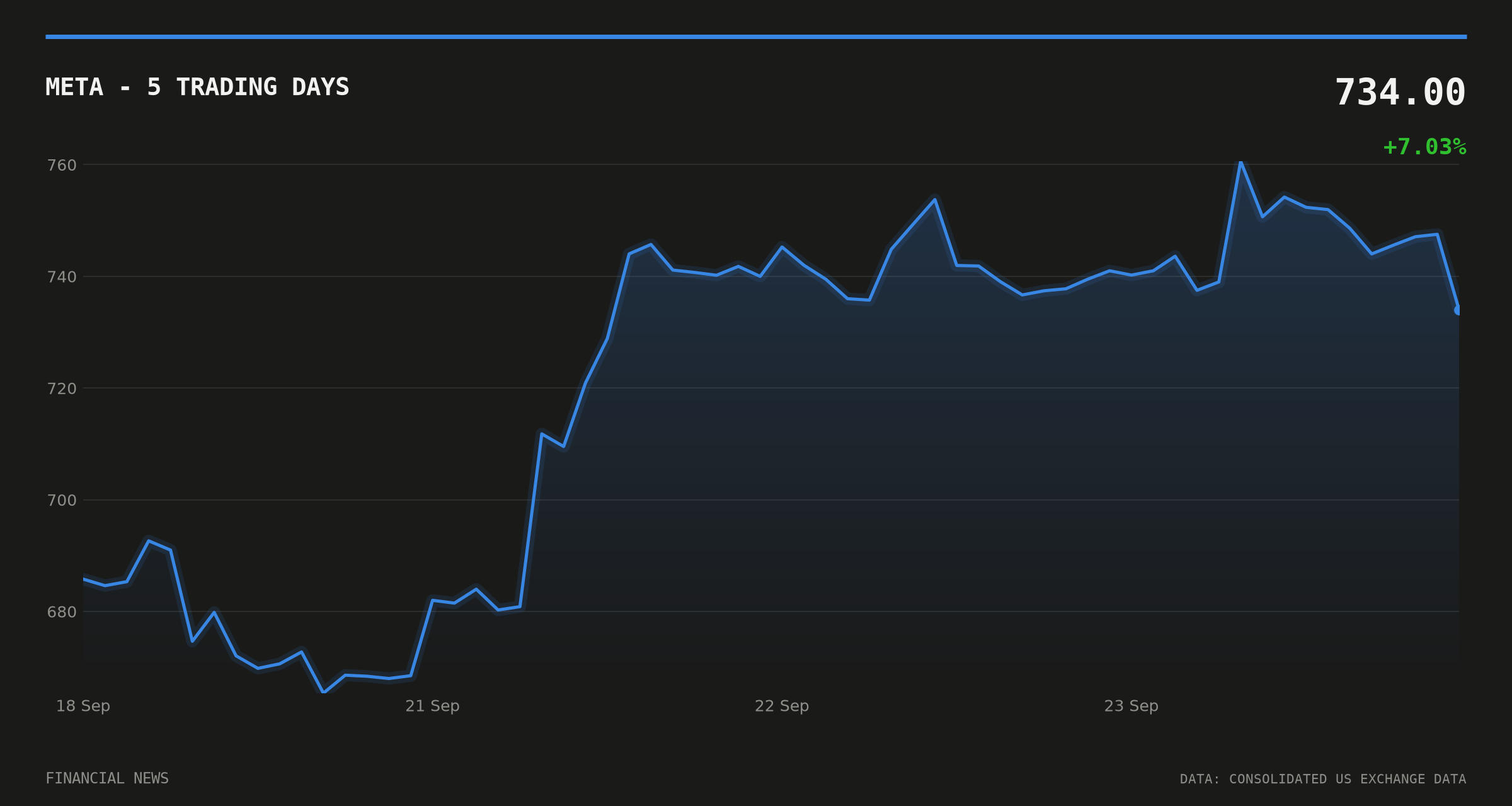
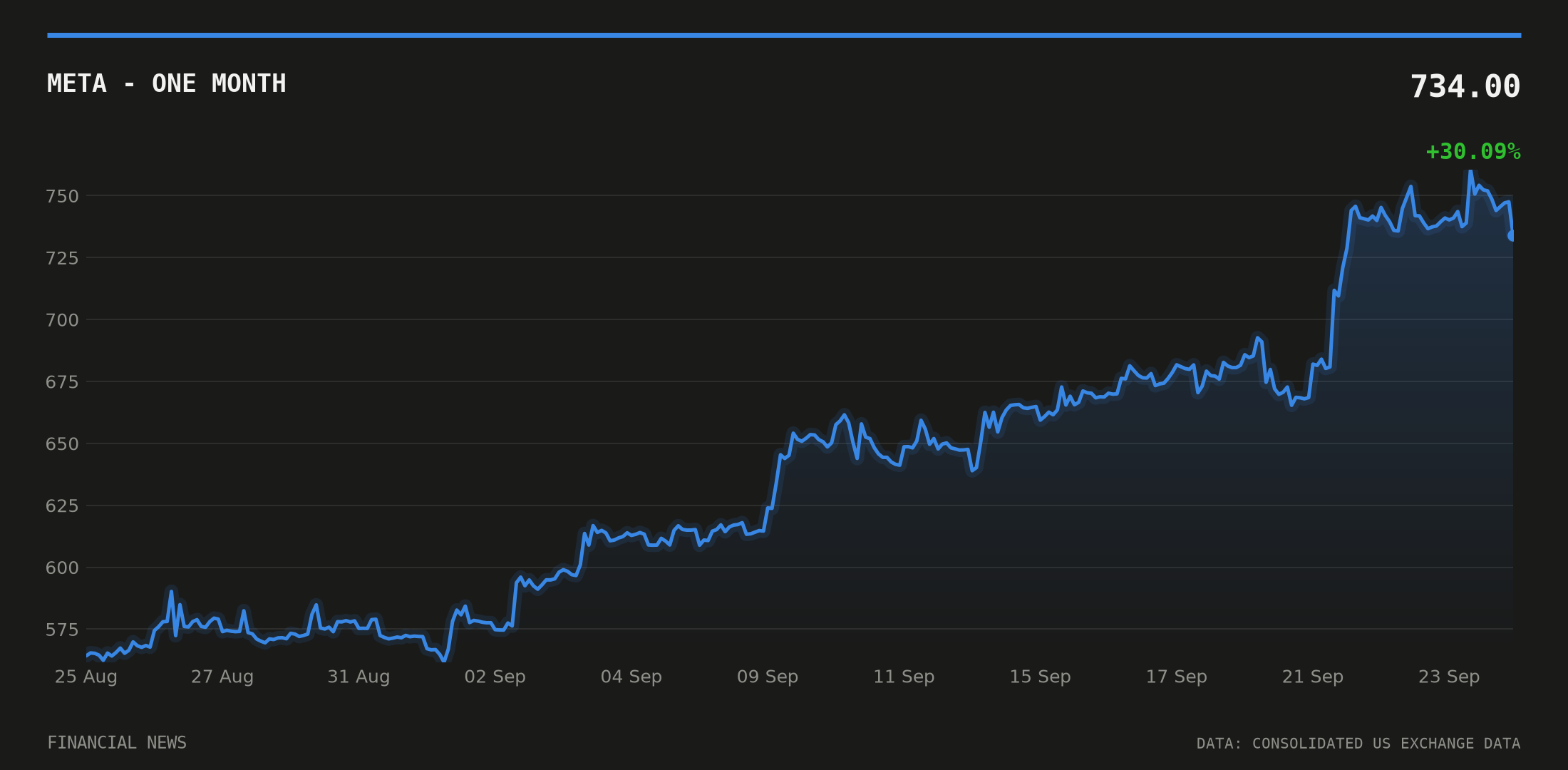
META shares closed at $734.00 on 23 September, down 2.44% on the day, having risen 22.54% over the prior 20 trading sessions. The stock had traded as high as $760.62 and as low as $596.65 over that same 20-day window, and volume ran 21% above the 20-day average as the keynote played out.
FINRA’s daily short-sale volume ratio for META edged up to 0.549 on announcement day, versus a September range that had mostly sat between 0.36 and 0.63 – not a sharp break from recent trading.
Insider filings and the balance-sheet backdrop
Two Meta executives, Christopher Cox and Javier Olivan, each filed Form 4 ownership reports with the SEC the same evening as the Connect event, filed at 22:15 and 22:14 UTC respectively. Neither filing in the public record discloses share counts or dollar values.
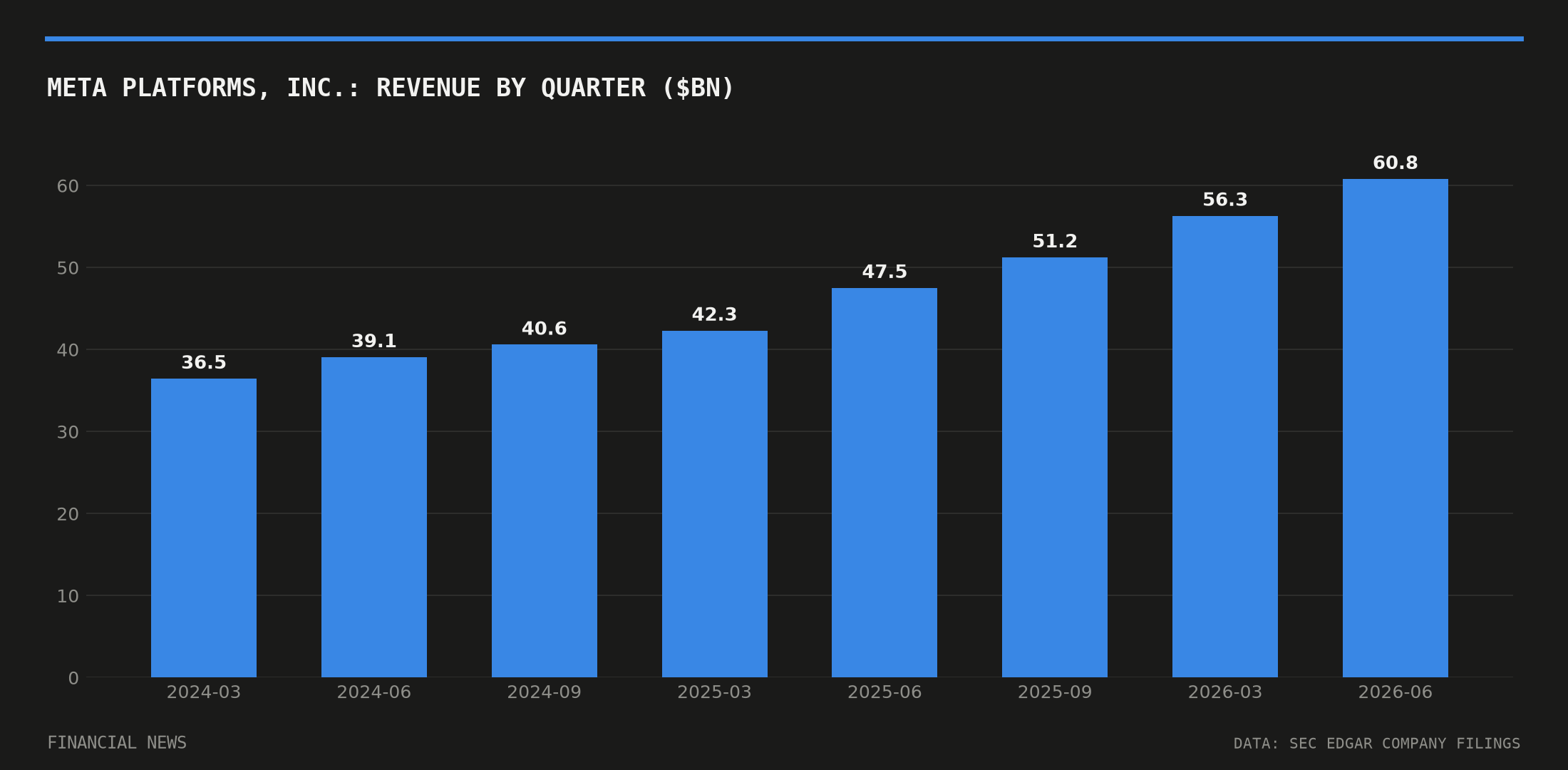
The hardware push comes as Meta’s revenue base has expanded sharply. Quarterly revenue rose from $36.455bn in the first quarter of 2024 to $60.801bn in the second quarter of 2026, according to 10-Q filings lodged with the SEC. Net income over the same run of quarters climbed from $12.369bn to $15.848bn, dipping to $2.709bn in the third quarter of 2025 before rebounding to $26.773bn in the first quarter of 2026, per the filings. Diluted earnings per share tracked a similar path, from $4.71 in early 2024 to $6.18 in the most recent quarter, having peaked at $10.44 in the first quarter of 2026. That financial run gives Meta room to fund parallel hardware lines – one built around cameras and facial-recognition-capable lenses, the other explicitly designed without one – even as advocacy groups press the company on the former.
Macro conditions sat quietly in the background of the launch. The 10-year US Treasury yield stood at 4.96% as of 22 September, unchanged from the prior session, while the 2-year yield eased to 4.71% from 4.76%, according to Federal Reserve data. The 10-year/2-year spread widened slightly to 0.26 percentage points. US headline CPI rose to an index level of 334.131 in August from 332.813 the month before, and unemployment held at 4.1%, per the Bureau of Labor Statistics data compiled by the St Louis Fed. None of that moved materially around the Connect announcement, but it frames a market backdrop in which growth-sensitive hardware bets face a steady, if unspectacular, rate environment.
Market position still rests on the camera line
Meta’s smart glasses business, developed jointly with EssilorLuxottica, sold more than 7 million units in the prior year, according to IBTimes reporting, a base built almost entirely on camera-equipped models. The camera-free device announced this week does not replace that line – it sits alongside it, giving Meta a second product to point to when critics raise the facial-recognition question, without pulling back on the cameras that built its lead in the category.
Meta has not disclosed pricing, availability dates or unit targets for the camera-free glasses. Investors and privacy campaigners alike are likely to watch how Meta positions the two lines against each other in marketing over the coming quarters, and whether the ACLU-led coalition presses further on the camera-equipped range now that an alternative exists.
This article is for information only and is not investment advice or a recommendation to buy or sell any asset. Markets move quickly; figures are correct as sourced at the time of writing. Always do your own research before making financial decisions.
