
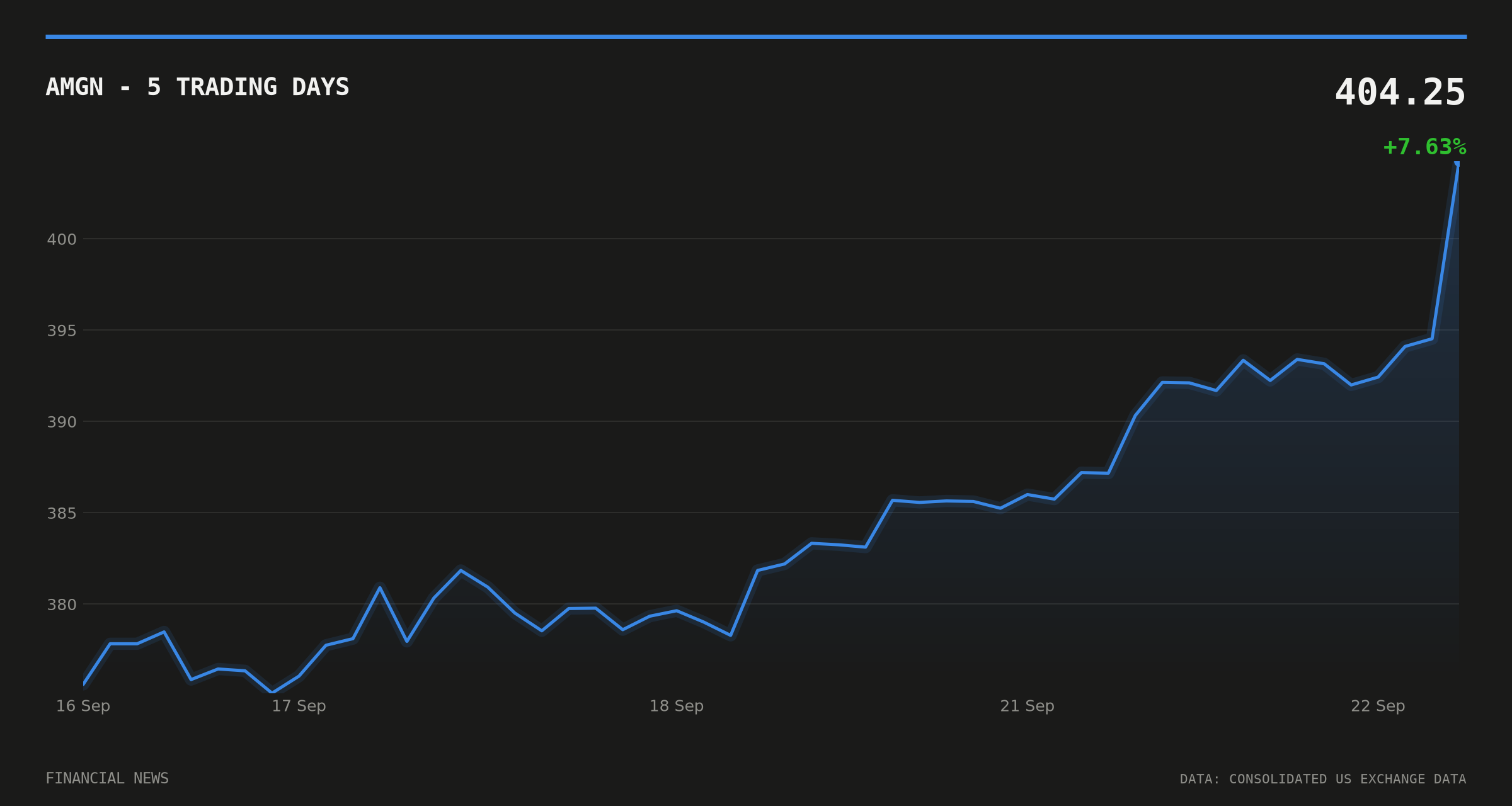

Amgen (NASDAQ: AMGN) said on 22 September 2026 that its dazodalibep Phase 3 trial met its primary endpoint in adults with moderate-to-severe systemic Sjögren’s disease. The drugmaker called the improvement in disease activity ‘statistically significant and clinically meaningful’.
Shares traded higher on the news, according to Benzinga, which reported the move immediately after Amgen’s announcement.
What the dazodalibep Phase 3 trial showed
The study, known as OASIZ 301, tested dazodalibep against placebo in patients with systemic disease activity from Sjögren’s, an autoimmune condition that attacks the glands producing saliva and tears. Amgen’s release said the drug produced ‘clinically meaningful improvement in systemic disease activity’ at Week 48, measured on the ESSDAI scale, a standard index of disease severity used across rheumatology trials.
That endpoint matches the trial’s pre-registered design. The listing for the study, HZNP-DAZ-301, on ClinicalTrials.gov specifies change from baseline in ESSDAI score at Week 48 as the primary outcome measure, meaning Amgen hit the target it set for itself before the trial began. Sjögren’s Syndrome News has reported the study enrolled 651 participants with moderate-to-severe systemic disease.
There is currently no treatment approved specifically for systemic Sjögren’s disease activity, which underscores the commercial stakes if dazodalibep advances through regulatory review. Amgen still has a second Phase 3 trial under way, OASIZ 303, targeting patients with high symptom burden but low systemic disease activity, expected to complete in the fourth quarter of 2026.
A separate Amgen Sjögren’s drug was scrapped
The result comes months after Amgen discontinued a different Sjögren’s candidate, AMG 329, following weak Phase 2 data, as FierceBiotech reported at the time. AMG 329 is a distinct molecule from dazodalibep, so its earlier failure has no bearing on the OASIZ 301 outcome. But the two headlines, both involving Amgen and Sjögren’s, illustrate how closely investors need to read past the disease name to the specific drug behind a trial result.
Positioning ahead of the readout
Daily short-sale data compiled by FINRA show AMGN’s short-volume ratio easing from 0.676 on 18 September to 0.582 on 21 September, the session before the readout, consistent with reduced bearish positioning heading into the catalyst.
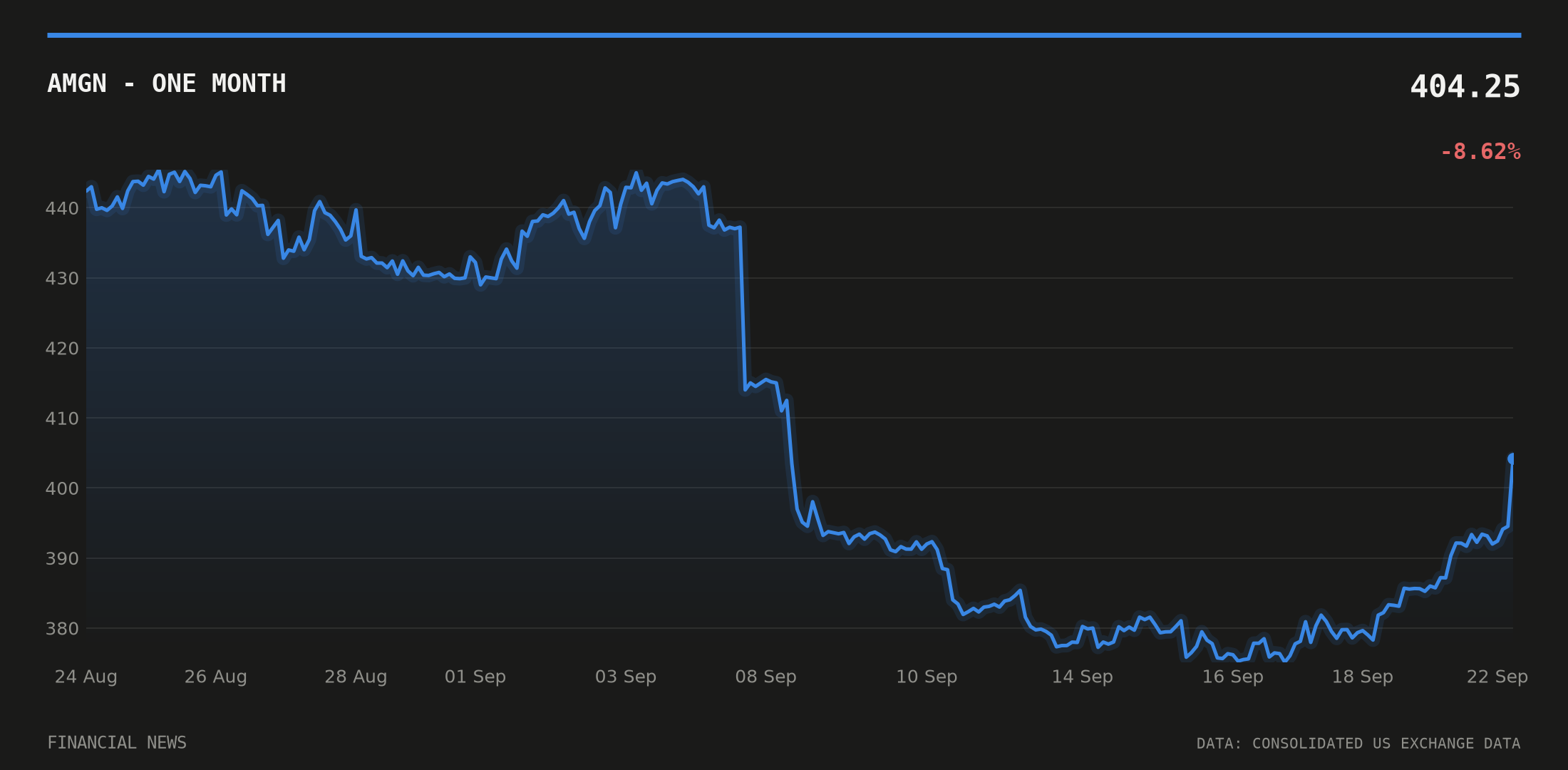
The stock had also been trading near record territory before the announcement. AMGN’s 20-day high stood close to the roughly $444 level marked in early September, according to the pack’s trading data, meaning the readout landed on shares that had already re-rated sharply this year rather than on a name trading at a discount.
Amgen’s balance sheet backdrop
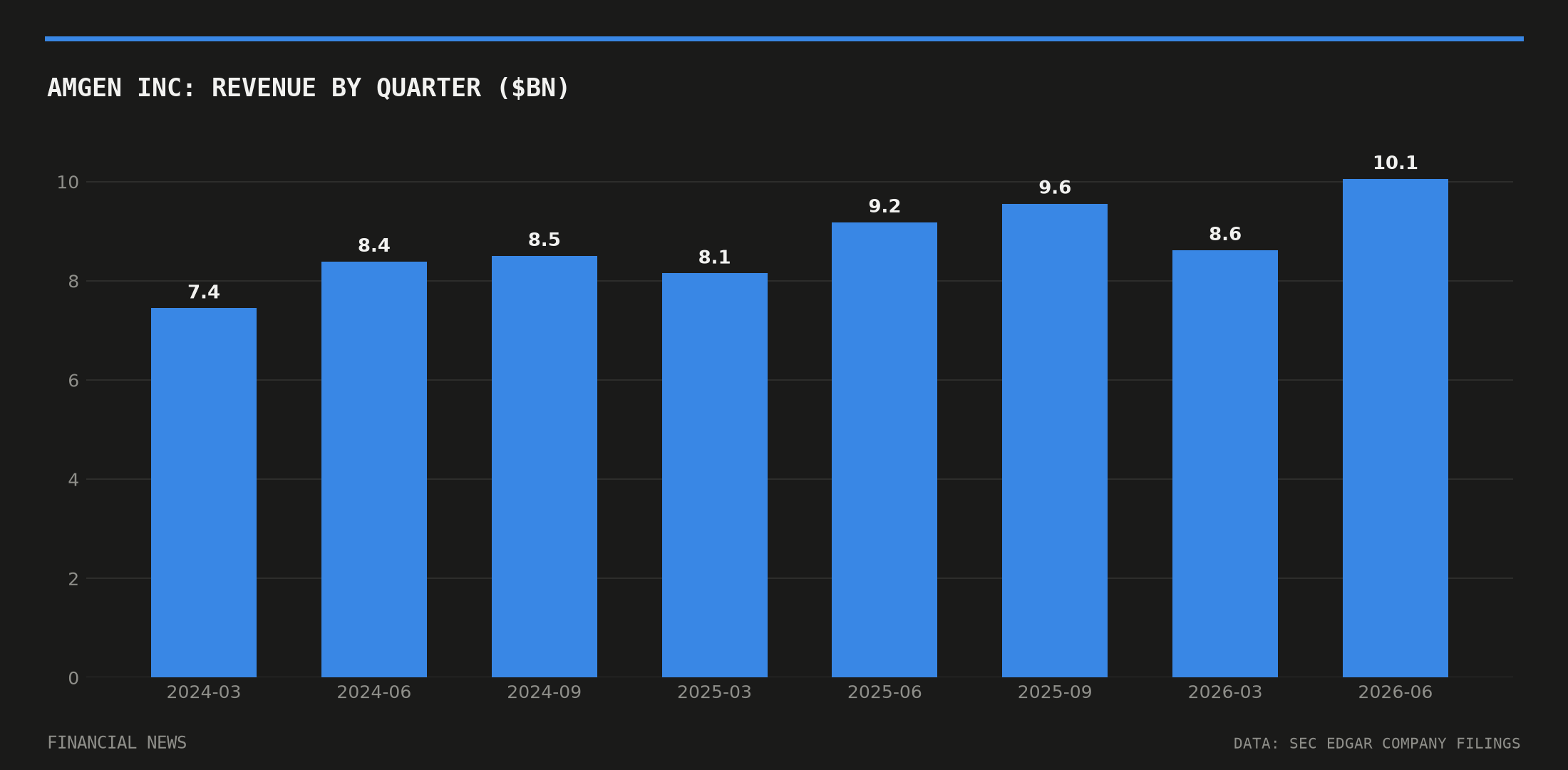
Amgen’s most recent quarterly filing showed revenue of $10,054m and net income of $2,375m, or diluted earnings of $4.37 a share, for the three months to 30 June 2026, according to its 10-Q filed with the SEC. That scale of cash generation gives the company room to keep funding late-stage programmes such as the dazodalibep Sjögren’s franchise without leaning on external financing.
Quarterly revenue has climbed steadily over the past two years, from $7,447m in the first quarter of 2024 to last quarter’s $10,054m, filings show, even as net income has swung between quarters on one-off items. The Sjögren’s readout adds a late-stage growth driver to a pipeline that investors have watched closely since Amgen absorbed dazodalibep through its 2023 acquisition of Horizon Therapeutics, the drug’s original developer.
Attention now turns to OASIZ 303, the companion trial addressing patients with lower systemic disease activity but higher symptom burden, due to read out later this year. Its result would determine how broad a population Amgen can eventually pursue for regulatory filings, market participants tracking the programme say.
This article is for information only and is not investment advice or a recommendation to buy or sell any asset. Markets move quickly; figures are correct as sourced at the time of writing. Always do your own research before making financial decisions.
