

DoorDash (NYSE: DASH) has agreed to pay $131.5m to settle a New York City probe into how it paid delivery workers, the company confirmed on 22 September 2026.
The settlement resolves an investigation by the city’s Department of Consumer and Worker Protection, which found DoorDash underpaid or paid some couriers late, as first reported by Reuters.
How the $131.5m breaks down
DoorDash’s own account of the settlement splits the total into three parts. It includes $12.3m for Dashers who were underpaid or paid late, more than $83m tied to a dispute over how to calculate pay for “online time” between deliveries, and $16.7m in fines payable to the city regulator, according to the company’s corporate statement.
That composition matters. The bulk of the money stems from a disagreement over pay-formula methodology rather than a finding that DoorDash pocketed wages outright. Roughly 264,000 Dashers are due a payment under the deal, including 209,000 for missing or late pay, DoorDash said, adding that fewer than 1% of all payments to NYC-based Dashers were affected.
DoorDash acknowledged the errors directly. ‘Simply put, we screwed up,’ the company said in its statement announcing the settlement. It attributed the underlying mistakes to technical bugs and complex edge cases, such as deliveries that crossed city boundaries or involved multiple pickup and drop-off points, according to a Reuters wire report carried by Investing.com.
A pattern of NYC scrutiny
This is not New York’s first run at gig-delivery pay practices. In January 2026, the city’s consumer protection department separately charged DoorDash and Uber Eats with causing couriers to lose more than $550m in tips through app changes, and reached a smaller $5m settlement with three delivery apps over minimum-pay violations, according to TheNextWeb. The latest deal extends that regulatory push rather than closing it out.
DoorDash frames New York as an outlier in complexity. The company said the city operates the most complex earning standard for delivery workers in the country, and that Dashers there have earned more than $1bn since the pay rule took effect in 2023, with average pay per active hour before tips of roughly $30, per its own statement.
No filing yet, insider sale on record
The settlement has not yet surfaced as an 8-K or litigation accrual in DoorDash’s SEC filings. The most recent filing on record is a Form 4 covering an insider transaction by Keith Yandell, filed with the SEC on 21 September 2026, unrelated to the settlement.
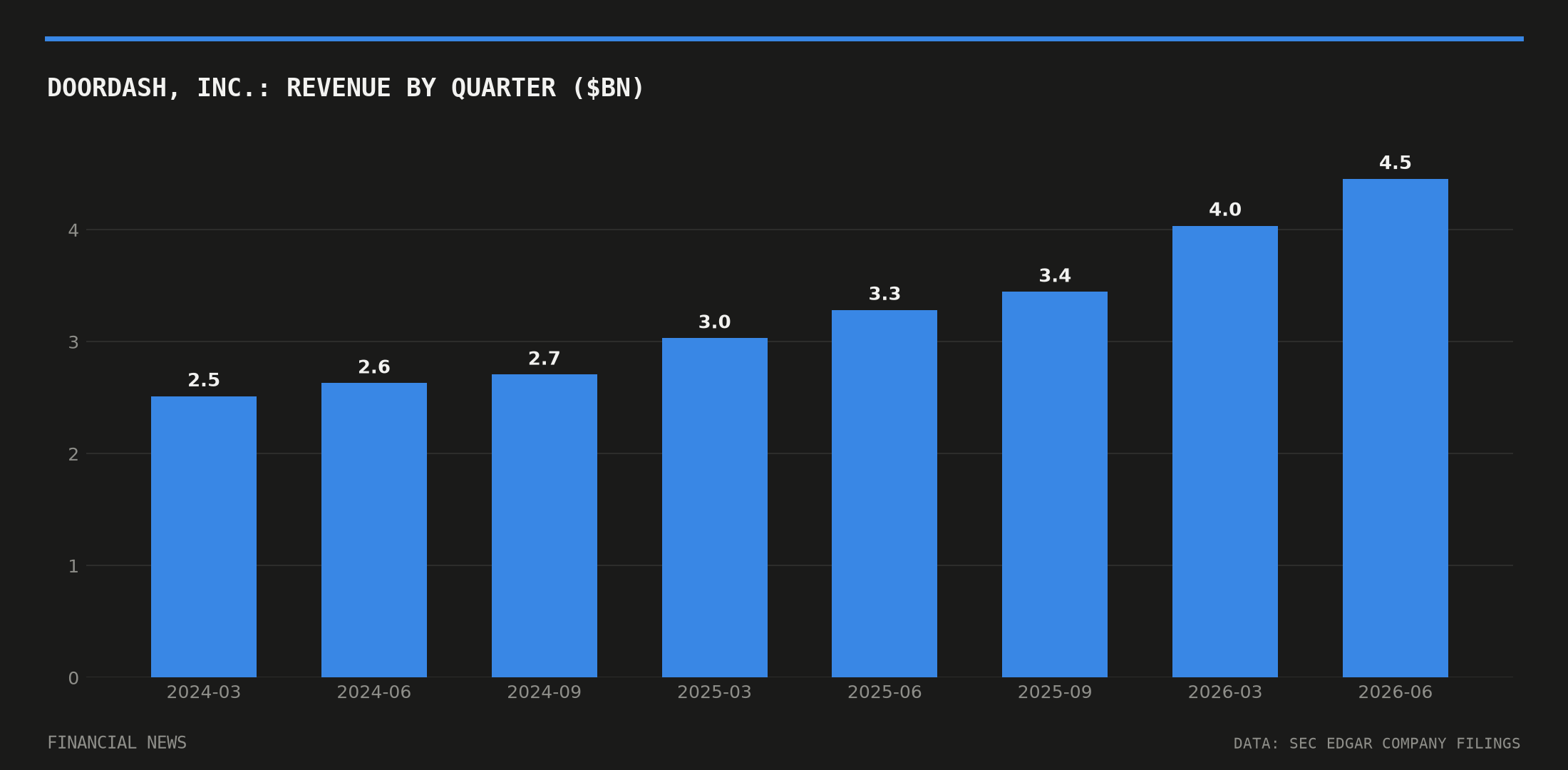
Set against DoorDash’s recent earnings, the payout is material but not disruptive. The company reported net income of $200m for the second quarter of 2026, up from $184m in the first quarter and $244m a year earlier in the third quarter of 2025, according to its 10-Q filing. At $131.5m, the settlement equates to roughly two-thirds of a single quarter’s profit. Revenue has kept climbing over the same run of quarters, from $3.03bn in the first quarter of 2025 to $4.45bn in the second quarter of 2026, filings show, underscoring that the cost lands on a business still scaling rapidly even as it now turns a consistent profit — a reversal from losses of $23m and $157m in the first two quarters of 2024.
Shares steady, no unusual short activity
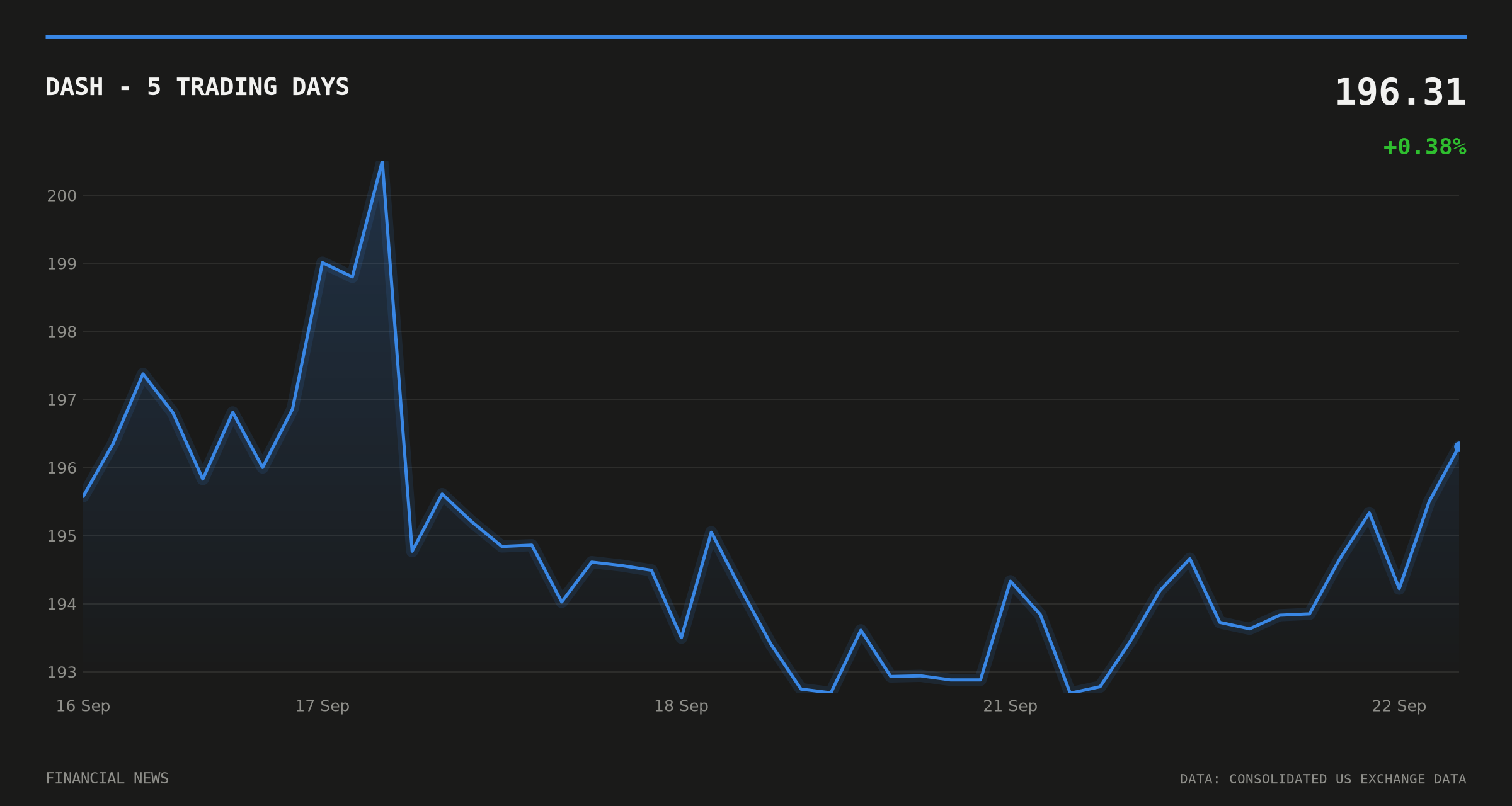
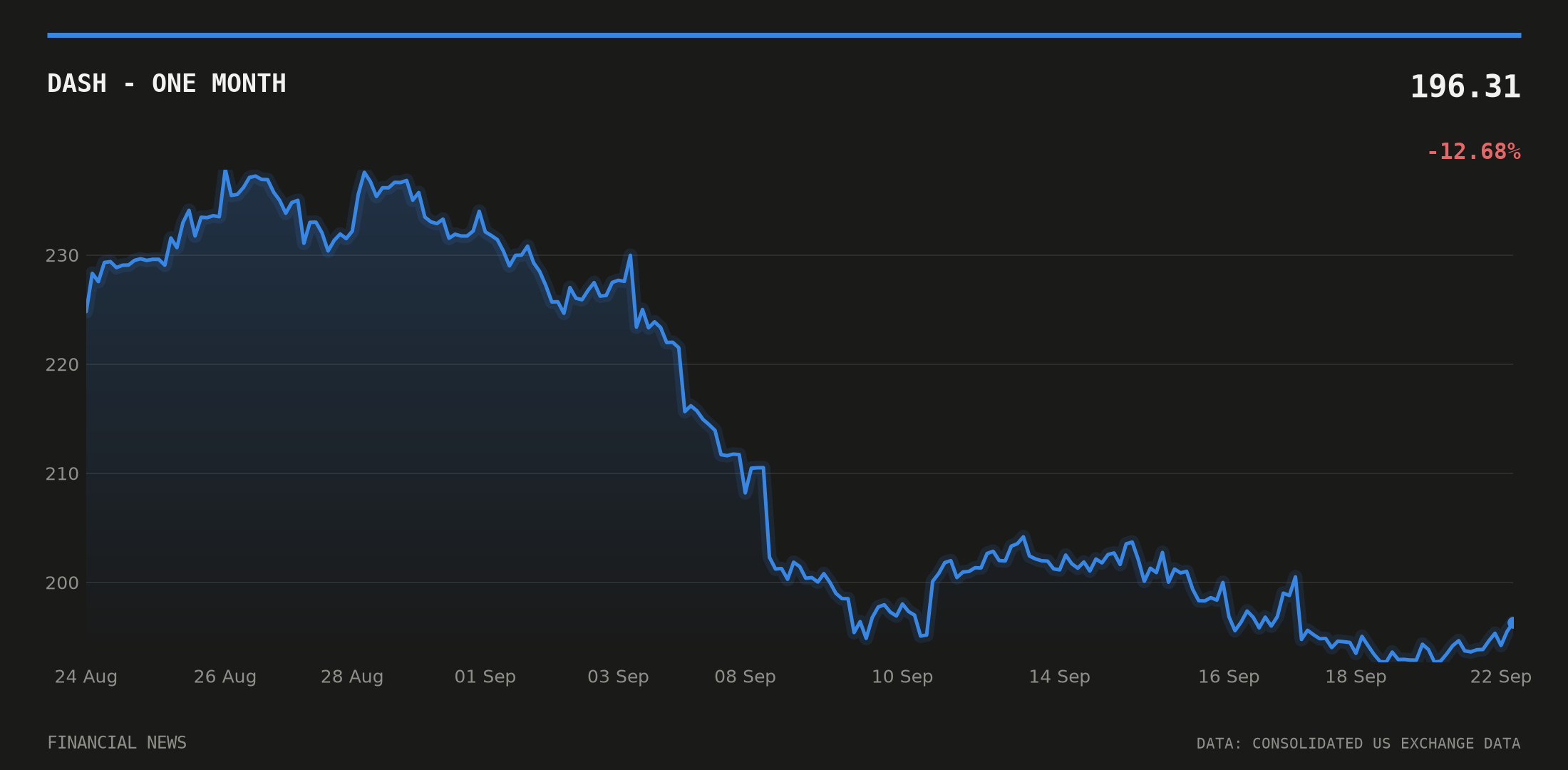
DASH shares traded at $197.05 as of 22 September, up 1.77% over 24 hours but still down 14.32% over the prior 20 trading days, according to consolidated exchange data. Trading volume ran below its 20-day average.
FINRA daily short-sale data show no spike around the announcement: the short-volume ratio for DASH ranged from roughly 0.48 to 0.72 across the ten trading sessions before the settlement was disclosed, consistent with routine trading rather than a build-up of bearish positioning ahead of the news, per FINRA data.
DoorDash has not indicated whether the settlement will require a specific disclosure in its next quarterly filing, due later this year.
This article is for information only and is not investment advice or a recommendation to buy or sell any asset. Markets move quickly; figures are correct as sourced at the time of writing. Always do your own research before making financial decisions.
