

Uber Technologies (NYSE: UBER) said on 16 September 2026 that Costco delivery through Uber Eats now reaches 47 US states, up from 17 previously.
Nearly 600 Costco locations are now available on the platform, according to the companies’ joint announcement.
Costco Uber Eats delivery goes nationwide
The expansion turns what had been a regional trial into near-national coverage. Customers in the newly added states can now order Costco groceries and household goods for delivery through the Uber Eats app, rather than driving to a warehouse club store.
The rollout was independently confirmed the same day by Benzinga, which reported the jump to 47 states from 17. The partnership between Uber and Costco predates this announcement; Costco has been available on Uber Eats across the US, Canada, Mexico and Japan since at least mid-2024, according to Uber’s own investor materials.
Shares barely move despite the scale of the rollout
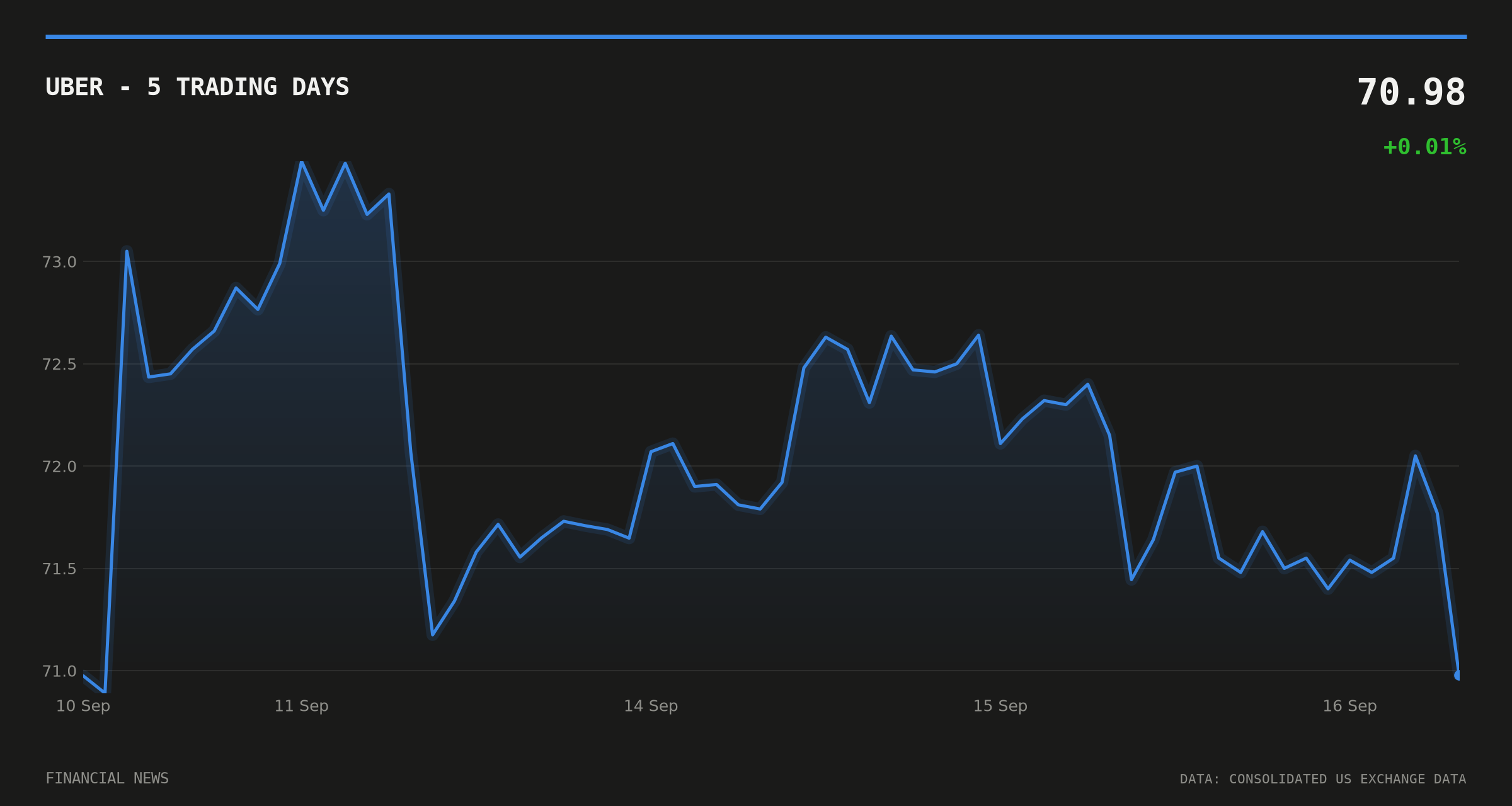
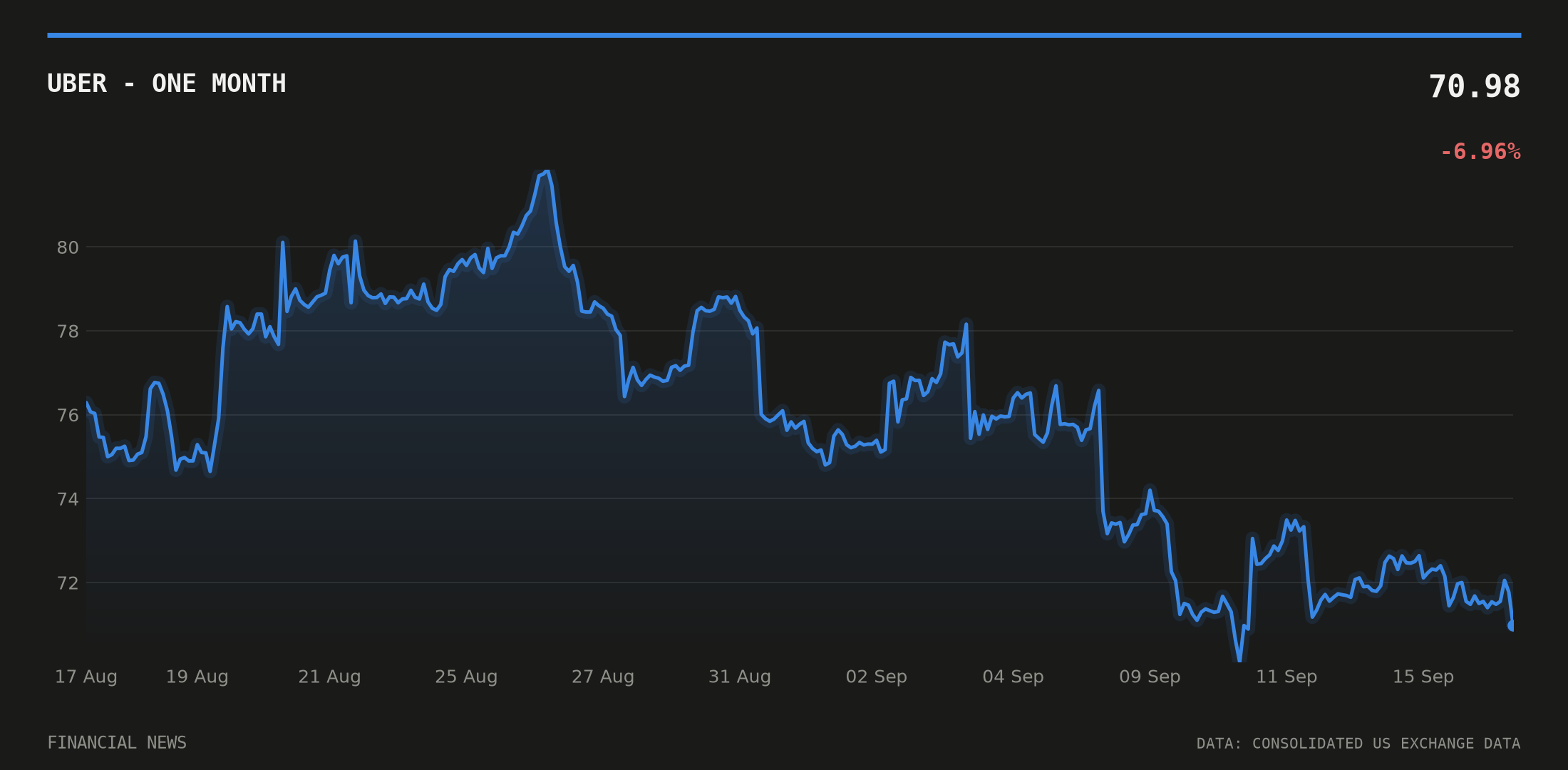
UBER stock closed little changed on the news. Shares traded at $70.65 as of 16 September, down 1.26% over 24 hours and down 11.68% over the trailing 20 trading days, according to consolidated US exchange data. The stock’s 20-day range ran from a low of $70.10 to a high of $79.99.
Trading volume around the announcement ran at roughly 14% of the 20-day average, suggesting limited investor reaction to the Costco news itself.
The muted response fits a pattern: Uber’s recent share weakness has tracked a separate, larger storyline. The company disclosed plans to cut around 10% of its workforce, its largest reduction since the pandemic, and investors have been digesting Uber’s proposed acquisition of Delivery Hero, an offer valued at $14.8bn in equity with cash consideration of €41.50 a share, a deal that would extend Uber’s delivery platform to 99 markets. Both developments carry more weight for the shares than an incremental expansion of an existing grocery-delivery tie-up.
Earnings history shows a business past its early growth-versus-profit debate
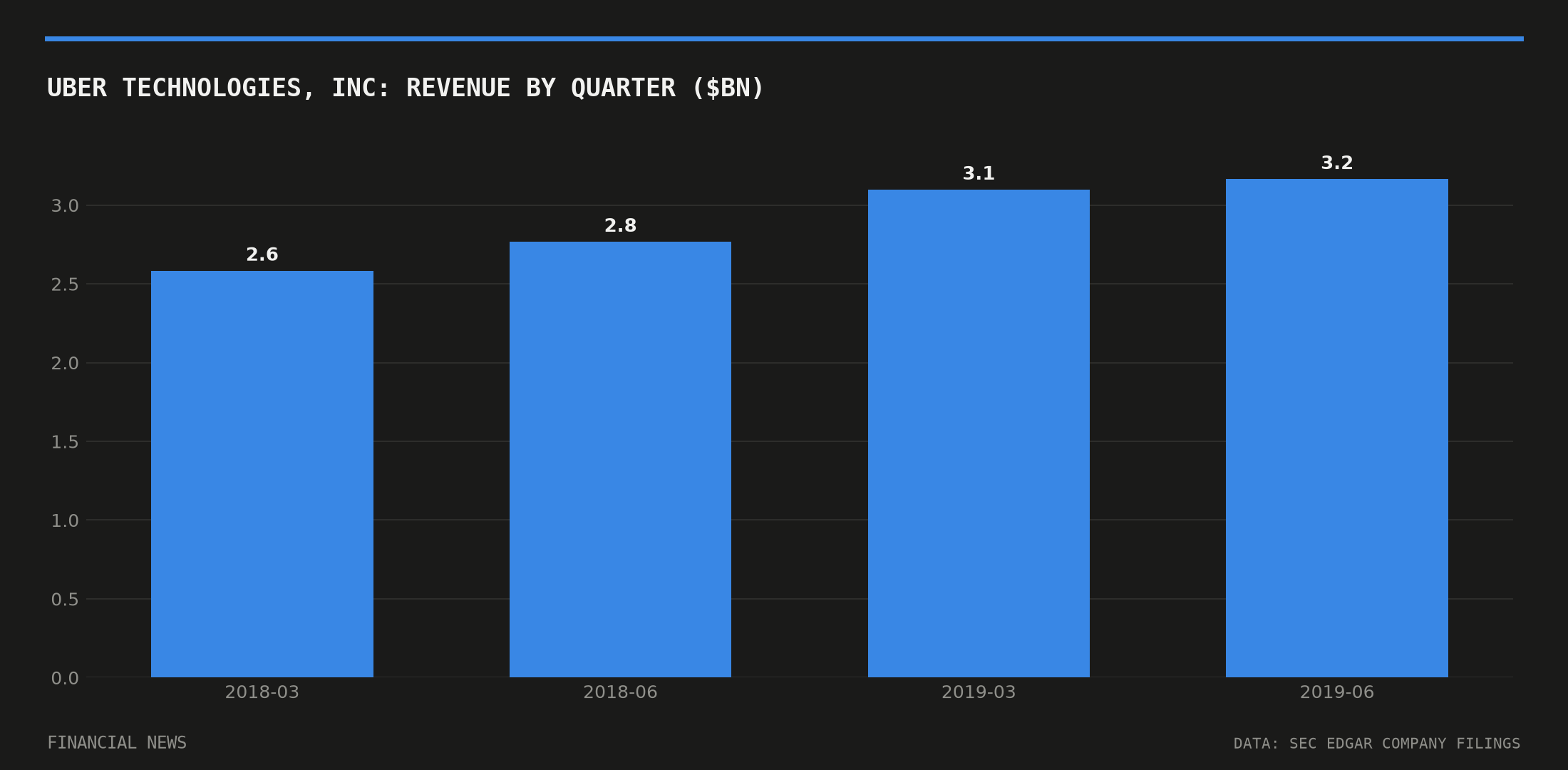
The delivery expansion lands against a backdrop of steadily improving, if uneven, quarterly profitability at Uber. Net income ran to $1.02bn in the second quarter of 2024 and $2.61bn in the third quarter of that year, before a sharply larger $6.88bn figure in the final quarter of 2024, filed via an 8-K in January 2026, according to SEC filings. Net income eased to $1.78bn in the first quarter of 2025 and $1.36bn in the second, before another large jump to $6.63bn in the third quarter of 2025.
More recently, net income came in at $263m for the first quarter of 2026 and $2.39bn for the second quarter of 2026, filed with the SEC in May and August respectively. Diluted earnings per share over the same recent stretch moved from $0.13 in the first quarter of 2026 to $1.17 in the second, according to Uber’s 10-Q filing. The swings across quarters partly reflect one-off items alongside operating performance, a pattern that has run through Uber’s results since it first turned consistently profitable.
Consumer incentives layered into the expanded tie-up
The expanded partnership also carries new consumer incentives. Reporting from CNBC indicates that eligible new customers can buy a Costco membership directly through Uber Eats, with a discount on their first order, alongside discounts on Uber One membership for existing Costco members. Those sign-up mechanics suggest Uber is using the grocery tie-up partly to widen its own subscription base rather than purely to move warehouse-club goods.
Positioning data give some sense of how bearish sentiment has shifted around the stock through the period. FINRA short-sale volume data show Uber’s short-sale ratio rising from 0.297 on 9 September to 0.52 by 15 September, the day before the Costco announcement, roughly a 75% increase over the week even as the ratio stayed below 1.0 throughout.
Wider market backdrop stayed steady
Broader US rate markets showed little movement around the announcement. The 10-year Treasury yield stood at 4.97% on 14 September, barely changed from 4.96% previously, according to Federal Reserve data. The 2-year yield held at 4.65%, up marginally from 4.63%, keeping the 10-year/2-year spread close to flat at 0.33 percentage points.
Investors will now weigh whether Uber’s delivery push, alongside its cost cuts and the pending Delivery Hero deal, can steady a stock that has slid nearly 12% over the past month even as the company’s core partnerships keep expanding.
This article is for information only and is not investment advice or a recommendation to buy or sell any asset. Markets move quickly; figures are correct as sourced at the time of writing. Always do your own research before making financial decisions.
