
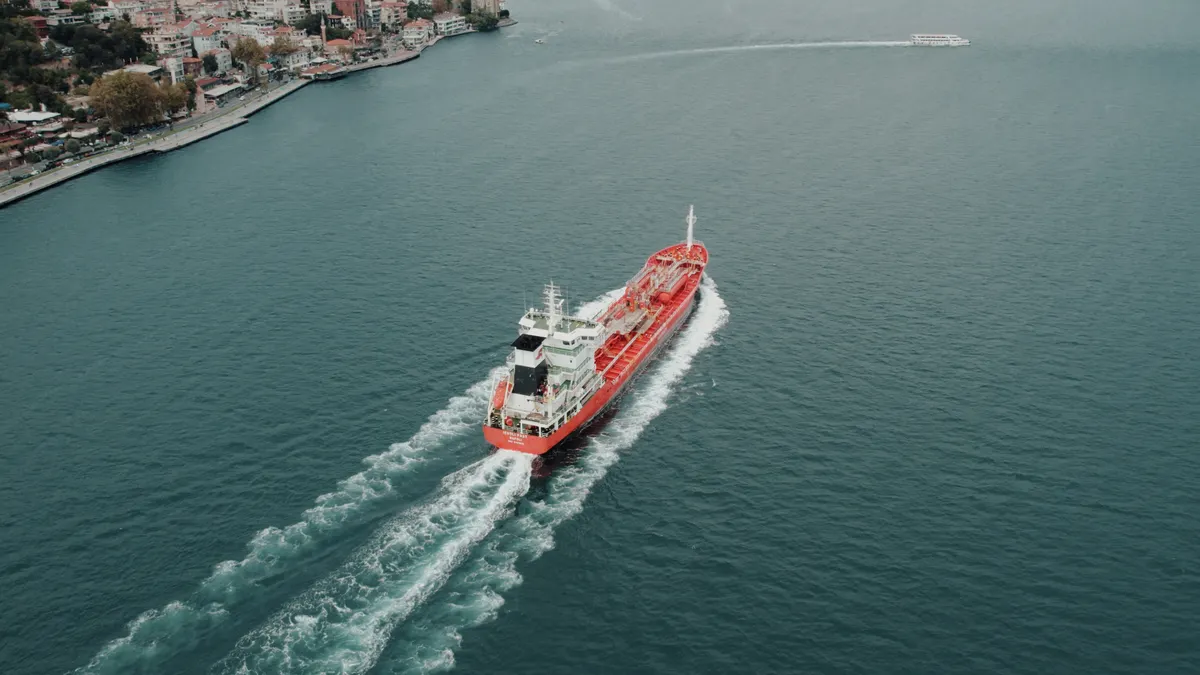

Strait of Hormuz talks have hit an impasse, pushing oil prices higher for a third consecutive session as Iran attached conditions to any reopening of the waterway and optimism over a US-Iran peace deal faded over the weekend.
Donald Trump said on Sunday the US was ‘low-keying it’ with Iran, adding Washington was ‘only semi-negotiating with them.’ ‘We are just watching Iran with its huge inflation and the fact they have no money,’ the President said.
What the Strait of Hormuz Talks Hinge On
Senior Iranian officials have tied any full reopening of the strait to a list of demands, according to the Institute for the Study of War (ISW). Those conditions include sanctions relief, the lifting of the US naval blockade, a withdrawal of US troops from around Iran, and the release of frozen assets.
ISW said the US blockade is ‘imposing high costs on Iran’s oil exports and broader economy’, but that pressure has not yet caused Iranian decision-makers to soften their position on the waterway.
Iranian foreign minister Abbas Araghchi said over the weekend that Iran and Oman are close to agreeing a temporary transit route through the strait for select vessels. He emphasised that a full reopening remained subject to ‘other conditions.’
Iran International reported that Araghchi said Iran no longer accepts the previous Traffic Separation Scheme (TSS) used by vessels transiting the strait. He said Iran and Oman were discussing a temporary route because establishing a permanent new arrangement involved ‘extensive technical and legal complexities.’
Araghchi also said any reopening was conditional on the US compensating for what he described as violations of the Islamabad memorandum, Iran International reported.
ISW assessed that Iran intends to use both ‘messaging and force to signal its continued intent’ to control traffic through the waterway.
GPS Interference Logged as Talks Drag
The United Kingdom Maritime Trade Operations reported that several vessels experienced GPS interference in the Strait of Hormuz for several hours on 18 May 2025. The ISW Iran Update of 19 May 2025 assessed that Iran may have jammed vessel navigation systems in the strait to set conditions for seizing vessels that inadvertently enter Iranian territorial waters due to navigation failures.
ISW and the Critical Threats Project at the American Enterprise Institute jointly produce the Iran Update series, drawing on publicly available information, local-language and Western reporting, social media, and commercially available satellite imagery.
Separate from the Hormuz question, nuclear negotiations between Washington and Tehran have continued in parallel. The Congressional Research Service, a body of the US Congress, reported that between April and May 2025 the two sides completed five rounds of nuclear talks, with a sixth round scheduled for mid-June 2025. The talks have been mainly indirect, with Oman mediating, though they have occasionally included direct communication between US Special Envoy Steve Witkoff and Araghchi.
The backdrop to the strait standoff also includes developments on the Israel-Gaza front. Israel rejected a 15-point peace plan constructed by Trump for Gaza, with Prime Minister Benjamin Netanyahu saying the country’s military ‘will not carry out any withdrawal until Hamas is genuinely disarmed.’
With a sixth round of nuclear talks set for mid-June 2025, and no agreement yet on even a temporary shipping route through the strait, the next scheduled negotiating session is the clearest near-term marker for whether Tehran’s position shifts.
