
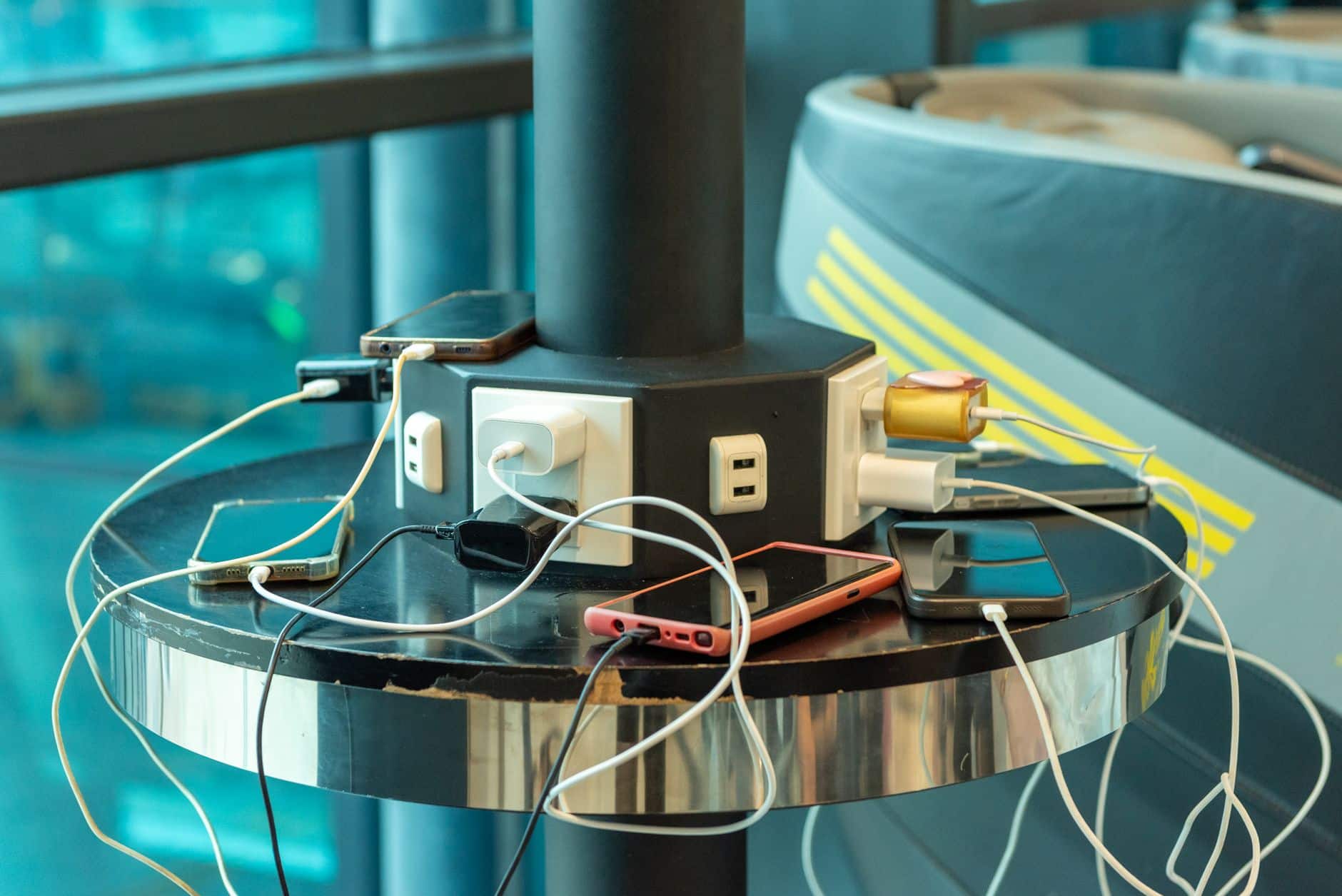

In an era dominated by digital ticketing, contactless payments, and app-based customer engagement, a dead smartphone battery isn’t just a minor inconvenience for a consumer, it’s an immediate disruption to their experience.
For commercial venues, from shopping centres and corporate events to transport hubs and hospitality spaces, providing a solution has rapidly evolved from a nice-to-have amenity into a core operational requirement.
However, forward-thinking operations managers and event directors are discovering that offering a phone charging station doesn’t have to be treated merely as a cost centre. Instead, it’s being transformed into a high-margin, dual-stream sponsorship revenue generator.
The Low-Battery Economy and Dwell Time
Low-battery anxiety is a measurable driver of consumer behaviour. When a phone drops into the red zone, customer focus shifts from browsing, consuming, or networking to finding power. Left unaddressed, visitors leave venues prematurely to charge their devices at home or in their vehicles.
By integrating dedicated charging infrastructure, venues solve this friction point and unlock a crucial commercial metric: dwell time.
Whether a customer is waiting for a 10-minute rapid top-up or leaving their phone safely stored inside a locker for an hour, they remain anchored to the site. This extended physical presence directly boosts secondary spend in adjacent retail, food, and beverage areas. Yet, the real financial windfall lies in capitalising on the captive audience created during those charging window minutes.
The Dual-Asset Sponsorship Model
Commercial phone charging units serve as a high-visibility canvas for brands. Modern units are structured to monetise attention through a dual physical-digital model:
- Digital Out-of-Home (DOOH) Media: High-definition 27-inch digital displays built into charging towers allow venues to program dynamic video and image ads. Because users actively look at the unit to plug in, initiate a lock cycle, or check charging progress, ad recall rates on these stations far exceed standard static signage. Venues can sell 10-to-30-second programmatic advertising loops to brand partners, creating a recurring, high-yield revenue stream.
- Vinyl Branding & Experiential Wraps: Beyond the screen, the entire exterior framework of a charging kiosk can be fully custom-wrapped in bespoke corporate livery. Sponsors pay a premium to “own” the station entirely, turning a utility into a prominent experiential touchpoint.
At corporate trade shows, festivals, and high-footfall shopping destinations, corporate sponsors are eager to underwrite the cost of the hardware rental in exchange for exclusive branding rights. To the attendee, the service is free and provided by the sponsor; to the venue, the setup costs are covered, and a profit margin is captured via the sponsorship package.
Data Capture and Interactive Value
Beyond passive visual impressions, modern charging setups unlock valuable active engagement. To access a free charging cycle or receive a digital key code, users can be prompted to interact with a digital screen, complete a brief 15-second survey, or opt into a newsletter.
This creates a triple-win ecosystem:
- The Consumer gets a critical service at zero monetary cost.
- The Sponsor captures verified first-party data and high-intent brand interactions from a fully engaged visitor.
- The Venue enhances its guest experience, increases dwell-time spend, and secures sponsorship capital.
Financial Models: From Expenditure to Net Income
The economics of venue charging stations for phones have shifted dramatically. Historically, venues viewed utility hardware as capital expenditure (CapEx) with zero direct financial return. Today, flexible commercial structures mean charging infrastructure can be deployed as an immediate revenue generator.
Venues can acquire or lease units and manage sponsorship sales internally, retaining 100% of the media margin. Alternatively, event organisers can bundle “Official Charging Host” rights into existing tier-one sponsorship packages, using the amenity as an upsell lever to close high-value corporate partners.
The Bottom Line
As physical spaces continue to compete with online channels, physical venues must maximise the monetisation of every square foot. Providing complimentary phone charging addresses a fundamental human requirement of the modern consumer while establishing an unmissable media asset. By converting a simple utility into a sponsored brand experience, venues are turning battery anxiety into bottom-line growth.
