

Sysco (NYSE: SYY) said on 14 September 2026 that it intends to offer $1.0bn of common stock. The food distribution giant will use the proceeds to help pay for its acquisition of Restaurant Depot owner Jetro, according to the company’s statement.
Underwriters have a 30-day option to buy a further $150m of shares to cover overallotments, Sysco said. The offering is not contingent on the Jetro deal closing.
Sysco stock offering funds record deal
Goldman Sachs and TD Securities are lead book-running managers on the offering, with Bank of America, J.P. Morgan and Wells Fargo also acting as book-runners, according to the Investing.com report on the deal.
Sysco agreed in March to buy Restaurant Depot parent Jetro for roughly $29bn including debt, as CNBC reported at the time. Terms call for Restaurant Depot shareholders to receive $21.6bn in cash plus 91.5m Sysco shares, according to Restaurant Business Online. Bloomberg has since confirmed the $1bn raise is intended to help cover part of that $29.1bn consideration, as first reported by Bloomberg.
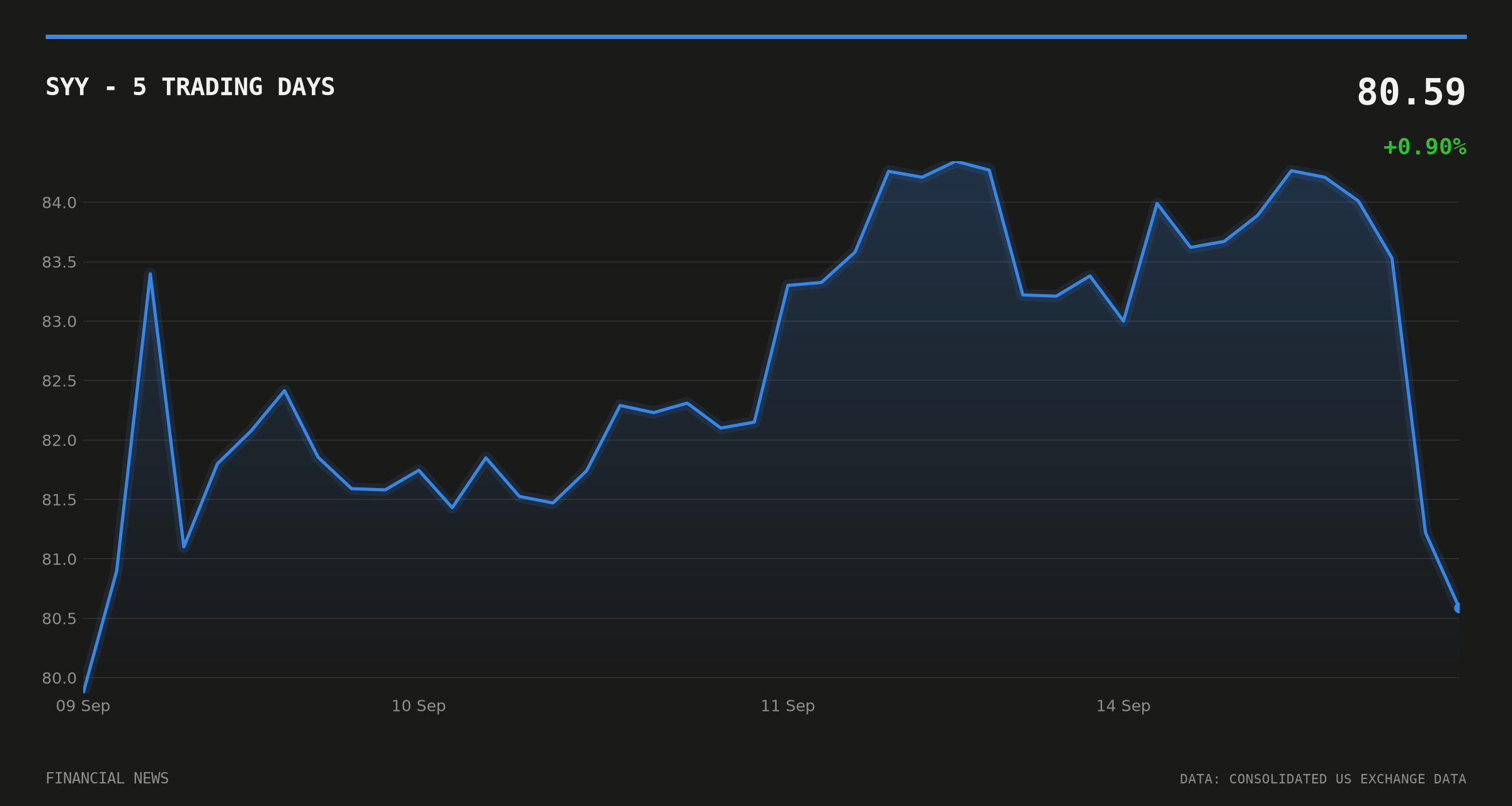
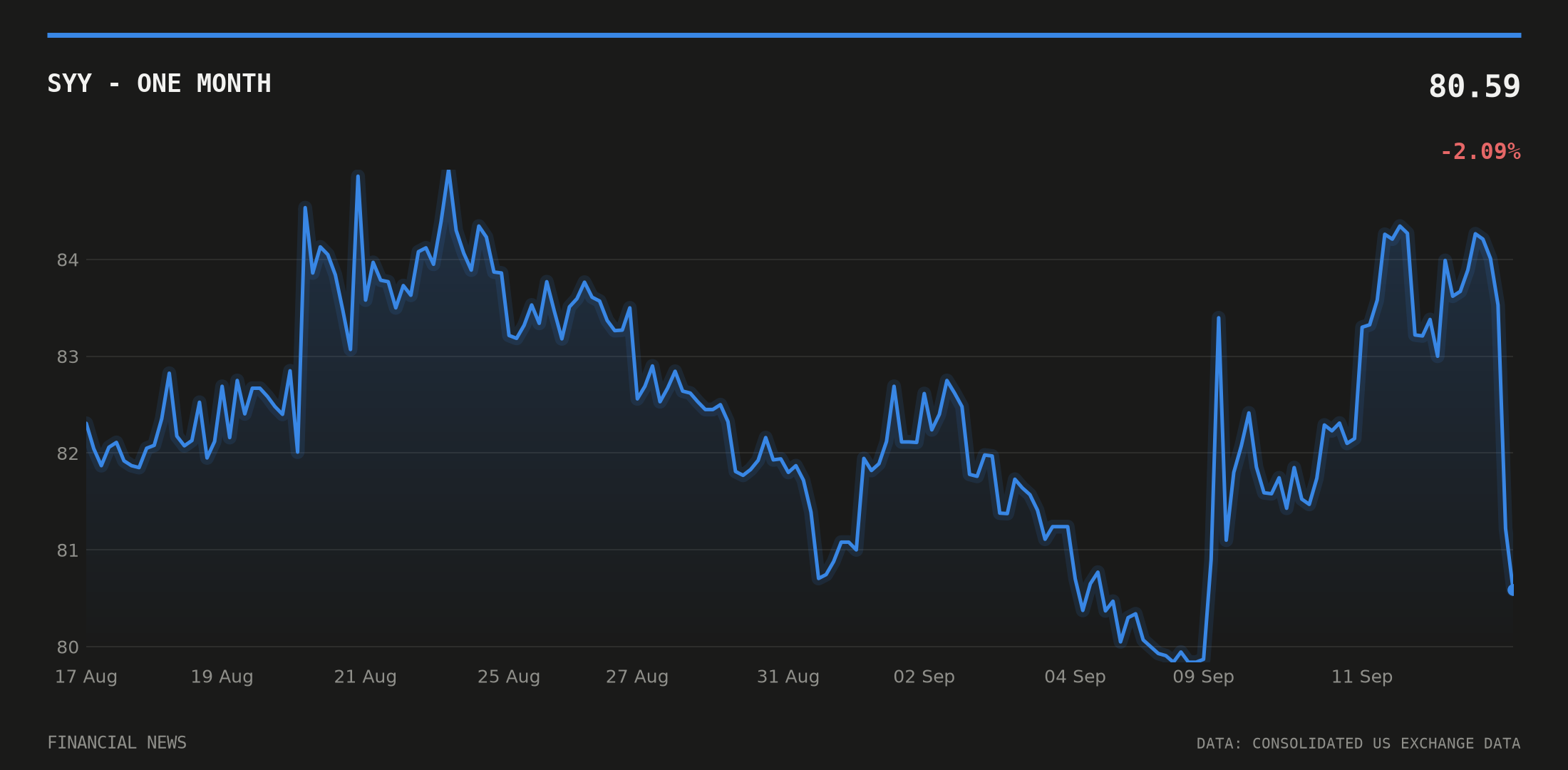
Sysco shares fell after the announcement. The stock closed down 3.97% on the day, near its 20-day low of $79.84, according to consolidated exchange data, while Investing.com put the initial move at 2.9% in an earlier snapshot.
Earnings have been softening
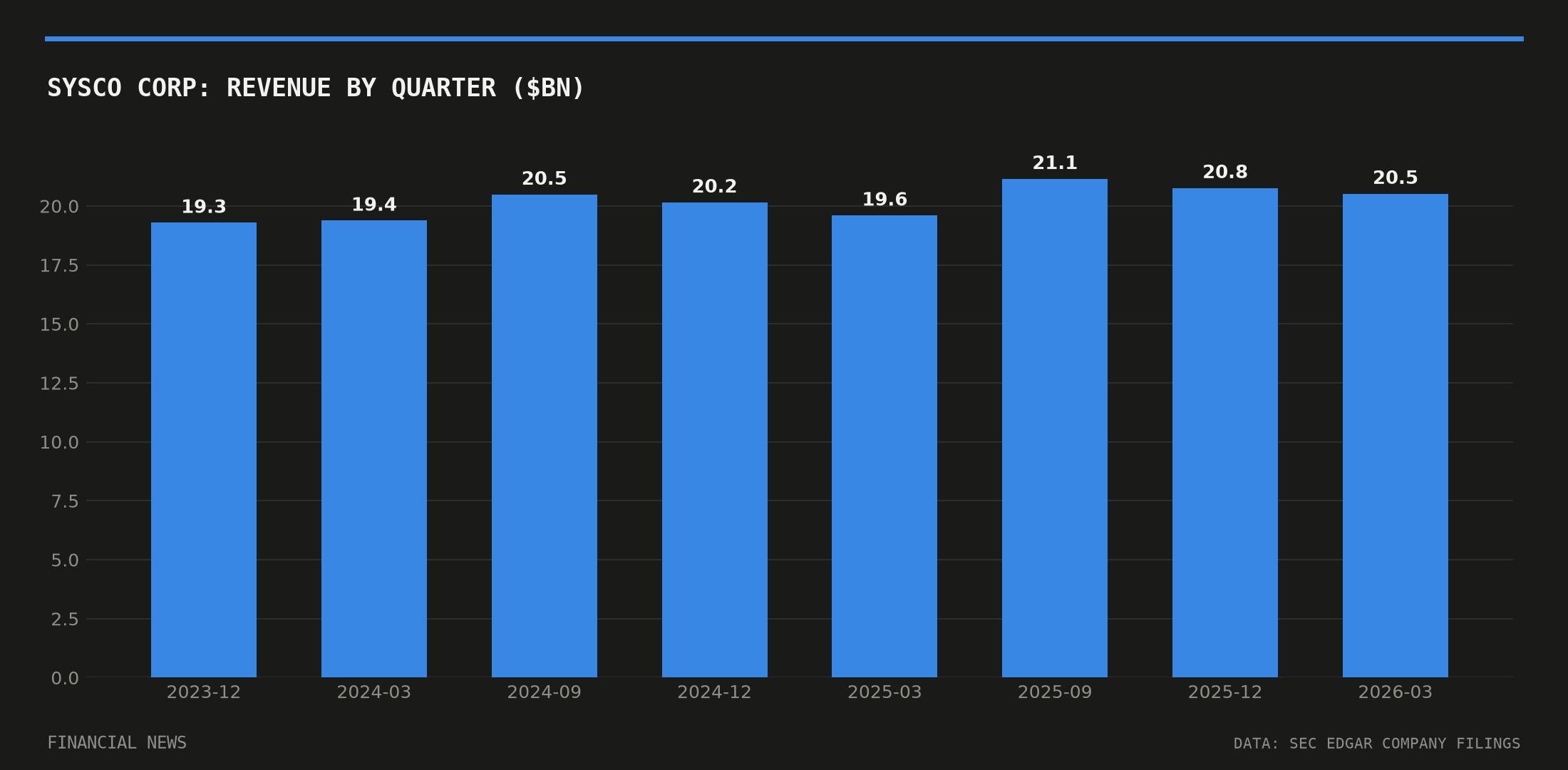
The equity raise arrives as Sysco’s quarterly profitability has cooled. Diluted earnings per share came in at $0.99 in fiscal 2026’s first quarter, then slipped to $0.81 in the second quarter and $0.71 in the third, according to filings with the SEC. Net income moved from $476m to $389m to $340m across those same three quarters, the filings show.
Quarterly revenue over that stretch held broadly flat, moving from $21.15bn to $20.76bn to $20.52bn across the same three quarters. The pattern contrasts with the prior fiscal year, when Sysco reported net income of $490m and diluted EPS of $0.99 in its first quarter of fiscal 2025, before easing to $406m and $401m in the following two quarters. Revenue in that earlier period ran from $20.48bn down to $19.60bn, according to the same SEC filings. The softer recent quarters give some context for why Sysco is turning partly to equity rather than financing the Jetro deal entirely with debt and cash.
Rates and positioning add context
The offering also lands as borrowing costs have risen. The 10-year US Treasury yield climbed to 4.95% by 10 September, up from 4.83% days earlier, according to data from the Federal Reserve Bank of St. Louis. The 2-year yield rose over the same period, from 4.43% to 4.56%, while the gap between the two narrowed slightly to 0.33 percentage points, Fed data show. Higher yields make debt issuance relatively costlier, a backdrop that helps explain why Sysco chose to fund a slice of its largest-ever acquisition with new shares rather than loading the balance sheet further with borrowed money.
Positioning data also show a shift in the days before the announcement. FINRA’s daily short-sale volume ratio for Sysco stock climbed from 0.316 on 28 August to as high as 0.44 on 10 September, according to FINRA figures. The short-volume ratio measures the share of daily trading volume tied to short sales rather than outright short interest, so the rise should not be read as direct evidence of advance positioning ahead of the deal. It nonetheless marks a notable pickup in bearish trading activity into the announcement window.
Wider macro indicators have been steady. US unemployment held at 4.1% in August, unchanged from July, while consumer prices edged up to an index level of 334.131 from 332.813 a month earlier, according to Federal Reserve data. Neither figure points to an economy under acute strain, leaving the Jetro financing decision as primarily a company-specific capital-structure call rather than one forced by broader conditions.
Sysco’s statement gave no pricing date for the shares. Investors will now watch for confirmation of final terms and for progress on regulatory clearance of the Jetro acquisition, which remains Sysco’s largest deal to date.
This article is for information only and is not investment advice or a recommendation to buy or sell any asset. Markets move quickly; figures are correct as sourced at the time of writing. Always do your own research before making financial decisions.
