
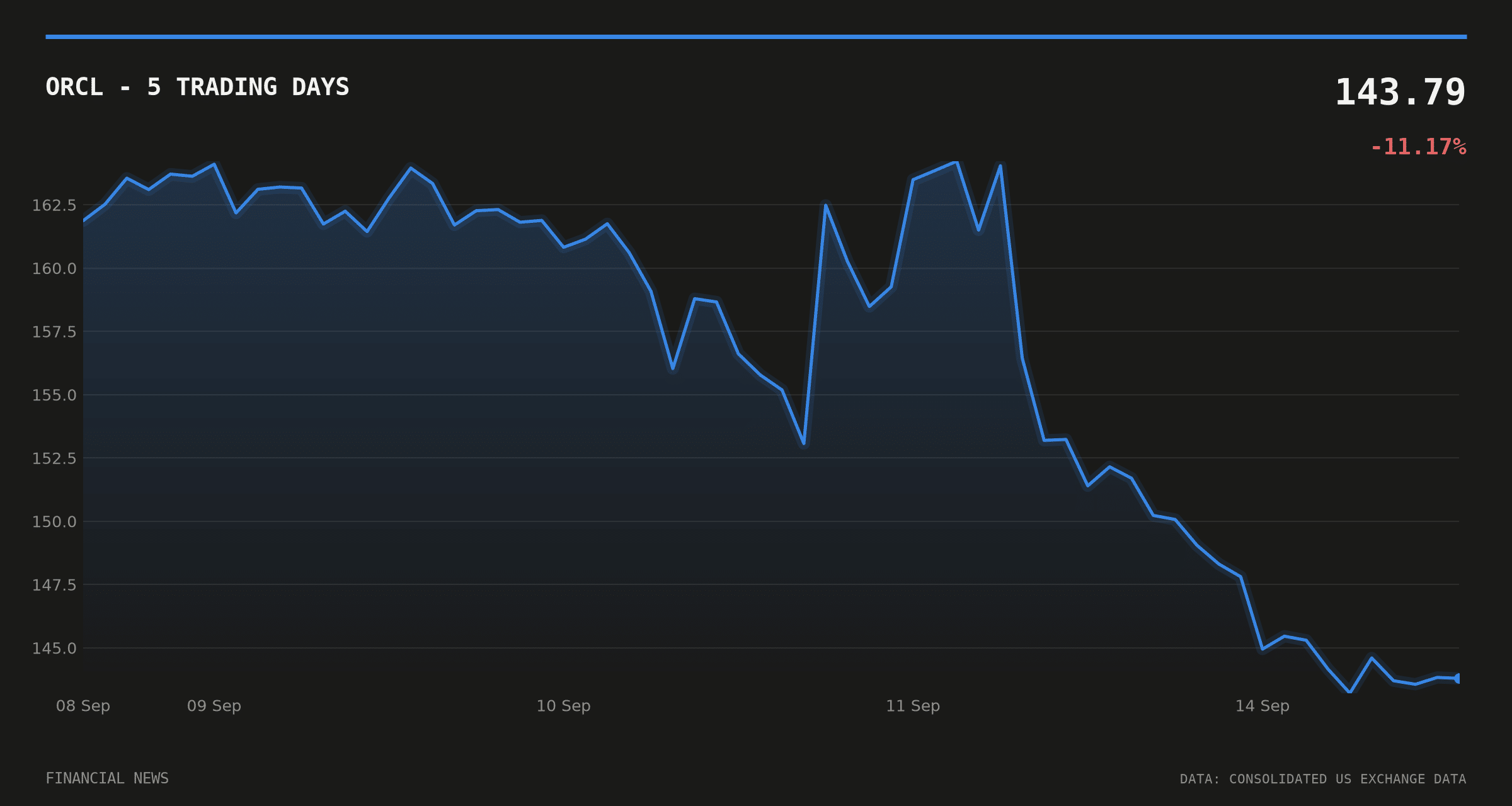

Oracle Corp (NYSE: ORCL) stock fell as much as 4.5% on 14 September 2026, after co-founder and executive chairman Larry Ellison scrapped a planned sale of up to 50 million of his shares, worth roughly $7.5bn, according to Bloomberg.
The stock had fallen 4.5% by 11.04am ET, the Motley Fool reported, with a separate Invezz report putting the intraday move at 4%. Shares later pared much of that loss: Oracle traded at $143.875 by 5pm UTC, down 0.98% over the session, according to Yahoo Finance data.
Why Oracle stock fell on a scrapped sale
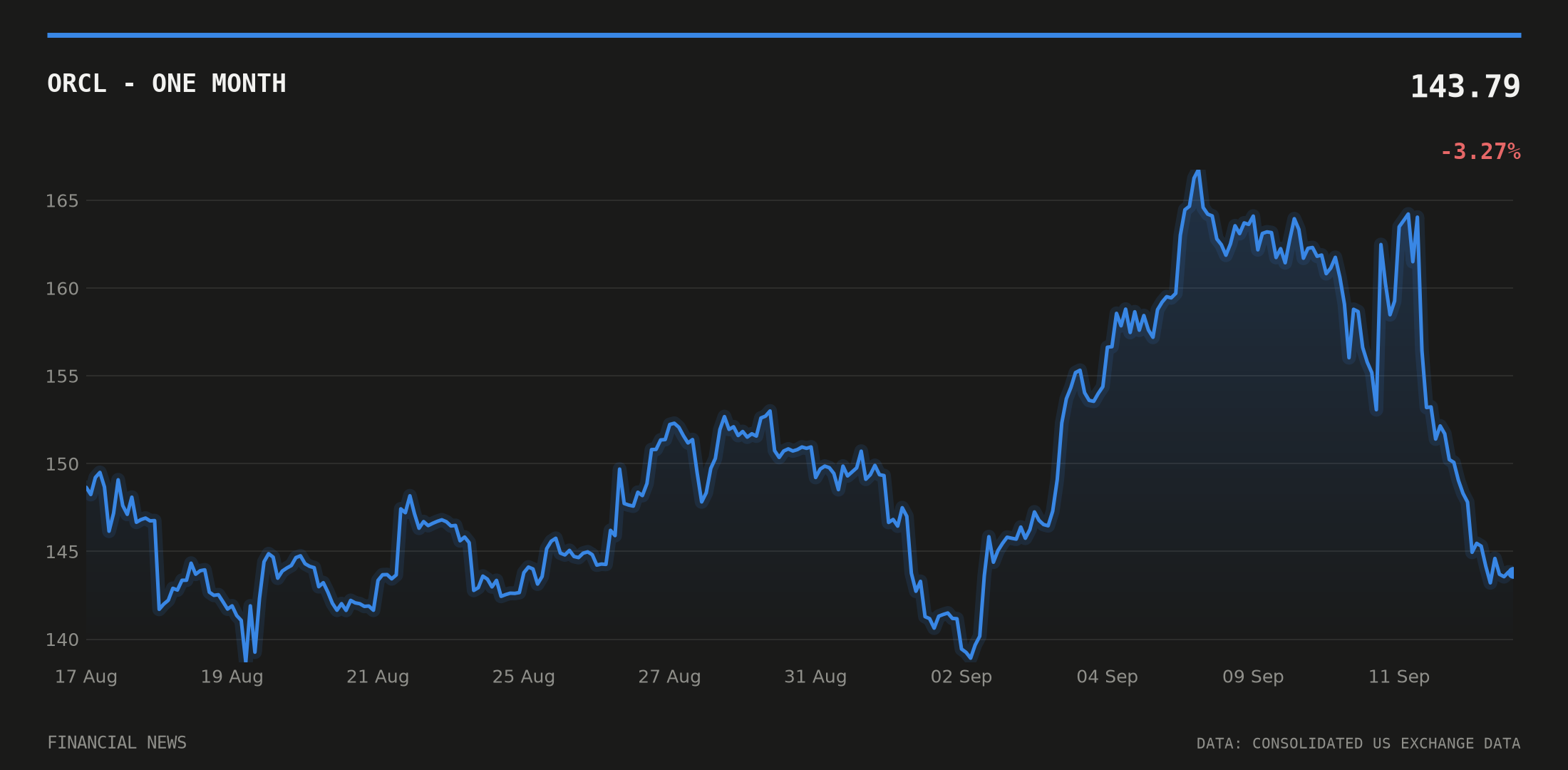
Ellison’s decision to cancel the disposal, first flagged by TechCrunch, would normally read as bullish – insiders selling less, not more. Instead it unsettled traders who had priced in the divestment and read the reversal as a signal that Ellison, who controls close to 40% of Oracle, sees limited upside from here, the Fool noted.
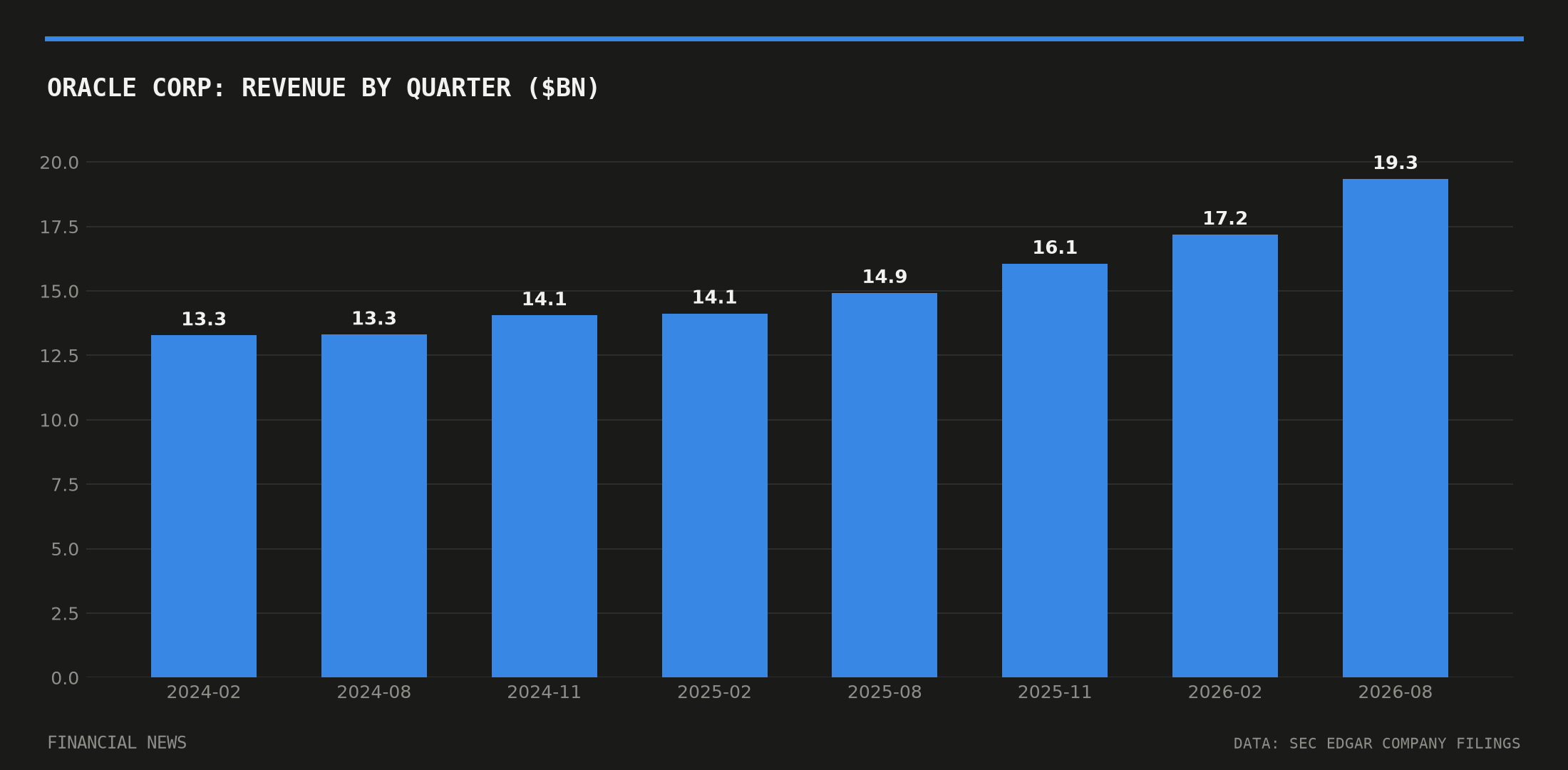
Oracle has leaned heavily on debt to fund its build-out of AI data centre capacity, making any hint of caution from its largest shareholder carry extra weight. The company’s fiscal first-quarter results, filed with the SEC on 11 September, showed revenue of $19.345bn and net income of $4.76bn, up from $14.926bn and $2.927bn a year earlier, according to Oracle’s 10-Q filing. Diluted earnings per share came in at $1.56, against $1.01 in the prior-year quarter.
Rate-hike fears compound the pressure
The Ellison news landed alongside rising bets that the Federal Reserve could raise rates rather than cut them, a scenario CNBC described as a “coin flip” after Fed chair Kevin Warsh’s Jackson Hole remarks. The 10-year Treasury yield climbed to 4.95% on 10 September from 4.83% previously, while the 2-year yield rose to 4.56% from 4.43%, according to Federal Reserve data. The 10-year/2-year spread narrowed to 0.33 percentage points from 0.39, consistent with markets pricing tighter near-term policy.
For a company funding AI infrastructure with debt, higher borrowing costs bite directly into margins. Oracle had already fallen 4% on 1 September in a bond-market selloff tied to the same concern, Yahoo Finance reported at the time, making the latest drop part of a pattern rather than an isolated event.
AI regulation calls hit the whole trade
A third strand ran through the session: renewed calls from Anthropic and OpenAI for tighter AI regulation, which the Fool said weighed on sentiment across the sector. Marvell Technology fell as much as 7.6% in pre-market trading the same morning, according to Yahoo Finance, while 24/7 Wall St. reported Broadcom down as much as 4.21% and Nvidia off 2.91% intraday as the “AI-pacing” debate collided with Fed week.
The regulatory question was not confined to markets commentary. Fortune covered a broader Capitol Hill debate over whether Congress should move to regulate artificial intelligence, and CNN Business examined the same day whether a Fed rate rise aimed at AI-driven inflation risk could actually work – underscoring how tightly monetary policy and the AI capex boom had become linked in investors’ minds by mid-September.
Positioning data point to building caution
Short-selling activity in Oracle had also been climbing into the drop. FINRA’s daily short-sale volume ratio for Oracle rose to 0.463 on 11 September from 0.310 on 28 August, according to FINRA data, suggesting some traders were positioning for weakness before Ellison’s reversal became public.
None of the day’s news changed Oracle’s underlying growth trajectory – quarterly revenue has risen every period for more than two years, from $13.28bn in the February 2024 quarter to $19.345bn in the quarter ended 31 August 2026. What moved the share price was sentiment: a scrapped sale that should have reassured investors instead reminded them how closely Oracle’s stock is tied to one shareholder’s next move, at a moment when rate expectations and AI-regulation noise were already unsettling the wider trade.
This article is for information only and is not investment advice or a recommendation to buy or sell any asset. Markets move quickly; figures are correct as sourced at the time of writing. Always do your own research before making financial decisions.
