Memory chips aren’t very glamorous. Compared to AI model launches, they don’t produce breathless headlines, and the companies that produce them—Samsung, SK Hynix, and Micron—rarely come up in casual discussions about the tech industry. However, memory has steadily emerged as one of the most significant supply-side narratives in the entire AI buildout. And one of the more hygienic ways to follow that tale is through the Roundhill Memory ETF, which is traded under the ticker DRAM.
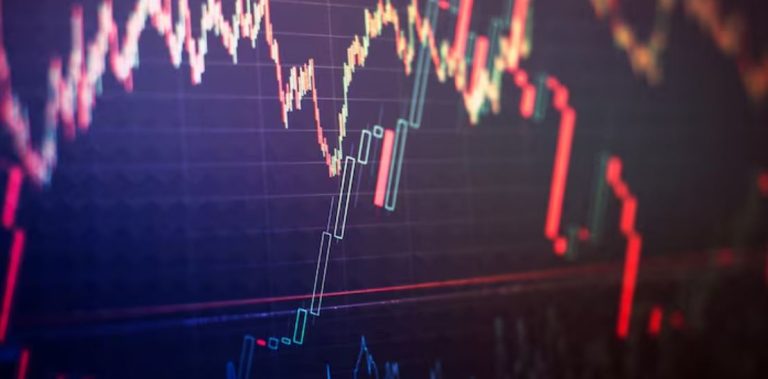
DRAM closed at $59.69 on September 4th, up 6.61% in just one session. For a fund that follows what most people still view as a rather unglamorous area of the semiconductor industry, that is a big step. More than 40 million shares were traded that day. The fund has traded as low as $26.14 and as high as $81.60, a spread that illustrates how sharply sentiment has fluctuated around the memory sector over the past year. The 52-week range reveals an even more intriguing story.
It’s difficult to ignore the fact that a significant amount of retail conviction was shaken out by the recent selloff in DRAM. At one point, the fund had dropped more than 30% from its year-to-date high. This was primarily due to over-leveraged Korean retail investors being forced to unwind their positions, which created a technical air pocket unrelated to actual chip demand rather than the underlying companies suddenly struggling. In the moment, that kind of selloff can be concerning. It frequently appears to be a reset in retrospect.
By design, the fund itself is simple. Samsung, SK Hynix, and Micron account for about 73% of DRAM’s assets, which is a concentrated basket of international memory companies. Both the attraction and the danger are found in that concentration. The fund provides targeted exposure without the hassle of choosing individual foreign stocks for investors who support the thesis that AI infrastructure needs exponentially more high bandwidth memory than anyone budgeted for just two years ago. Direct access to Samsung and SK Hynix stocks is difficult for American retail investors. That access is comparatively easy thanks to DRAM.
At least some technical frameworks indicate that the long-term signal is still strong. Resistance extends toward $79.46 on the upside, a level the fund traded above earlier this year prior to the correction, while support is located around $63.48. Anyone hoping for a clear breakout in the upcoming week is probably getting ahead of themselves because the near-term momentum is mixed and the short-term picture is sufficiently uncertain. However, the longer term appears more promising, especially if cloud providers continue to invest heavily in AI through the remainder of 2026.
There is a valid bear case, and it deserves careful consideration. Since the fund’s three biggest holdings together make up almost three-quarters of its assets, the fund could be disproportionately impacted by a single poor quarter from Samsung or a demand revision from a significant hyperscaler. By its very nature, memory is also a cyclical industry; prices can fluctuate more quickly than in most other sectors, and the history of chip stocks is replete with boom-bust cycles that have taken hopeful investors by surprise.
The nature of the demand driving this cycle is what, at least in part, makes the current setup feel different. In AI accelerators, high bandwidth memory, or HBM, is physically necessary in ways that general-purpose DRAM was not in earlier computing eras. Without it, big AI models cannot be trained. As a result, the floor is more resilient to demand than the memory cycles of the 2000s and 2010s. As the rate of AI infrastructure spending returns to normal, demand might moderate. However, as long as the major cloud providers continue to expand, a collapse in HBM demand seems unlikely.
There’s a sense that the memory industry has moved into a second stage, one that is less motivated by the initial excitement and more based on the supply-demand reality of chips, which are now as vital to contemporary AI workloads as electricity is to a data center. One of the more honest ways to maintain that perspective in a portfolio might be through DRAM, the ETF.