
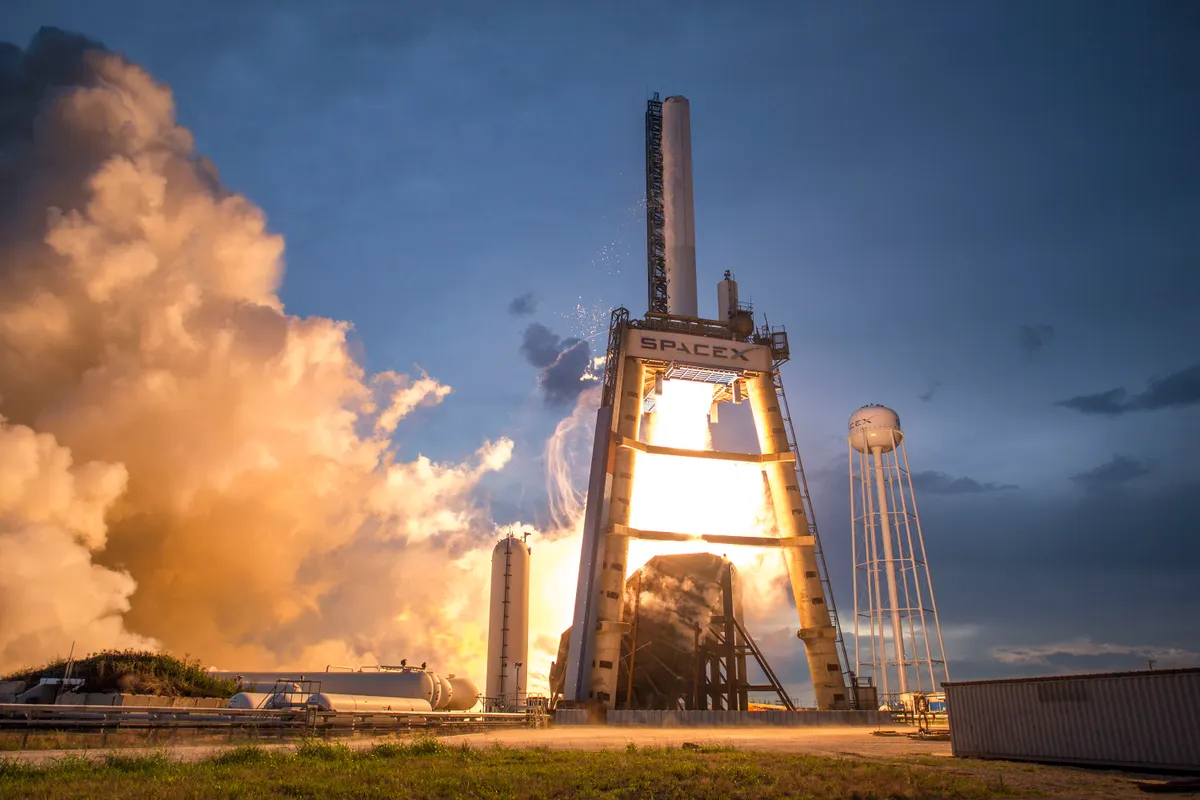

SpaceX’s IPO share price has slumped more than 50% from its peak, wiping roughly half the value from stakes bought at the top of the market in what the Nasdaq Newsroom described as the largest IPO in history, raising $75 billion at an implied valuation of approximately $1.77 trillion.
The stock, listed on Nasdaq as SPCX, priced at $135 a share on 12 June 2026. It opened that day at $150 and closed at $160.95, a gain of nearly 20%, according to Yahoo Finance. On the first full trading day, the stock added roughly another $31 to close at $192.50. Within days, shares topped $220.
As of early August, SPCX was trading at $108, a fall of more than 50% from that peak in approximately six weeks. SpaceX pays no dividend, so the loss is unambiguous: a hypothetical £7,777 stake bought at the top would now be worth approximately £3,735.
What the SpaceX IPO Share Price Drop Reveals About Valuation
The numbers behind the SpaceX IPO share price set a high bar from the start. SpaceX reported 2025 revenue of $18.674 billion and a net loss of $4.937 billion, according to a TradingKey analysis of the S-1 financials. At the $135 IPO price, that placed the stock at approximately 94 times 2025 revenue.
When much of a share price rests on sentiment rather than earnings, sentiment-driven declines can be swift. SpaceX’s Starlink internet service generates substantial revenue, but heavy research and development spending keeps the company loss-making.
The SEC’s 424(b)(4) final prospectus adds a structural detail that could matter to holders. It includes a provision allowing up to 455.8 million additional Class A common stock shares, described as Additional Release Shares, to be released if the closing price is at least 30% above the IPO price for at least five of ten consecutive trading days ending on the First Earnings Release Date. Given the current price sits well below the $135 IPO level, that threshold is not in play for now.
Short Sellers and What Comes Next
The decline has drawn one of the largest short positions in US equity markets. MarketBeat short-interest data shows that as of 31 July 2026, 207,781,764 shares were sold short, a dollar volume of approximately $22.52 billion, representing 1.6% of float and up 25.9% from the prior period. By 14 August 2026, that had fallen to 184,389,672 shares ($25.81 billion dollar volume), down 11.3%, at 1.4% of float.
That partial retreat by short sellers aligns with a pattern tracked by Yahoo Finance, citing S3 Partners data: short interest dropped to roughly 11% of tradable float from a peak of 34% just seven days earlier, as a sharp stock rebound forced some bears to cover.
Opening-day trading volume topped 500 million shares, approaching the roughly 580 million traded at Facebook’s 2012 debut, Yahoo Finance reported. Retail net buying of SPCX ran at more than 3.5 times that of NVDA on debut day, with retail turnover reaching $453 million, around 4% of all single-stock retail turnover that session.
On the bull case, Elon Musk posted on X that SpaceX ‘might be able to reach approximately’ $1 trillion in revenue in 2030, adding that he ‘would be surprised if revenue is not greater than $1T in 2031,’ according to CNBC. The company’s 2025 revenue was $18.7 billion. Closing that gap in four to five years would require a compound annual growth rate that has few precedents in large-cap history.
SpaceX’s Falcon 9 rocket has no peer in commercial launch markets, and the company made more launch attempts than any individual country in 2025. Whether that operational lead justifies a valuation built on a $1 trillion revenue ambition is the question buyers at $108 are effectively answering with their capital.
The next concrete trigger is the First Earnings Release Date, when the additional share release provision in the prospectus either activates or lapses. With SPCX currently below its IPO price, that test looks distant.
