

OpenAI’s head of data centers, Chris Malone, has left the company, the Wall Street Journal reported on 25 August 2026.
He is at least the sixth senior executive to depart the ChatGPT maker this year, as first reported by the Wall Street Journal.
An OpenAI spokesperson confirmed on the record that Malone was no longer with the company, according to Bloomberg. Malone joined OpenAI in March 2025 after roughly four years as an engineer at Meta Platforms, having previously worked on data-centre technology at Google, according to Seeking Alpha.
A pattern of OpenAI exits
Malone’s departure follows those of chief revenue officer Denise Dresser, chief operating officer Brad Lightcap and deputy chief executive Fidji Simo, according to the WSJ report, cited by Investing.com.
Lightcap’s exit came as OpenAI sought to justify an $852bn valuation ahead of an expected initial public offering, CNBC reported. Earlier in the year, Bill Peebles, Kevin Weil and Srinivas Narayanan had also announced their departures, ahead of Simo’s exit in July, according to Yahoo Finance.
Analysts have flagged the pace of C-suite departures as a ‘huge red flag’ for investors weighing OpenAI’s prospects ahead of a public listing, CNBC reported.
Why the role matters
Malone’s job sat at the centre of OpenAI’s data-centre buildout, the physical infrastructure underpinning its Stargate-scale compute ambitions. His exit lands as chipmakers and cloud providers tied to that buildout, including Advanced Micro Devices (NASDAQ: AMD), Broadcom (NASDAQ: AVGO), Amazon (NASDAQ: AMZN) and CoreWeave (NASDAQ: CRWV), remain closely watched by investors pricing the durability of AI infrastructure spending.
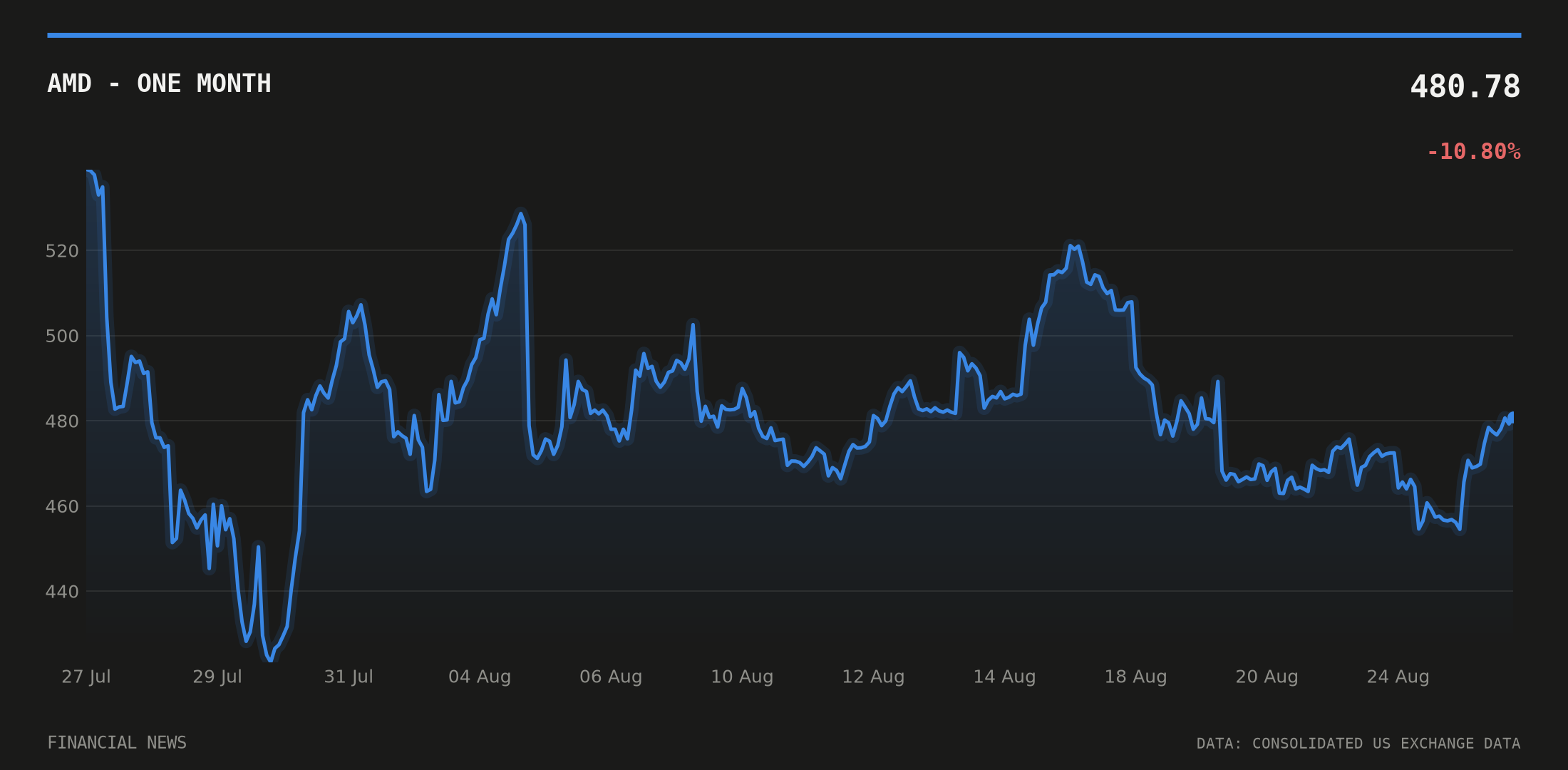
No source links Malone’s departure directly to trading in those names. AMD shares closed at $481.20 on 25 August 2026, up 1.37% on the day and 1.95% over 20 days, with volume running 1.64 times the 20-day average, according to consolidated US exchange data. The stock has traded in a $454.51-to-$521.11 range over the past month.
AMD’s growth backdrop
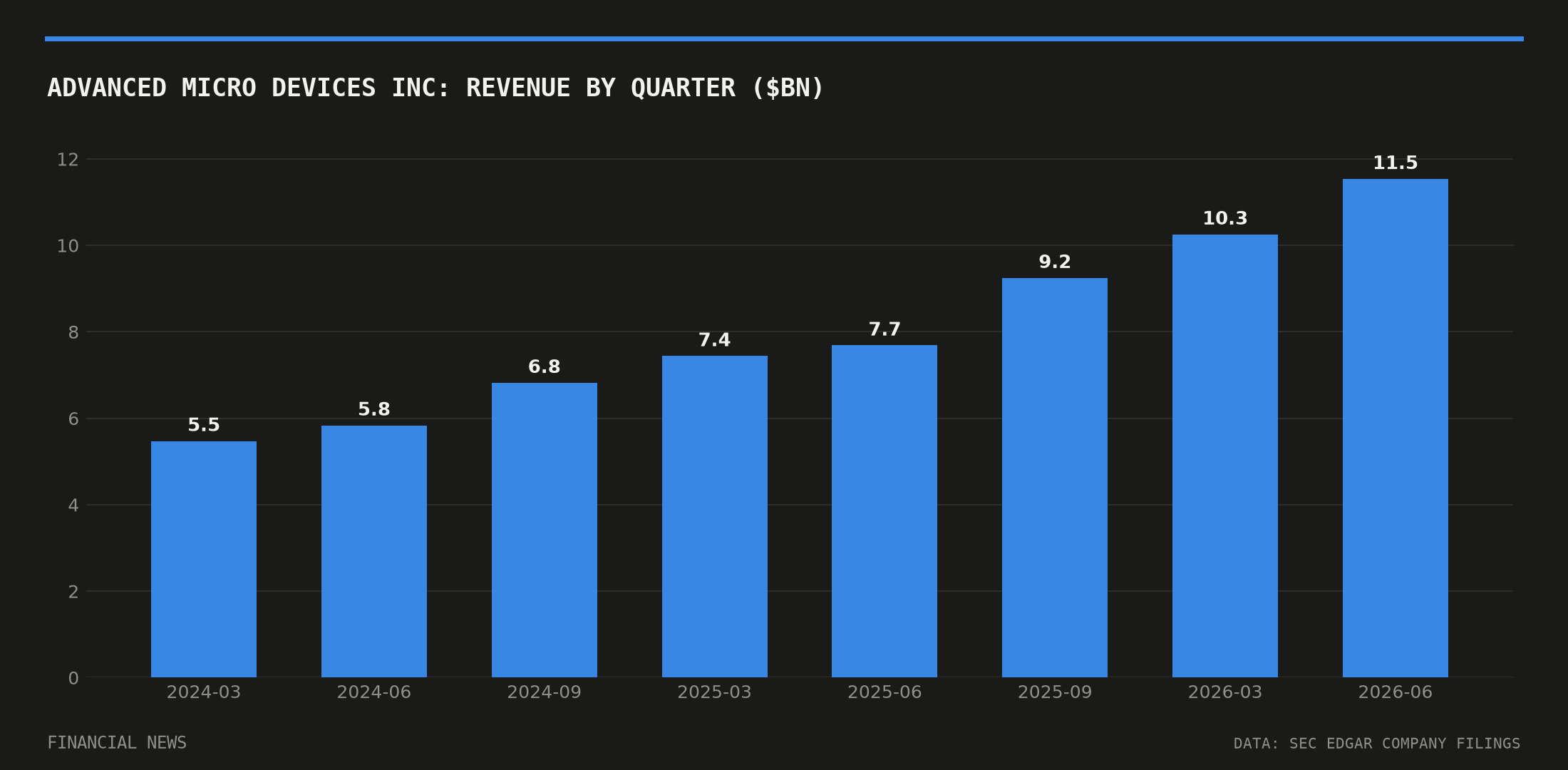
AMD’s own filings show the scale of the AI-driven revenue climb that underpins investor interest in the sector. Quarterly revenue rose from $9.246bn in the three months to 27 September 2025 to $10.253bn in the quarter to 28 March 2026, then to $11.536bn in the quarter ended 27 June 2026, according to AMD’s 10-Q filing with the SEC. Net income over that same latest quarter came in at $2.297bn, against $1.383bn the quarter before, the filing shows. Diluted earnings per share rose to $1.38 for the June quarter from $0.84 in the prior three months.
The trajectory marks a sharp acceleration from early 2024, when AMD reported quarterly revenue of $5.473bn and net income of just $123m, according to its first-quarter 2024 filing. Chief technology officer Mark Papermaster filed a Form 4 with the SEC on 21 August 2026, days before the OpenAI story broke, according to EDGAR records.
Separately, CoreWeave saw a cluster of insider filings in the same week as the OpenAI news, including one from chief executive Michael Intrator on 22 August 2026, according to SEC filings. Amazon executives Brian Olsavsky and Shelley Reynolds also filed Form 4s on 25 August, EDGAR shows. None of these filings has been linked by any source to the Malone departure; they sit alongside it in the same trading week.
FINRA daily short-sale data show AMD’s short-volume ratio ranging roughly between 0.40 and 0.55 across the ten trading sessions before the story broke, with no discernible spike tied to the news, according to FINRA figures.
What happens next
OpenAI has not disclosed a successor to Malone’s role. The company is widely reported to be preparing for a public listing as early as 2027, a timeline against which each senior departure is likely to be measured by prospective investors. The 10-year US Treasury yield stood at 4.74% as of 21 August 2026, up from 4.69% the prior reading, part of the financing backdrop against which AI infrastructure spending continues to be weighed, according to Federal Reserve data.
This article is for information only and is not investment advice or a recommendation to buy or sell any asset. Markets move quickly; figures are correct as sourced at the time of writing. Always do your own research before making financial decisions.
