

Canada announced retaliatory tariffs of up to 50% on roughly $20bn of US goods on 25 August 2026, matching dollar-for-dollar the levies Washington had already imposed on Canadian exports.
Canadian finance minister François-Philippe Champagne unveiled a sliding scale of 15%, 25% and 50%, covering about $20bn, or CA$27.6bn, of American products, according to Benzinga. The measures take effect on 8 September.
Matching Washington, not escalating
The move mirrors, rather than tops, the tariff Washington imposed first. The US had already applied 50% tariffs on $20bn of Canadian products, which prime minister Mark Carney had pledged to match “dollar for dollar” from 8 September, NPR reported.
Existing Canadian counter-tariffs on US steel and aluminium double from 25% to 50% under the new schedule, according to the Reuters account of the announcement. Alcoa (NYSE: AA) and Cleveland-Cliffs (NYSE: CLF), both exposed to cross-border metals flows, sit among the names traders will watch as the higher rate beds in.
Steel, dairy and electronics caught in the net
The 50% band also covers US-made furniture, clothing, video game consoles, smartphones and other electronics, the Benzinga report said. A 25% tier applies to appliances, cheese, fish and seafood, plus certain steel and aluminium derivative products. Machinery, industrial tools and farm equipment – a category that includes Deere (NYSE: DE) products – fall into the 15% band, according to CNN Business.
Ottawa paired the tariffs with a $7.5bn support package for businesses and workers hit by the US levies, CNBC reported. The retaliation follows the collapse of trade talks days earlier; trade minister Dominic LeBlanc had said a deal was “very close” before both sides blamed each other, according to CNBC’s separate account of the breakdown.
Trump’s next threat lands first
President Donald Trump had already raised the stakes before Ottawa responded. On the Monday before Canada’s announcement, he threatened to raise tariffs to 50% on Canadian vehicles, auto parts and steel from January 2027, a threat corroborated by Fox Business and CBS News. That timeline suggests the dispute has further to run beyond the September tariff date now on the calendar.
Set against total US exports to Canada of $333.6bn in 2025, the roughly $20bn caught by Ottawa’s measures amounts to about 6% of that trade, per Benzinga’s analysis of US Trade Representative figures – a reminder that the headline dollar figure, while large in absolute terms, covers a narrow slice of the overall relationship.
Markets show little panic so far
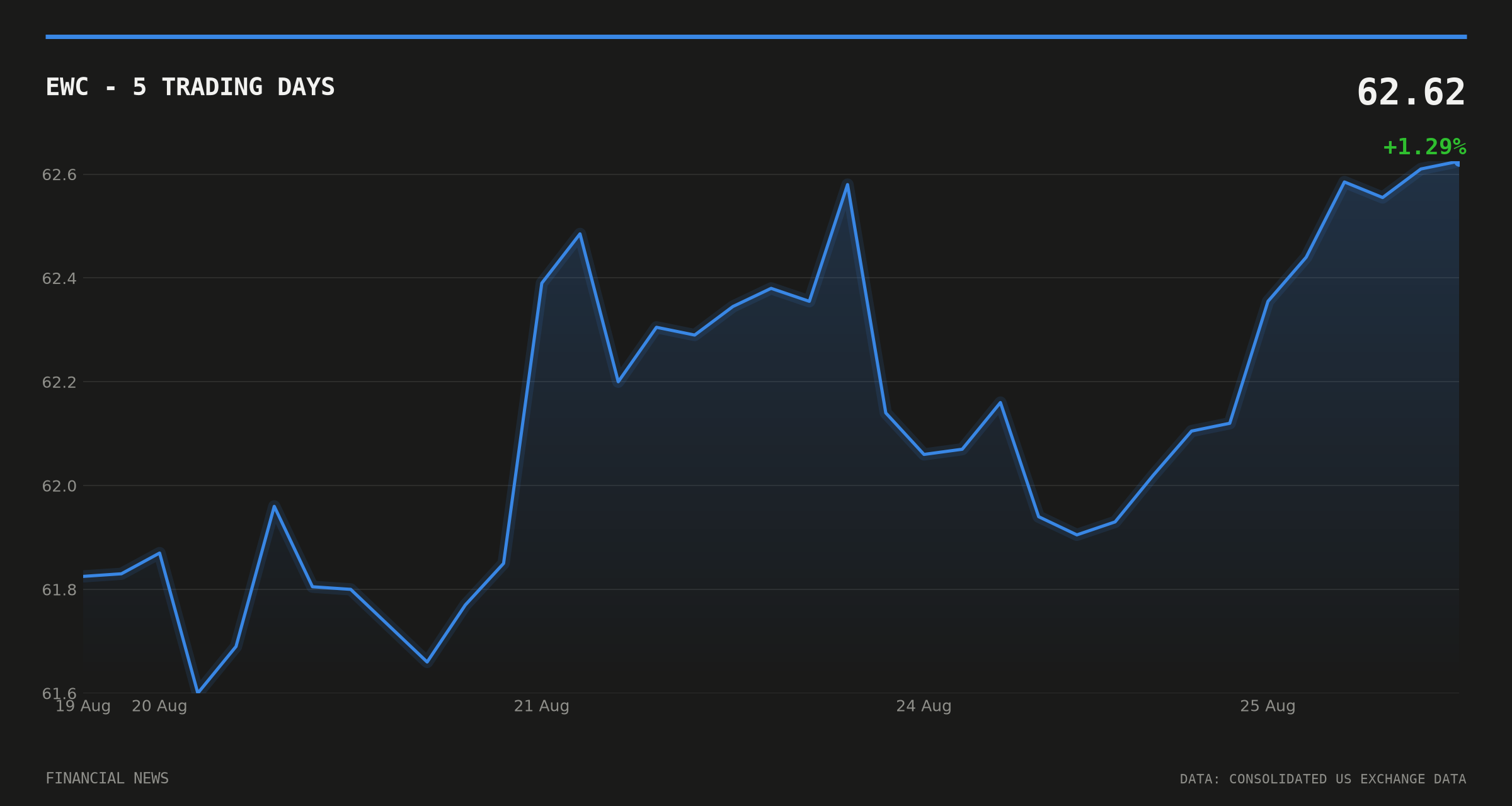
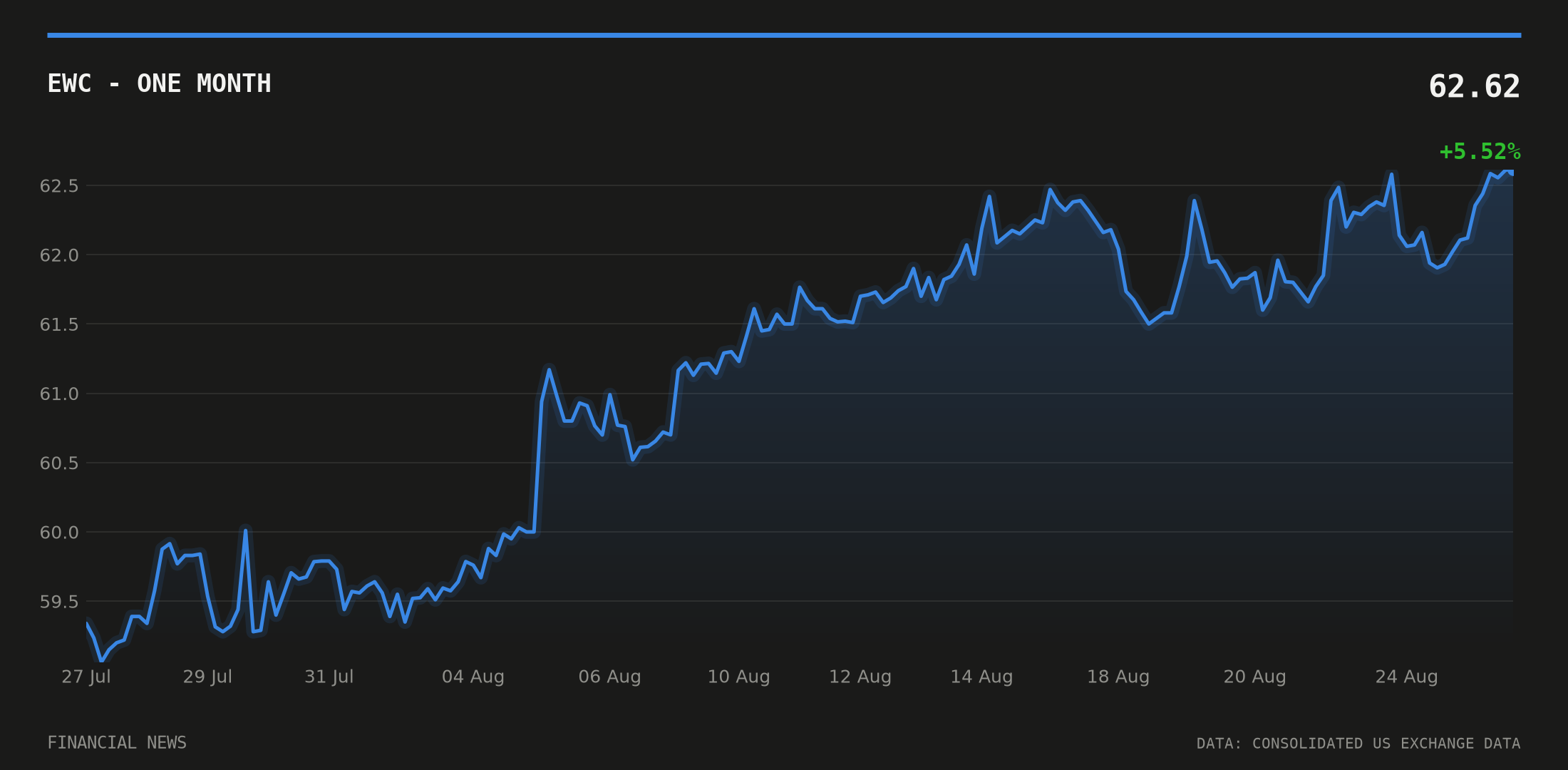
The iShares MSCI Canada ETF (NYSE Arca: EWC) closed at $62.60 as of 25 August, up 0.94% on the day and 4.28% over the prior 20 sessions, according to consolidated US exchange data. Short-sale activity in the fund had eased into the announcement: FINRA daily data show its short-sale ratio falling from 0.971 on 17 August to 0.579 by 24 August, pointing to lighter short-side positioning heading into the tariff news.
The broader rates backdrop stayed largely unmoved. The 10-year US Treasury yield stood at 4.74% on 21 August, up from 4.69% previously, while the 2-year sat at 4.24% against 4.19% prior, according to Federal Reserve data. US unemployment held at 4.1% in July, down from 4.2%, giving policymakers some room to absorb a fresh trade shock without an immediate hit to the labour market.
Attention now turns to 8 September, when Canada’s tariffs take effect, and to January 2027, when Trump’s threatened 50% levy on Canadian vehicles, auto parts and steel is due to begin – assuming neither side returns to the table before then.
This article is for information only and is not investment advice or a recommendation to buy or sell any asset. Markets move quickly; figures are correct as sourced at the time of writing. Always do your own research before making financial decisions.
