

Before a shift change, there’s a certain silence that falls over an assembly line, and at the Daimler Truck plant in Wörth am Rhein, that silence is about to become much busier. The business recently introduced Daimler Truck Defence, a new international brand designed to bring disparate military vehicle operations together under one roof. The announcement isn’t particularly eye-catching. However, it’s difficult to ignore the numbers that go with it.
With a mid-three-digit million-euro investment spread across engineering, manufacturing, sales, and service, the company hopes to reach €1 billion in defense revenue by 2028. This seems like a company searching for solid ground elsewhere for a truckmaker whose profits fell 34 percent last year, in part due to U.S. tariffs and slow North American demand.
Here, it’s worth stopping on the scale. The group revenue of Daimler Truck was €49.5 billion in the previous year. Even at its lofty 2028 target, defense would only make up a small portion of that. However, at this time, direction is more important than size. According to Dennis Kinzelmann, the recently appointed head of Daimler Truck Defence, military vehicles currently account for a low single-digit percentage of sales. That is going to change, consciously and clearly.
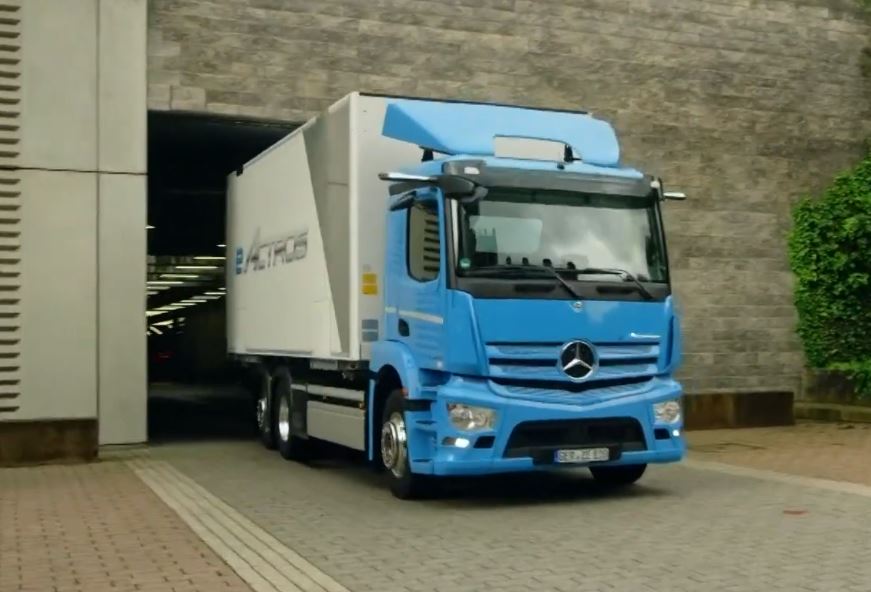
This part of the company currently employs about 1,000 people, and Wörth am Rhein, a location that most people outside the industry are probably unfamiliar with, plans to add over 100 more jobs. At a time when so much manufacturing news is about closures rather than hiring, it seems almost archaic to watch a legacy industrial town absorb this kind of growth.
The motivation behind this is not a mystery. Over the course of the decade, European defense budgets are expected to surpass €500 billion, and truck manufacturers have discovered what automakers like GM Defense and Ford previously discovered: It is not necessary to construct military logistics vehicles from the ground up. Daimler Truck relies on tried-and-true platforms, such as the Unimog, Zetros, and Arocs, which have years of experience towing equipment and transporting cargo in civilian environments. It takes more integration than invention to transform them for use in defense.
This is supported by recent contracts. A three-figure order from Germany’s own military, a framework agreement with the French military through Arquus for 7,000 trucks, and a partnership with General Dynamics Land Systems for at least 1,500 logistics trucks for Canada. When combined, those agreements give the €1 billion goal more substance than just hope.
Additionally, there is a more general pattern that is worth observing. VW, Stellantis, Renault, and now Daimler Truck are all circling the same opportunity: excess manufacturing capacity meeting an unexpectedly wealthy defense market. Although the term “trend” understates how structural this appears to be, it is tempting to refer to it as such. These are hiring campaigns, capacity investments, and brand consolidations rather than short-term contracts chasing a spending cycle.
It’s still unclear if Daimler Truck will be able to raise €1 billion by 2028. When supply chains, geopolitics, and procurement bureaucracies are involved, targets such as these often appear more straightforward on paper. However, the company already has 5,000 service locations in more than 160 countries, giving it an advantage over competitors in this race: the infrastructure to support its products long after the trucks are manufactured.
