

The 2026 World Cup AI rollout marks the first time a major global sports event has placed artificial intelligence at the centre of how fans receive, consume and discuss the game. From the pitch to the broadcast centre, the infrastructure is in place. The question now is whether sponsors and clubs understand what that means for their visibility.
What FIFA and Its Partners Have Already Built
Lenovo, the Official Technology Partner of FIFA World Cup 2026, has unveiled three AI-driven systems for the tournament. The centrepiece is Football AI Pro, a generative AI knowledge assistant built on FIFA’s Football Language Model and trained on hundreds of millions of FIFA-owned data points. It will be made available to all 48 competing teams.
The other two innovations are AI-enabled 3D player avatars and a next-generation Referee View broadcast system. FIFA President Gianni Infantino and Lenovo Chairman and CEO Yuanqing Yang announced them at Lenovo Tech World 2026 in Las Vegas, according to the FIFA newsroom.
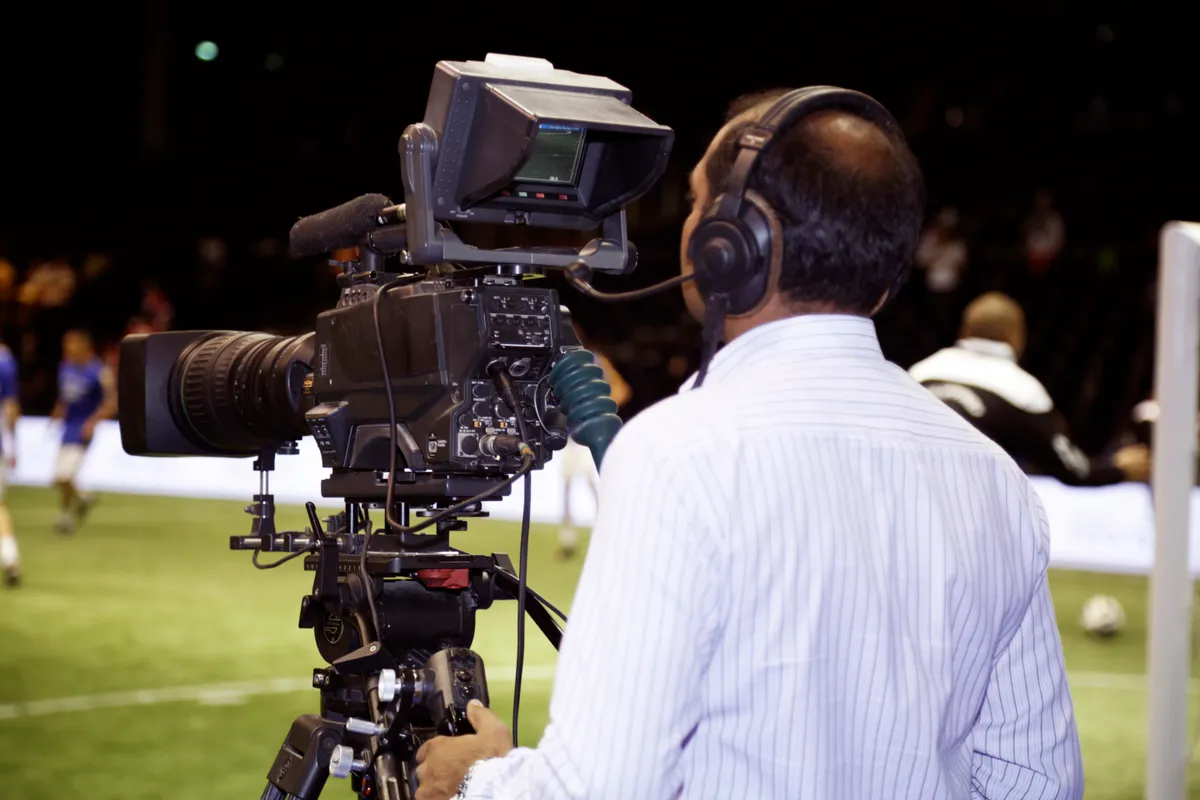
Lenovo is also delivering a near real-time AI-powered infrastructure platform to enable ultra-low-latency IPTV distribution alongside traditional broadcast, plus intelligent content delivery across the event. The FIFA World Cup 2026 International Broadcast Centre will be hosted at the Kay Bailey Hutchison Convention Center in Dallas and operated by Host Broadcast Services, FIFA’s appointed host broadcaster.
Details of the broadcast infrastructure are set out in Lenovo’s own press release.
At club level, Liverpool FC has signed a multi-year partnership with analytics company SAS, naming it the club’s Official AI Marketing Automation Partner. Liverpool is deploying SAS Customer Intelligence 360 and SAS Viya to deliver personalised, real-time digital fan experiences. AI agents are planned to enable more adaptive fan engagement, according to the SAS press release.
Agentic AI for ticketing is further behind. A Lenovo executive told Fortune that AI agents capable of hunting for tickets online are still at pilot stage for this tournament and are expected to be more ready for the FIFA Women’s World Cup in Brazil in 2027, Fortune reported.
The 2026 World Cup AI Shift in How Fans Find Information
The operational layer matters. But the less-reported shift is what AI is doing to fan behaviour above the infrastructure level.
For two decades, football fandom was mediated by search and social platforms. Supporters searched Google, followed journalists on Twitter, argued on Reddit and watched clips on TikTok. The fan did the filtering.
Agentic AI is automating that process. Fans increasingly ask large language models direct questions and receive two or three curated answers rather than a page of links. The model searches, filters and synthesises on the fan’s behalf. It draws on Reddit threads, fan forums, podcasts, YouTube debates, player interviews and Wikipedia pages to construct a narrative about clubs, players and sponsors.
If a brand, sponsor or club is absent from those conversations, the model has nothing to synthesise. It does not appear in the answer.
This has a direct commercial consequence. Vague marketing language built around “passion,” “innovation” and “community” produces weak signal for AI systems. Models respond to specificity, consistency and repeated references across credible sources. The brands with the clearest positioning and the most active communities online will appear most often in AI-generated responses.
Nike’s presence across Reddit, fan forums and podcasts is not accidental. The brand has built a recognisable narrative around ambition and elite athletes that AI systems can locate and reproduce. That is the competitive advantage sponsors need to understand before the tournament kicks off.
The metric that follows from this is what some in the industry are calling “share of model”: how often an AI system recommends a brand, venue or piece of content, and what story it associates with that brand. Google monetised search. AI-mediated recommendations will be monetised too, and the sports brands investing in narrative authority now will hold an advantage when those commercial layers are formalised.
The 2026 tournament runs across the United States, Canada and Mexico. With the Women’s World Cup in Brazil in 2027 as the next staging post for more advanced agentic capabilities, sponsors have a narrow window to audit how AI systems currently represent them and build the content signals that close the gaps.
