

Do the math while standing in the cereal section of practically any American grocery store. In most markets, a box of Kellogg’s Corn Flakes, which used to cost $3.49, is now approaching $5. The box has the same appearance. The cereal inside has the same flavor. However, the cost is different, and the unspoken but unsettling reality is that it is most likely never going to return. According to economists who are cautiously neutral, inflation has “cooled.” For a family pushing a cart through a Safeway in Colorado Springs, what they mean is that prices stopped increasing as quickly. They remained upright. They stay upright. This isn’t how it operates.
The difference is more important than it might seem. After years of agonizing rate increases and political pressure, the Federal Reserve’s announcement that inflation has fallen below 3% for the first time since 2021 is a true economic milestone. However, Lisa, a 66-year-old semi-retired paralegal in Middletown, Maryland, feels that the headline figure is disconnected from reality at the checkout counter when she sees the price of a loaf of bread rise from $2.99 to $4.99 and a 5-pound bag of carrots go from $2.99 to $4.99.
| Key Information: Grocery Inflation in America | Details |
|---|---|
| Topic | Grocery Price Inflation & Sticky Prices Post-Pandemic |
| Grocery Price Increase Since 2019 | Up 28% — food prices continue to outpace overall inflation |
| Peak Grocery Inflation (Aug 2022) | 14% year-over-year increase at its worst point |
| 4-Year Food Price Increase | 22% over four years (2020–2024) |
| Grocery/Electricity/Used Car Prices | Over 30% higher than 2020 levels |
| Consumers Frustrated | More than 85% report frustration with current grocery prices |
| General Mills Price Hike | Raised prices 4% — profits jumped to $670.1 million |
| Kellogg’s Cereal Price Hike | Raised cereal prices 12% in recent period |
| Food Insecure Americans (2022) | 44.2 million — up from 33.8 million in 2021 |
| Key Economic Voice | Ernie Tedeschi, Yale Budget Lab — former White House Chief Economist |
| “Greedflation” Explanation | Corporate markups explain at most 25% of grocery price rises |
| Key Policy Response | Kamala Harris proposed national ban on price-gouging (2024) |
| Why Prices Don’t Fall | Inflation “cooling” means slower increases — not reversal |
| Reference | Washington Post: Why Prices Are Never Going Back Down |
To take advantage of a senior discount, she now shops on Tuesdays. She makes methodical use of coupons. She and her neighbors cultivate vegetables. In order to afford what she was regularly purchasing five years ago, she has effectively created a whole parallel economy inside her own home. The story is not out of the ordinary. Tens of millions of Americans are currently affected by that.
Since 2019, food prices have increased by about 28%, significantly exceeding overall inflation. The cost of groceries, electricity, and used cars has increased by more than 30% since 2020. Over 85% of consumers, regardless of their zip code, political affiliation, or income level, say they are truly dissatisfied with the prices they pay at the grocery store. Grocery prices had increased by 14% in a single year at their highest point in August 2022. Although that surge has since subsided, you are still at a high base when you moderate from a high base. The math is easy. It is more difficult to understand its psychology.
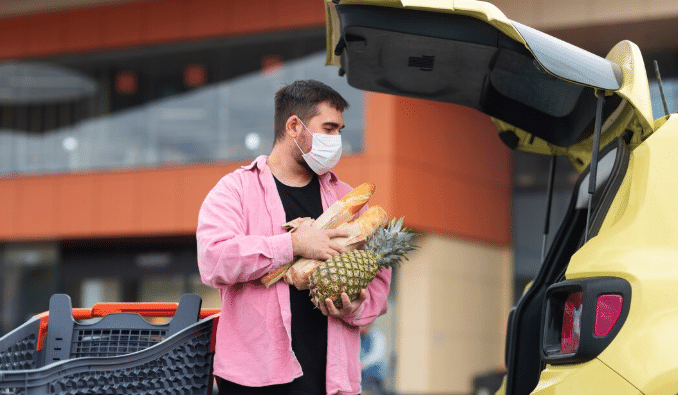
A phrase that became popular a few years ago is “greedflation.” The concept, which is appealing in its simplicity, is that businesses raised prices above what their true costs justified by using the pandemic and its supply chain chaos as cover. They pocketed the difference as profit while blaming labor shortages and shipping containers. It’s not an unfounded argument. General Mills reported $670.1 million in profits while raising prices by 4%. Kellogg’s increased the price of cereal by 12%.
These are businesses with noticeable, expanding margins that maintained pricing power long after the supply chain turbulence began to subside, not businesses that silently absorbed cost increases. After carefully examining the data, Ernie Tedeschi, director of economics at the Yale Budget Lab and former chief economist at the White House’s Council of Economic Advisers, came to the conclusion that corporate markups could account for no more than 25% of the sharp increase in grocery prices. To put it another way, greedflation is real. Simply put, it doesn’t tell the entire story or even the majority of it.
The complete picture includes supply chains that actually collapsed during the pandemic, stimulus funds that flooded an economy with insufficient goods to absorb them, labor costs that increased as workers, rightly, demanded more after years of stagnation, and energy prices that affected nearly every aspect of transportation and food production. Because it lacks a clear villain and doesn’t neatly resolve into a policy fix, it’s a less satisfying explanation than corporate greed. During her 2024 presidential campaign, Kamala Harris suggested outlawing price-gouging nationwide. The impulse made sense. It’s more difficult to say whether it would have had a significant impact on an egg carton.
The human math occurring in households across the nation is even more difficult to reconcile. A 41-year-old woman in Colorado Springs who is eight months pregnant talks about restricting her husband and herself to two meals per day so their kids can eat three. A gallon of milk used to cost $1.89, but now it costs between $3.39 and $3.89. Cherries were $5 per pound at the cheapest, and she had been craving them all summer. She didn’t purchase them. A 54-year-old writer in Chicago drives to several stores because the difference in prices between an Aldi, a Mexican grocery store, and a restaurant supply store justifies the detour.
To counteract what the grocery store has become, a 32-year-old Utah resident with two school-age children has raised backyard chickens and planted heirloom seeds. These are not examples of edge cases. They are widespread in American society and hardly ever show up in aggregate statistics; they are the new normal.
It’s difficult to ignore how the terminology used in all of this has changed. The well-established tendency of prices to rise more quickly than they fall—businesses adjust upward quickly and downward slowly, if at all—is referred to by economists as “sticky prices,” a technical term. It’s a fact when Britannica’s financial guidance says that cooling inflation simply means prices aren’t growing as quickly as they used to. However, there is a big disconnect between everyday reality and economic jargon for someone standing at a watermelon display and seeing a $16 price tag, which would have seemed ridiculous in 2019. The number of Americans living in food-insecure households increased from 33.8 million in 2021 to 44.2 million in 2022.
Meal planning techniques, bulk purchasing at Costco, embracing dried beans and lentils, and perusing the clearance rack before expiration dates arrive are some of the positive outcomes of this story. Real people have discovered real adaptations that, at least in part, work. However, adaptations are reactions rather than fixes to an issue. People learning to make red lentil curry won’t solve the underlying issue, which is that a basic category of household spending has permanently repriced itself upward by more than a quarter.
Future increases in food production productivity or the normalization of the global supply could eventually moderate the trajectory. The likelihood that bread prices in 2029 will resemble those in 2019 is significantly lower. For the majority of items that fit in a grocery cart, that window has quietly closed.
