

From the street, 61 Broadway appears to be in good condition on a Tuesday morning. Steel, glass, and the steady low hum of lower Manhattan’s daily activities. However, half of it is vacant. That is not a metaphor or a rounding error; rather, it is the actual situation that caused RXR Realty, one of the most well-known real estate companies in New York, to fall behind on a $240 million bank loan associated with that exact tower. The CEO of RXR, Scott Rechler, spoke candidly about the decision. “Time to face reality,” he declared. The structure was not going to fill on its own. The loans were about to expire. Furthermore, the world that supported those loans—cheap debt, consistent office demand, and employees traveling five days a week—just doesn’t exist anymore.
How pervasive that reality is and whether the commercial real estate market is headed toward something that uncannily resembles 2008 are important questions to consider. Some serious analysts disagree with the comparisons because they are flawed. However, it is challenging to completely ignore the structural parallels, such as overpriced assets, loans that are due sooner than the market can absorb them, and banks sitting on paper that no longer accurately represents reality. A significant portion of the approximately $3.1 trillion in outstanding commercial real estate loans in the United States, according to Goldman Sachs, are associated with office buildings that have lost tenants, lost value, and are now running out of time as refinancing deadlines draw near.
| Key Information: Commercial Real Estate Crisis | Details |
|---|---|
| Topic | Commercial Real Estate (CRE) Market Stress |
| Total U.S. CRE Loans Outstanding | $3.1 trillion (Goldman Sachs estimate) |
| NYC Empty Office Space | Equivalent of 30 Empire State Buildings |
| Office Vacancy Rate (Late 2022) | 18.2% nationally — over 20% in Manhattan, Silicon Valley, Atlanta |
| Office Building Price Decline | Down as much as 40% since the pandemic |
| CRE Loans Expiring (Next 2 Years) | $1.5 trillion |
| Notable Default | RXR Realty — $240M loan at 61 Broadway, NYC |
| Key Voice (Bearish) | Prof. Stijn Van Nieuwerburgh, Columbia Business School |
| Key Voice (Industry) | Marc Holliday, CEO — SL Green Realty (NYC’s largest office landlord) |
| RXR CEO | Scott Rechler — “We’re not going back to where we were” |
| Moody’s Assessment | “More of a typical down cycle” — Kevin Fagan, CRE Analysis Director |
| Hardest Hit Segment | Class B office buildings — older, lower-quality stock |
| Sectors Holding Up | Industrial, retail, hotels |
| Refinancing Risk | ~25% of office mortgages needed refinancing in 2023 at much higher rates |
| Reference | Bloomberg CRE Analysis |
This issue wasn’t caused by the pandemic; rather, it was brought on by a latent shift in American office culture. Many employers thought that once vaccines were available, remote work would disappear like a bad habit, but instead it has solidified into a new normal. From mid-sized Chicago law firms to San Francisco tech firms, hybrid schedules are the norm. Thirty Empire State Buildings’ worth of office space, or more than 95 million square feet, are currently vacant in New York City. You can’t hide that statistic in a footnote. The CEO of SL Green Realty, the largest office landlord in New York, Marc Holliday, referred to work from home as “one of the biggest societal problems we’re facing right now.” It is evident in the quiet elevator banks and dark windows on floors that were once bustling with activity by nine in the morning.
The model is under a lot of pressure, as evidenced by the fact that even the most upbeat voices in the room use the word “problem.” With traffic to SL Green buildings increasing, leases being signed or negotiated, and the company having recently finished the structure for its 1 Madison Avenue tower, Holliday had been sounding genuinely confident in the early months of 2023. The mood on Wall Street quickly changed after Silicon Valley Bank failed. As analysts voiced concerns about possible defaults across the $3.1 trillion in commercial real estate debt, bank shares fell and remained low. Exactly, the optimism did not vanish. Simply put, it became quieter.
The real source of discomfort is the refinancing issue. The basic premise of commercial real estate is that loans are automatically refinanced every five to ten years, with lenders modifying terms based on rental income and property values. For decades, that assumption was true. Right now, it’s not holding. At the same time that vacancy rates are rising and building values are declining, any landlord entering into a refinancing conversation today faces significantly higher payments because interest rates have practically doubled from the historically low levels at which many of these loans were originally written. It’s not a good combination of factors to deal with at once. “No one knows what is a fair price,” stated Scott Rechler. The opinions of buyers and sellers differ.
The situation, according to Columbia Business School real estate professor Stijn Van Nieuwerburgh, who has spent years modeling the effect of hybrid work on office pricing, is “a train wreck in slow motion.” The phrase struck a chord because it accurately describes the speed of this specific reckoning. According to some estimates, the cost of office buildings has decreased by up to 40% since the pandemic. Van Nieuwerburgh contends that this adjustment is still ongoing because many office tenants have not yet reached the point where they must choose between renewing their leases, taking up less space, or leaving completely. The numbers will change once more when those decisions are made. Instead of being priced in, it’s possible that the worst is still to come.
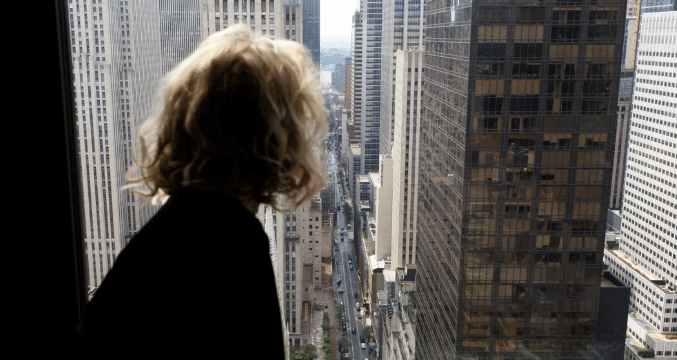
It’s important to remember that not everyone interprets the situation in the same way, and pessimists are not the only ones who have this narrative. The current period is “more of a typical down cycle” rather than a systemic crash, according to Kevin Fagan of Moody’s Analytics. Hotels, retail establishments, and industrial properties have all stayed comparatively stable, indicating that the stress is concentrated in offices rather than throughout commercial real estate. For its part, the Federal Reserve has continuously insisted that most banks’ exposure to commercial real estate is manageable. After Silicon Valley Bank failed, Jerome Powell stated clearly that SVB had very little commercial real estate on its books in the first place.
However, observing how this has developed over the last three years gives the impression that the system is pushing the boundaries of what it is capable of handling. The most exposed are Class B office buildings, which are older towers in secondary locations that are unable to compete with newer glass-and-amenity buildings for the tenants who are still leasing. Smaller regional banks that hold the loans suffer the most when those properties’ values decline. Credit spreads have blown out in ways that have drawn unsettling comparisons to the subprime housing market, and delinquencies have increased as values have declined. In these discussions, the term “subprime” is used cautiously, typically with a qualifier. However, it keeps coming up.
The deserted skyscrapers of Manhattan are not a ghost story. They are a financial structure that is under constant strain, holding loans from a different era for a type of work that might not be returning. It is still genuinely unclear whether the market gradually absorbs the pain over years without a dramatic collapse, or whether that pressure eventually breaks something significant—a wave of bank losses, a municipal tax crisis, a deeper economic ripple. The structures remain intact. Who ends up with them and at what cost are the questions.
