

When you drive past Nike’s campus in Beaverton, Oregon on any weekday morning, you’ll notice how big the place is. It’s a vast collection of buildings named after athletes, acres of well-kept fields, and the kind of architectural confidence that comes from being the biggest name in your industry for decades. The building was designed to convey ambition and permanence.
The NKE share price chart, which began in 2025 near $80, broke through $70 heading lower, found itself at $42 in early April 2026, and has since bounced back toward $45, is a little startling to look at right now. This chart does not represent a company that is coasting. It is a diagram showing how a business is resolving an issue.
Nike is dealing with a number of issues that, when considered separately, each company has previously encountered, but when combined, they create a particularly uncomfortable time. The China business, which contributes significantly to sales through about 5,500 franchised stores, has been weak; consumer demand there has not returned to pre-pandemic levels, and the competitive pressure from domestic Chinese brands like Li Ning and ANTA has become more severe than Western analysts were prepared to admit until recently.
| Key Information | Details |
|---|---|
| Company | Nike, Inc. — world’s largest athletic footwear and apparel brand |
| Ticker | NKE (NYSE) |
| Current Share Price | ~$45.44 USD (April 16, 2026); pre-market $45.77 |
| 52-Week High | $80.16–80.17 |
| 52-Week Low | $42.09 |
| Market Capitalisation | ~$67.29 billion |
| P/E Ratio (TTM) | 29.89 |
| EPS (TTM) | $1.52 |
| Forward Dividend & Yield | $1.64 per share — 3.61% yield |
| YTD Return (2026) | +28.20% (vs S&P 500 +2.59%) — recovery from early 2026 lows |
| 1-Year Return | −16.90% (vs S&P 500 +30.14%) |
| Q3 2026 Revenue | $11.28 billion — flat year-on-year (+0.09%) |
| Operating Margin | Down to 5.6% from 7.0% — a concerning compression |
| Next Earnings Date | ~June 25, 2026 (Q4 2025 report) |
| Analyst 1-Year Price Target | $62.37 — implying roughly 37% upside from current levels |
| Headquarters | Beaverton, Oregon, USA |
| Employees | 77,800 (2025) — down 1,600 year-on-year |
| Key Brands | Nike, Jordan, Converse, NikeSkims |
Rebuilding the wholesale relationships that Nike deliberately ended in favor of direct-to-consumer channels proved to be more difficult than anticipated. Additionally, the product pipeline experienced what Morningstar analyst David Swartz referred to as “lackluster product development.” Investors and analysts had previously characterized the pipeline as essentially self-reinforcing. That’s a polite way of saying that the Swoosh stopped releasing shoes that caused people to stop scrolling.
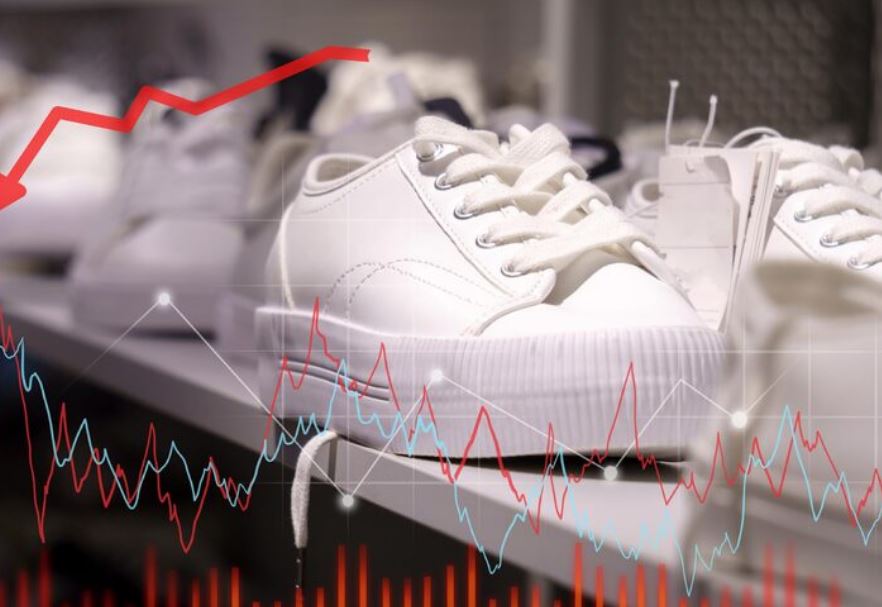
A mixed signal was provided by the most recent quarterly results, which showed Q3 2026 revenue of $11.28 billion, essentially flat year over year. The earnings per share exceeded expectations by 24.31%, which is impressive until you consider that the operating margin continued to compress, dropping from 7.0% to 5.6%, and that the beat was against a low baseline. Because it implies that even when Nike is sustaining revenue, it is doing so at a cost that isn’t entirely apparent in the top line, that margin decline is the number worth monitoring. In the two weeks that followed the release of the earnings, shares dropped by about 14.5%, indicating that the market was expecting an improvement that did not materialize.
The tone has somewhat changed in recent weeks due to insider buying. Following what Yahoo Finance described as substantial insider buying by top executives, Nike shares saw a 3.8% increase, indicating that those close to the company think the stock has overcorrected. Board-level interest in the company’s direction has been linked to Tim Cook’s name, and CEO Elliott Hill, who rejoined Nike in late 2024 after a period away, has been making public remarks that imply he is aware of the severity of the issue and is not ignoring it. It’s still unclear if comprehending an issue and finding a solution quickly enough to satisfy investors are the same thing.
The fifty-two-week range alone—$42.09 to $80.17—captures a nearly dizzying aspect of NKE’s performance over the previous 12 months. An investor who purchased close to the peak is currently experiencing a nearly 45% loss. An investor is already up about 8% after purchasing at the low three weeks ago. With a consensus one-year price target of $62.37, the analyst community believes that the current price is significantly below fair value, suggesting an upside of about 37% if the target is reached. Nike’s brand intangible gives it pricing power that should withstand the current turbulence and produce economic profits for at least twenty more years, according to Morningstar, which maintains its wide moat rating. For a stock that is trading close to twelve-year lows, that is a long time horizon, and there is a tension there that is better left unresolved than resolved too quickly in either direction.
The situation is further complicated by the tariff environment. Nike outsources almost all of its production to contract manufacturers in over thirty countries, so it is challenging to fully model how the reorganization of global trade costs affects its cost structure. The athletic apparel industry as a whole must contend with a consumer base that is both brand-loyal and value-sensitive—loyal enough to shell out money for the ideal Air Max colorway, but sensitive enough to switch to Adidas or New Balance if Nike’s prices go too high. Nike’s position in women’s athleisure has been eroded by Lululemon; the company’s response, the NikeSkims partnership, is intriguing but premature. It’s difficult to ignore the fact that all of Nike’s issues are theoretically solvable. Which of them is resolved in time to meet analysts’ projected earnings-per-share estimate of $0.12 for Q4, and what the recovery’s cadence looks like through the second half of 2026 are the questions.
