
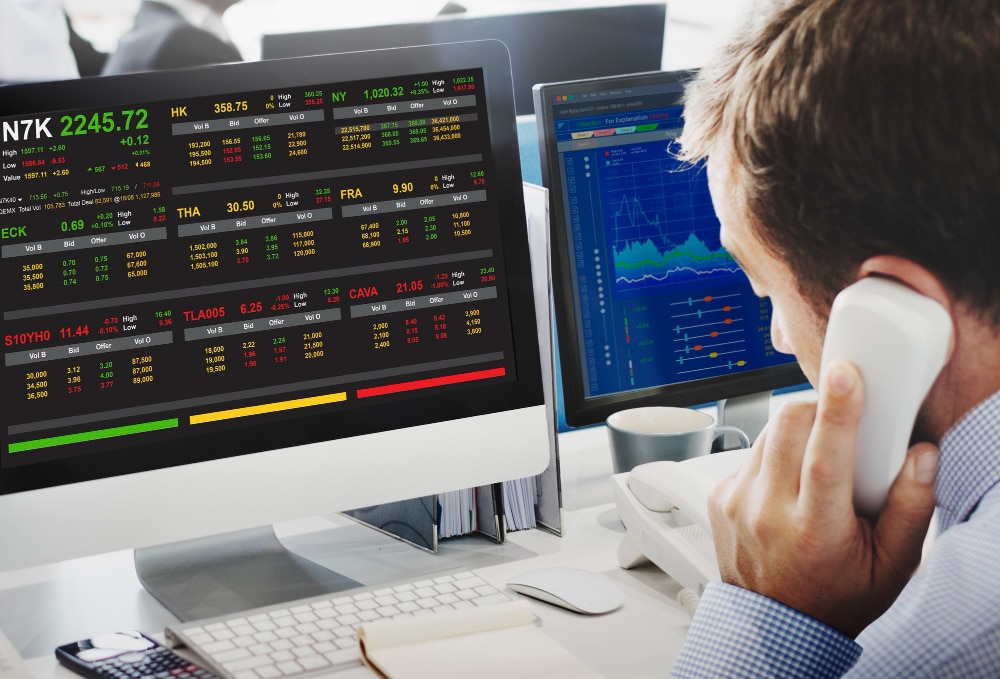

The glass buildings surrounding La Défense in Paris are illuminated late in the afternoon, giving the impression that everything is calmer than it actually is. Screens in those offices glow with numbers that don’t quite match the silence outside. The CAC 40 had recently risen once more, lingering close to the well-known psychological threshold of 8,000.
Earlier in the week, it briefly crossed it. then retreated. Push forward, hesitate, retreat is a pattern that seems more and more familiar. The index seems to be attempting to persuade itself just as much as it is persuading investors.
| Category | Details |
|---|---|
| Index Name | CAC 40 |
| Location | Paris Stock Exchange (Euronext Paris) |
| Current Level | ~7,974 points |
| Type | Free-float market capitalization weighted index |
| Key Sectors | Luxury, Energy, Finance, Industrials |
| 52-Week Range | 6,763 – 8,642 |
| Major Companies | LVMH, TotalEnergies, Airbus, BNP Paribas |
| Market Role | Benchmark index for French economy |
| Reference | https://live.euronext.com |
The numbers appear comforting at first glance. gains driven by well-known companies in the industry, a consistent contribution from energy behemoths like TotalEnergies, and sporadic upswings linked to diplomatic signals from the Middle East and Washington. Even if it’s not perfect, markets prefer clarity.
However, the atmosphere seems more nuanced than the charts indicate when passing cafés where vendors check their phones in between sips of espresso.
It’s possible that the CAC 40 is increasing because things aren’t getting worse—at least not rapidly—rather than because things are getting better. That distinction is important.
Forty of France’s biggest businesses are included in the index, but many of them have operations outside of France. Asian demand drives luxury groups. Aerospace companies depend on international travel. Banks transfer money between continents. The world, not just Paris, is frequently reflected in the CAC 40’s movements.
And the world seems uneasy right now. The price of oil is still high, hovering above levels that subtly put pressure on business margins. The ongoing geopolitical tensions—particularly around the Strait of Hormuz—continue to ripple through markets. Fuel prices are a concern for airlines. Manufacturers compute new costs. Sometimes in the middle of a session, investors modify their expectations.
All of that is absorbed by the CAC 40, frequently in ways that are difficult to decipher. Consider the most recent sessions. The hope that diplomatic efforts could reduce tensions helped the index rise above 8,000. However, at the same time, defense firms like Thales attracted attention for a completely different reason: growing expectations for military spending.
Two opposing forces in parallel motion. That makes me a little uncomfortable. It’s difficult to ignore how some sectors act virtually independently of the general mood. For example, luxury stocks have demonstrated hesitancy. Long regarded as dependable growth engines, companies like LVMH and Kering are now dealing with softer demand signals from China and worries about trade tensions.
Concurrently, energy and industrial stocks are holding steady, taking advantage of a world that, ironically, makes them more profitable during times of instability.
The market becomes fragmented as a result of this divergence. Instead of making large commitments, investors appear to be managing it cautiously by shifting capital. Even though the underlying dynamics are anything but stable, an increase in one sector frequently corresponds with a decline in another, making the index appear stable.
This reminds me of past cycles. European markets have frequently surged on optimism—central bank signals, diplomatic gestures, policy changes—only to retreat when reality sets in. The past has not been forgotten.
It’s evident in the hesitancy. An additional level of anticipation is created by the impending decisions made by central banks, especially the Federal Reserve and the European Central Bank. Investors price risk based on a variety of factors, including interest rates, inflation expectations, and currency fluctuations.
The CAC 40 does more than simply respond. It foresees. Incorrectly at times. Observing the index’s daily fluctuations reveals a nearly human rhythm. an increase in good news. A pause while traders take stock. a small decline when doubt returns. It’s not just mechanical.
It has to do with behavior. Additionally, the way the market is managing this situation has a very European feel to it. Maybe less dramatic than Wall Street, but no less intricate. The underlying tension persists despite the measured movements.
Simply put, it’s quieter. The CAC 40 settles slightly below that 8,000 mark once more by the time the closing bell rings. Near enough to imply power. Not enough to verify it.
Right now, the market appears to be defined by that space in between. Although they don’t fully commit, investors seem eager to take part. Gains are acknowledged but promptly questioned. There is confidence, but it seems contingent on variables that could change at any time.
The index seems to be waiting for something more conclusive. a settlement of geopolitical disputes. a more distinct economic path. a signal that can be maintained by the current balance, despite its fragility.
Up until then, the CAC 40 keeps making incremental progress while testing levels, modifying expectations, and withstanding shocks.
