

David Tanaka noticed a pattern. Koi keepers would test their water, get a reading, and post it to an online forum. They hoped someone, somewhere, with no knowledge of their pond or fish load, could tell them what to do next.
It was, he concluded, the wrong way to keep expensive fish alive.
Koi ponds look simple from above. They are not. Beneath the surface, a continuous chemical process runs through every hour of every day. Fish waste and decomposing food produce ammonia constantly. Beneficial bacteria convert that ammonia into nitrite — itself toxic — before converting it again into nitrate. Meanwhile, pH shifts with rainfall, plant activity and changes in the water supply. Dissolved oxygen fluctuates with temperature. KH buffers deplete quietly until they don’t. A sudden pH crash can then put every fish under severe stress.
The central problem Tanaka identified is one of context. A single water test provides a number. It does not provide a story. An ammonia reading of 0.25ppm could represent a stable pond in steady equilibrium. Or it could represent the opening stage of a rapid spike. Without knowing the trend, a keeper cannot meaningfully interpret what they are looking at. Where that number was last week, how fast it moved, what else shifted alongside it — none of that comes from a single test.
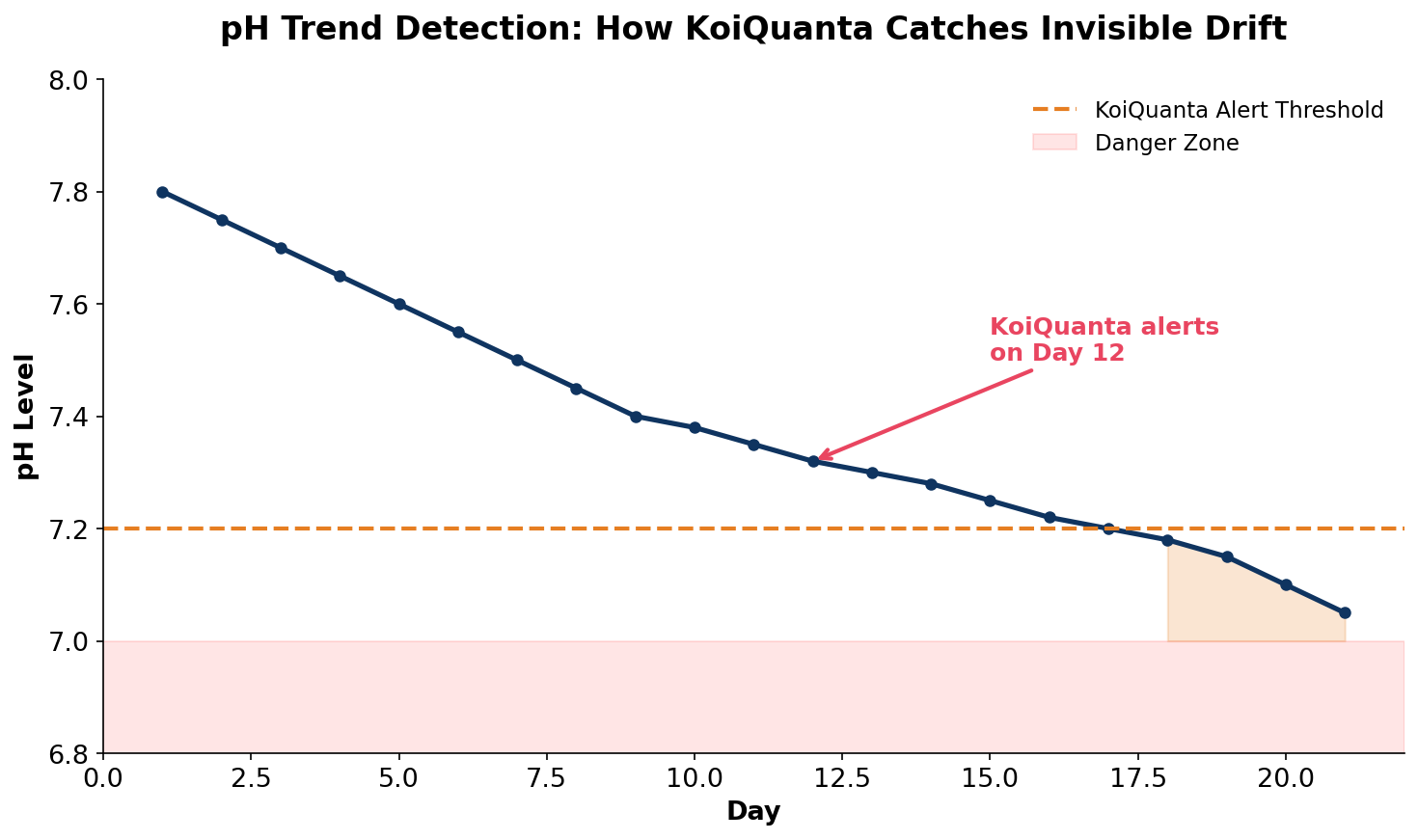
KoiQuanta tracks water chemistry across eight parameters: ammonia, nitrite, nitrate, pH, KH, GH, dissolved oxygen and temperature. The platform is at https://koiquanta.com. Its AI analyses how those values move over time and how they interact with each other. Each reading does not stand alone.
Tanaka put the problem plainly. “Koi keepers were testing their water and then going to online forums to ask strangers what to do about the results,” he said. “Those strangers don’t know your pond. They don’t know your fish load, your volume, your filter system, or your water source. KoiQuanta does. It replaces anonymous advice with real science, personalized to the pond you actually have.”
Treatment dosing sits at the sharp end of that problem. Forums routinely recommend salt, potassium permanganate or Praziquantel for common koi ailments. Yet the correct dose depends on pond volume, current water chemistry, temperature and fish population simultaneously. Under-treatment fails to resolve the problem. Over-treatment harms the fish. KoiQuanta calculates specific dosing recommendations from a pond’s actual measured conditions rather than from generalised forum guidance.
Still, quarantine workflows address a separate but equally serious risk. New koi can carry parasites, bacteria or disease into an established pond population — silently, before any symptoms appear. KoiQuanta guides keepers through tank setup, water parameter matching, observation periods and preventative treatment schedules. It also sets out the specific criteria that determine when a fish can safely enter the main pond.
Seasonal transitions demand a different kind of attention again. Spring startup requires careful monitoring as fish resume feeding and biological filtration restarts after winter dormancy. Summer brings rising temperatures, oxygen depletion and algae pressure. Autumn preparation involves adjusting feeding schedules and readying equipment. Winter management focuses on gas exchange and observing fish through their least active period. KoiQuanta provides workflows and target water parameters for each transition, calibrated to climate zone rather than a generic calendar.
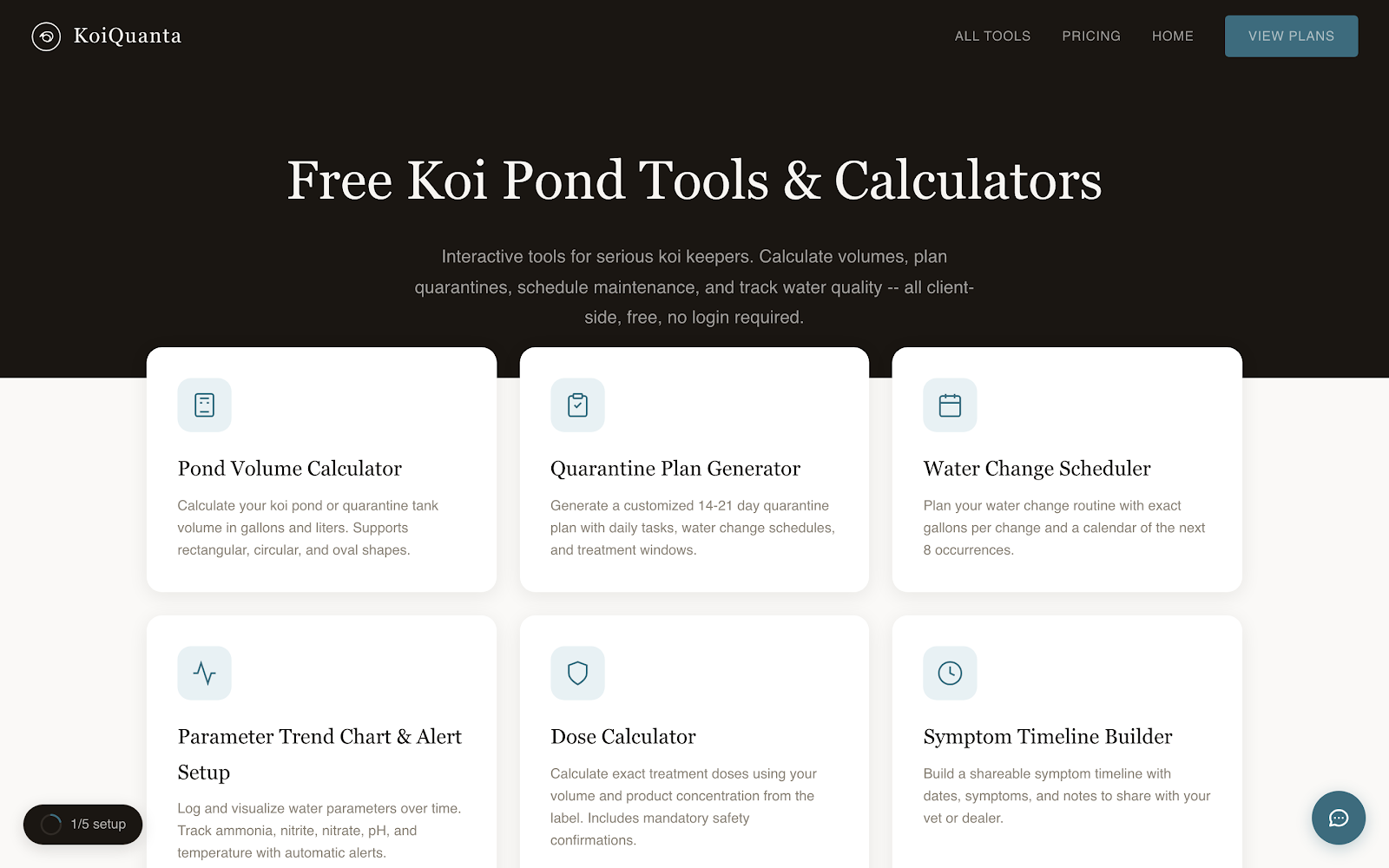
The koi varieties database at https://koiquanta.com/varieties covers Kohaku, Sanke, Showa and Shiro Utsuri among others. Each entry includes identification guides, colour development information and variety-specific care notes. Free tools sit at https://koiquanta.com/koi/tools and require no account. Those include pond volume calculators, salt dosing calculators, water change planners and seasonal checklists.
Beyond seasonal care, individual fish health tracking rounds out the platform. Keepers can photograph their koi and log changes in skin condition, colouration, fin damage, ulcers or behaviour over time. Some koi change hands for tens of thousands of dollars. For those keepers, health records carry weight for both care management and insurance documentation.
KoiQuanta serves hobbyist keepers, dedicated enthusiasts, breeders and water garden owners. Professional pond maintenance companies managing multiple client sites use it too.
