

Will’s daughter was two and a half and had fewer than twenty words when her paediatrician referred her to a speech-language pathologist — and told Will the waiting list ran four months. During those four months, he tried everything. Flashcards. YouTube. Apps that played songs about colours and animals but did nothing for speech production. Nothing practised specific sounds. Nothing adjusted to her level. Nothing had the patience to repeat the same syllable thirty times without frustration. So he built something that did.
Little Words, a free AI-powered speech practice companion for children, launched from Los Angeles to address a problem that affects one in twelve children in the United States. That figure translates to roughly 7.7 million kids. Some struggle with specific sounds. Some cannot string sentences together at the expected developmental stage. Some carry a diagnosis of childhood apraxia of speech — a neurological condition in which the brain cannot adequately coordinate the physical movements required to produce words. Others speak later than their peers while their parents spend sleepless nights weighing whether the delay matters.
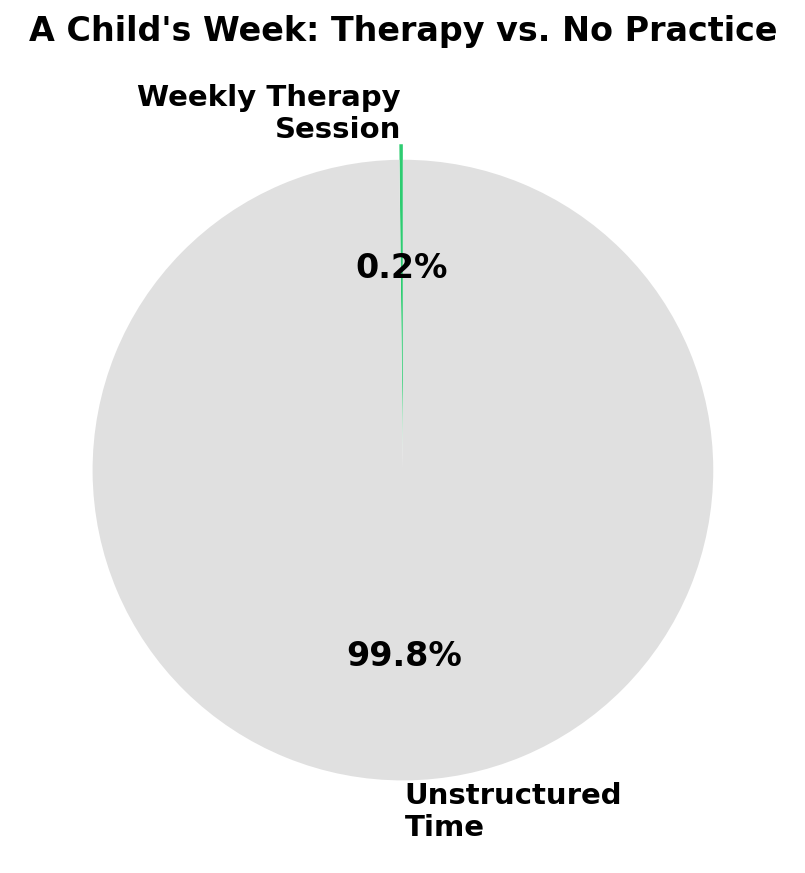
Standard treatment is speech-language therapy. Sessions typically run thirty minutes, once or twice a week. The therapist works on articulation, phonological awareness or language processing, depending on the child’s specific needs. Then the session ends. The child goes home. For the next six days and twenty-three hours, no structured practice occurs. Research consistently shows that daily practice of just ten to fifteen minutes dramatically accelerates outcomes. But qualified therapists do not work seven days a week, and most parents — regardless of willingness — lack training in the techniques that make speech practice effective rather than frustrating.
Access compounds the problem. In many US states, the waiting list for a paediatric speech-language pathologist stretches past six months. In rural areas, a qualified therapist may not exist within an hour’s drive. During those months of waiting, the window for early intervention narrows. Parents watch it happen with few useful options.
Will’s four-month wait produced Little Words. The platform is not a replacement for clinical therapy. It fills the gap between sessions — or provides structured daily practice during the months before a child reaches the front of a waiting list. The distinction matters. Little Words exists alongside professional therapy, not instead of it.
The design centres on a single principle: patience. A child working on the “r” sound might need to hear a model fifty times before attempting it. They might attempt it thirty times before producing it clearly. They might produce it once, then lose it the following day. Little Words never tires, never signals impatience, never moves on prematurely. The fiftieth repetition arrives with the same warmth as the first. Every attempt earns a response — not only the successes.
The exercises were developed with licensed speech-language pathologists and follow established therapeutic methods. Minimal pairs target phonological disorders. Syllable shaping addresses apraxia. Progressive phoneme practice works through articulation delays. None of it feels like clinical work to a child. Games, stories and interactive activities carry the exercises. Real-time difficulty adjustment means the AI simplifies when a child struggles and advances — from sounds to words to phrases to sentences — when a child progresses. Both happen within a single session.
Progress tracking converts home practice into data that parents and therapists can use. Parents see which sounds their child has mastered, which remain in progress, and which have not yet been introduced. Therapists already working with a child can adjust clinical sessions based on what the platform captures at home. That continuity between home practice and clinical care did not previously exist in a usable form.
Privacy shaped the architecture from the start. Little Words stores no photos, sells no child data, displays no advertising and requires no account creation. The platform exists only to help children practise. Nothing else.
Little Words serves children with speech delays, articulation disorders, phonological processing challenges, childhood apraxia of speech and expressive language delays. Speech-language pathologists increasingly recommend it as a home practice tool for families between clinical sessions. The product is free.
Seven point seven million children in the United States need speech practice more often than once a week. Most of them do not get it. Will built Little Words for his daughter. It now exists for the rest of them too.
