
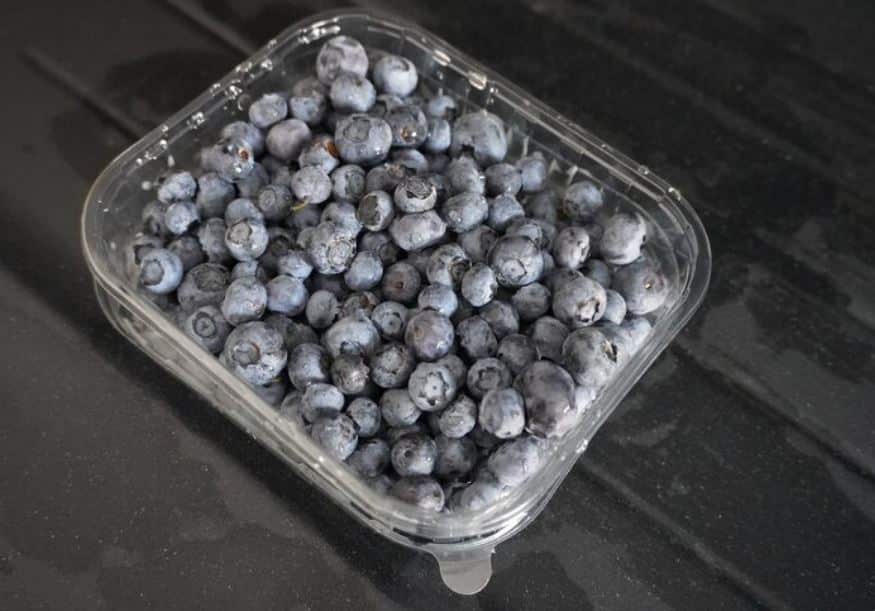

Seldom does the frozen fruit section seem dangerous. The place is peaceful, with frost lining the glass doors and bags of blueberries arranged in neat rows. The deep blue hue of the berries suggests smoothies and muffins, as well as perhaps a modest attempt at healthier morning routines. This is why there is a certain amount of anxiety surrounding the recent recall of over 55,000 pounds of frozen blueberries.
Individually Quick Frozen (IQF) blueberries that were distributed throughout four U.S. states and into Canada are the subject of a recall that was started by Oregon Potato Company LLC and subsequently categorized as Class I by the U.S. Food and Drug Administration. The FDA’s most severe classification, Class I, is applied when there is a plausible chance that exposure could result in death or major health effects. That wording is not used carelessly by regulators.
| Category | Details |
|---|---|
| Company Initiating Recall | Oregon Potato Company LLC |
| Operating As | Willamette Valley Fruit Company |
| Regulatory Authority | U.S. Food and Drug Administration |
| Canadian Oversight | Canadian Food Inspection Agency |
| Recall Classification | Class I (Highest Risk Level) |
| Product | Individually Quick Frozen (IQF) Blueberries |
| Quantity Recalled | 55,689 pounds (approx. 25,260 kg) |
| Distribution | Michigan, Oregon, Washington, Wisconsin, and Canada |
| Contaminant Concern | Listeria monocytogenes |
| Official FDA Notice | https://www.fda.gov/safety/recalls-market-withdrawals-safety-alerts |
There is a twist, though. The impacted shipments found in Canada were quarantined at an importer’s warehouse prior to being delivered to retailers, according to the Canadian Food Inspection Agency. “Canadian consumers are not at risk,” the agency stated. It’s comforting. For the most part.
Nevertheless, the figures remain: 55,689 pounds. That isn’t just one pallet left in a warehouse corner. These blueberries were packed in 1,400-pound industrial totes and 30-pound corrugated cases, the same type of totes you see at the rear of food manufacturing facilities, shrink-wrapped and marked in thick black marker. They were meant for food service distributors and manufacturers, not supermarket shelves.
That is an important detail. due to the abstract nature of commercial distribution. In Michigan, a tote of frozen fruit might be used as filling for bakery pies, while in Oregon, it might be used as a smoothie blend. Ingredients dissolve into larger systems once they reach production lines. The precise downstream products that might have included the berries are still unknown.
The bacteria at the core of this recall, Listeria monocytogenes, does not have a particularly striking appearance. It has no effect on food’s texture or flavor. Inside a sealed polyethylene liner, it doesn’t raise any red flags. It is silent and thrives in frigid temperatures that would kill off a lot of other infections. Listeria is not killed by freezing. It just suspends it.
Pallets were probably routinely moved across polished concrete floors in a Salem, Oregon, processing facility by forklifts. Workers sealed polyethylene bags inside corrugated cartons while stacking cases while wearing insulated gloves. Every berry would have been trapped in a tiny sphere of frost by the freezing process, which is meant to maintain texture and nutritional value. It’s difficult not to picture the scene going on as usual while testing results were being examined elsewhere.
On February 24, the recall was upgraded to Class I after initially being posted on February 12. This escalation implies that regulators were sufficiently concerned by the evidence. It’s not entirely clear if that was because of contamination levels, distribution scope, or laboratory confirmation.
Listeria-caused listeriosis, which manifests as fever, muscle aches, and nausea, can mimic the symptoms of a severe flu in the majority of healthy adults. However, the infection can spread beyond the intestines and become invasive in older adults, pregnant women, newborns, and those with compromised immune systems. In those situations, convulsions, disorientation, and stiff neck are possible symptoms. Even worse at times.
Customers may not even notice this recall for the most part. Many households might not even be aware that the blueberries were a part of the supply chain if they never made it to retail establishments. However, this lack of visibility can also cast doubt on the openness of commercial food channels.
Frozen produce seems to have a subtle aura of security. We relate it to durability, control, and preservation. That assumption is a little shattered as I watch this play out. Even in 2026, food safety is still a balancing act between industrial precision and agricultural reality.
In recent years, recalls involving infant formula, peanut butter, and lettuce have nearly become daily news stories. Theoretically, the system functions when tainted products are found and eliminated before extensive damage is done. Furthermore, no verified reports of disease linked to these blueberries have surfaced in this instance.
Nevertheless, the term “highest risk classification” leaves a lasting impression. It’s difficult to ignore how tiny a microscopic organism appears in comparison to the size of national supply chains.
Grocery store freezers are still humming. Behind frosted glass, bags of blueberries remain stacked, unrelated and unaffected. Most customers won’t hesitate to pass them.
Pallets are being kept from distribution, cases are being logged, and shrink wrap is being cut open somewhere in a warehouse. quiet interventions. Essential ones.
Food safety frequently functions best when nothing spectacular occurs, such as when tainted products are discovered early, when alerts are promptly given, and when consumers are kept in the dark because danger never materializes.
It’s unclear if this incident will go away quietly or if it will lead to a closer examination of the supply chains for frozen fruit. The recall serves as a reminder for the time being that even the most commonplace items in our kitchens have complicated journeys before they reach us. And those paths can occasionally take unexpected detours.
