
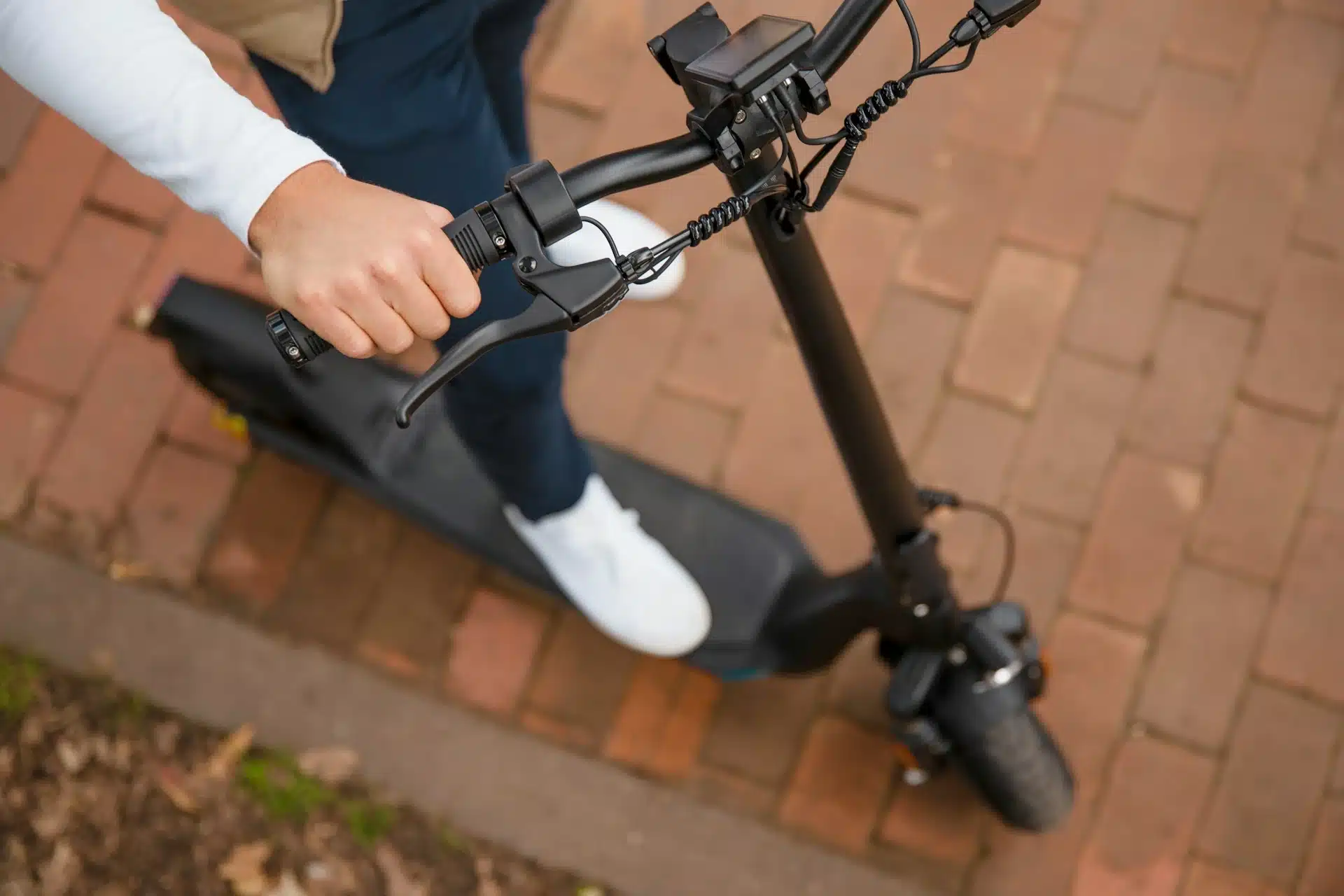

The use of electric scooters has grown significantly across the United Kingdom in recent years. Driven by changing travel habits, urban micromobility trends and the rollout of rental schemes in cities, e-scooters are becoming a familiar sight on British streets.
However, what was introduced as a flexible, low-emission urban travel option now presents a set of legal, safety, and financial challenges for insurers and motorists alike.
Despite regulatory limits, private ownership of these vehicles has soared. Estimated figures suggest that between 750,000 and 1,000,000 privately owned e-scooters have been purchased by UK consumers, even though these vehicles remain largely illegal on public roads outside of approved trials.
As usage has expanded, so have recorded collisions. According to the Department for Transport (DfT), the following statistics were recorded:
- In 2024, 1,312 reported collisions involved e-scooters in Great Britain.
- These collisions resulted in 1,390 casualties.
- Of those injured or killed, 1,096 were e-scooter riders.
- 444 people were seriously injured, and six fatalities were recorded.
Legal Landscape and Insurance Gaps
Privately owned e-scooters are classified as motor vehicles under the Road Traffic Act 1988, meaning they would normally require a driving licence and valid insurance to be used lawfully in public spaces. Because riding them on public roads is illegal, it is effectively impossible for private owners to obtain insurance that covers such use.
In contrast, e-scooters rented through government-approved trial schemes can be used legally on public roads because the rental operator provides cover as part of the service. This dichotomy creates a regulatory grey area that complicates the role of traditional motor insurance products.
If a driver is involved in a collision with an uninsured rider, the insurer may be unable to recover costs from a third party. That inability often results in the claim being processed as a fault claim against the motorist’s own policy, leading to increased premiums even when the driver was not at fault.
The Growing Burden on the MIB
The Motor Insurers’ Bureau (MIB), which compensates victims of accidents involving uninsured or untraced drivers, has recorded a growing number of e-scooter accident claims. These cases typically involve pedestrians, cyclists, and motorists injured by privately owned e-scooters being used illegally on public roads.
Because many private e-scooters carry no valid insurance, liability often falls to the MIB. The cost of compensation is funded through levies on motor insurers, meaning the financial burden is ultimately shared by insured drivers rather than by those using uninsured vehicles. One serious injury claim alone carried a projected cost of approximately £628,000, illustrating how a relatively small number of high-severity cases can generate a substantial impact.
Insurers are already seeing measurable claims exposure linked to e-scooters. Zurich, for instance, has acknowledged handling a number of cases, including incidents involving serious injury. Other companies have indicated that they are setting aside substantial reserves, in some instances amounting to several hundred thousand pounds, in anticipation of liabilities arising from collisions.
The Missing Numbers
Despite this activity, there is no comprehensive UK-wide dataset capturing the total number of insurance claims or the full financial cost associated with e-scooter collisions. The absence of consolidated figures stems from two structural factors.
First, privately owned e-scooters cannot legally obtain a road insurance policy for public use. When incidents occur, they often fall outside conventional motor-financial-protection channels. This limits the visibility of claims within standard insurance reporting systems.
Second, insurers do not typically disclose granular claims data by incident type in their public financial statements. E-scooter-related suits are therefore absorbed into broader motor or liability categories, making it difficult to isolate precise totals. Analysts must instead piece together insights from MIB disclosures, parliamentary evidence, and individual insurer commentary.
The result is an incomplete statistical picture. Even so, the available evidence clearly indicates an upward trend in claims frequency and reserving activity, signalling a growing area of exposure within the UK motor insurance market.
What Comes Next
The expansion of e-scooter use has moved beyond a short-term transport experiment. With accident figures in the thousands and claims already reaching seven-figure exposure levels, the issue now sits firmly within the long-term risk landscape of UK motor insurance.
For the public, clarity and responsibility are essential. Riders need to understand that privately owned e-scooters currently operate outside a lawful insurance framework. Greater awareness of personal liability, injury risk, and financial consequences would reduce avoidable harm. If e-scooters are to become a permanent part of urban mobility, users must adopt safer riding practices and comply fully with any future regulatory requirements.
For insurers, this creates a new challenge. They need better tracking of how often e-scooter accidents happen, clearer ways to record these claims separately, and enough money set aside to pay for future cases. Without accurate data and proper financial planning, it becomes harder to price motor insurance fairly.
Pricing models may require adjustment to reflect the systemic cost of uninsured collisions. At the same time, insurers have an opportunity to innovate through specialist micromobility products, clearer policy wordings, and partnerships with rental operators to create structured frameworks.
For regulators and policymakers, the present dual system is unlikely to remain sustainable. Authorities may need to consider compulsory third-party insurance for private e-scooters, clearer enforcement mechanisms, and consistent national standards.
The direction of travel is clear. E-scooters are already embedded in the urban transport ecosystem. Without clear rules and coordinated action, the cost of these accidents will continue to spread across the wider motor insurance system, meaning ordinary drivers are likely to carry the financial burden.
