

You can’t help but notice how many people look at their fast food burger before they even bite into it. The silent evaluation, the subtle squint, and the rapid lift of the top bun are all present. Burger King patrons have been doing just that with the Whopper for years, and far too frequently, the results have been disappointing. mushy buns. slippery mayonnaise. The chaos was barely contained by a paper wrapper.
Now, Burger King is changing its crown jewel for the first time in almost ten years.
At first glance, the changes appear minor: a creamier mayonnaise, a stronger, more “premium” bun, and packaging that uses clamshell boxes instead of paper wrap. However, even minor adjustments carry risk in the fast food industry, where nostalgia sells, and familiarity is revered.
| Category | Details |
|---|---|
| Product | Whopper |
| Company | Burger King |
| Parent Company | Restaurant Brands International |
| First Introduced | 1957 |
| Latest Update | Premium bun, creamier mayo, clamshell box packaging (2026) |
| U.S. Locations | 7,000+ |
| Official Website | https://www.bk.com |
Silently, the complaints had been mounting. Photos of Whoppers flattened like pressed flowers, lettuce spilling from the sides, and sesame seeds adhered to waxy paper can be found on social media. According to reports, the president of the chain personally collected complaints from consumers by answering their calls and texts. This direct route to diners may have expedited what would have otherwise been an indefinite delay.
Teams reportedly spent seven months adjusting the packaging design, glaze consistency, and bun density inside test kitchens. In one experiment, the burger was even turned upside down, with the vegetables on the bottom and the patty on top. That concept was dropped. It appears that tradition is still important.
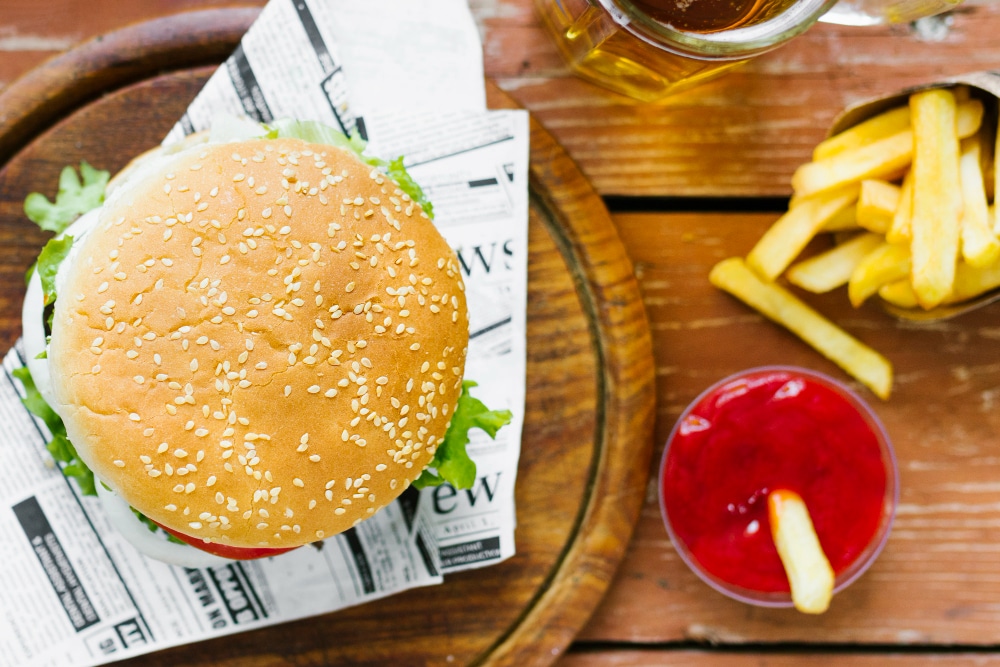
Today, there is a noticeable but subtle difference when you walk into a Burger King. Sesame seeds adhere more firmly to the top of the new bun, which has a slight lift that is almost dome-shaped. The burger retains its shape and warmth thanks to the box rather than the old crinkly wrapper. When you open it, the Whopper feels more like something that was thoughtfully put together than something that was hastily put together.
However, the quarter-pound flame-grilled beef patty is still the main ingredient. The one area that executives were cautious not to touch was the smoky scent that rises when the lid is lifted. It seems as though altering the patty would have incited a revolt.
Why now? A few convergent pressures are mentioned by industry analysts. Burger King began to receive complaints about its dated locations and uneven quality around 2023. Sales fell. Rivals improved their own menus. Burger King’s parent company, Restaurant Brands International, advocated for operational purification prior to menu redesign.
The modest but consistent growth in same-store sales in recent years may have given leadership the courage to try something more daring. Investors appear to think that loyalty can be regained without upsetting devoted followers through refinement rather than drastic reinvention.
However, the upgrade isn’t free. According to reports, franchisees will pay an additional $4,000 annually to implement the changes. In a sector already strained by inflation and labor costs, that is not negligible. Instead of raising prices, corporate leadership has suggested that better quality will increase foot traffic.
In 2026, fast food has changed from a decade ago. Value is scrutinized more closely by customers. Drive-through speed is important. The appearance of packaging is important. Social media is important. A burger is photographed in addition to being consumed. In just a few minutes, a flattened sandwich can go viral.
Burger King may have realized something basic: perception is influenced by presentation. A box indicates concern. Intention is indicated by a stronger bun. If you notice it, a creamier mayo indicates indulgence.
As you watch this happen, you get the impression that the Whopper is being moved rather than simply repaired. Not as cheesy nostalgia, but as a little more sophisticated. Instead of completely reinventing the Whopper, executives have compared it to putting it in a tuxedo. The metaphor practically knows what it is doing.
However, in the fast-food industry, minor menu changes have previously backfired. Consumers develop sentimental bonds with texture and flavor. Even a slightly sweeter mayo can cause controversy. Whether ardent Whopper devotees will accept the update or maintain that the previous version tasted better is still up in the air.
Recently, a middle-aged traveler opened his boxed Whopper and stopped in a Burger King near an airport terminal. He looked at the bun, gave a small nod, and bit into it. No big response. Just silent consent. That kind of reaction—not fireworks, but restoration—may be just what the business is looking for.
This illustrates a larger point about how traditional brands must deal with contemporary demands. McDonald’s is always trying new things. The simplicity of Chick-fil-A is protected. Instead of seeking innovation, Burger King, which has long been positioned as the flame-grilled alternative, appears to be rediscovering its own icon.
The Whopper is ultimately still a Whopper. The beef hasn’t changed. The lettuce still overflows the edge a little. However, it comes in a box that suggests someone finally paid attention, a little taller, and a little neater.
Reinvention isn’t always loud. It’s simply less messy at times.
