

Commuters slowed as they passed a ten-meter fountain gushing murky brown water on a soggy evening along London’s South Bank. Children and adults who resembled bronze seemed to be frozen in mid-retch. A suited executive holding a briefcase full of cash was standing above them. Travelers raised their phones. A few chuckled uneasily. Others appeared truly uneasy.
Known as the “Fountain of Filth,” the installation was not understated. It served as a promotional stunt for Channel 4’s upcoming three-part factual drama, Dirty Business. However, it seemed to be doing something else as the crowd grew: bringing a complex environmental scandal into the open.
| Category | Details |
|---|---|
| Programme | Dirty Business |
| Broadcaster | Channel 4 |
| Lead Cast | David Thewlis, Jason Watkins |
| Based On | Real-life investigation into England’s water companies |
| Episodes | 3 x 60 minutes (2026) |
| Reference Website | https://www.channel4.com/programmes/dirty-business |
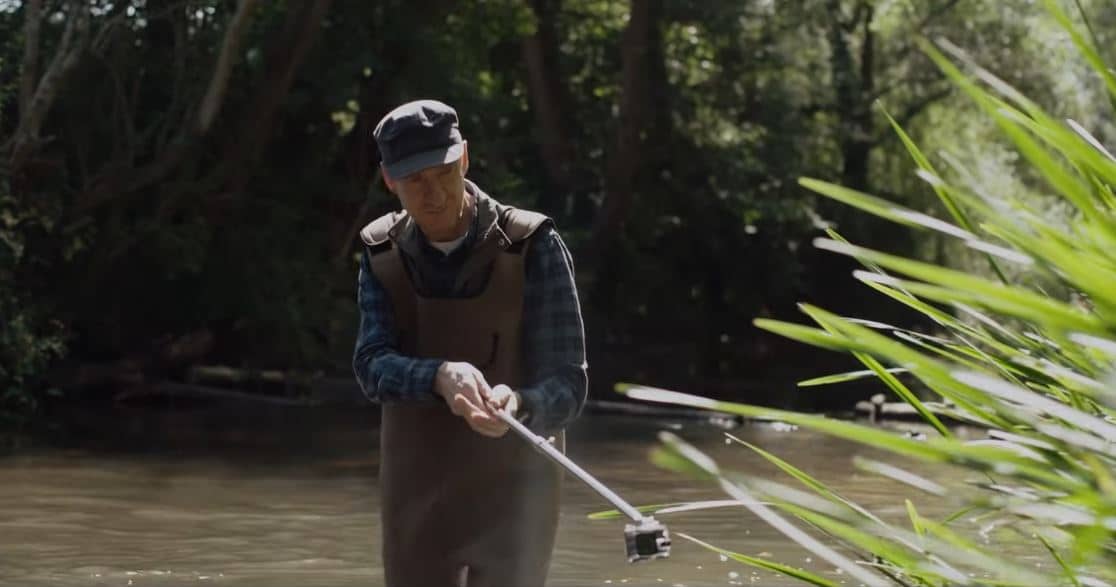
A ten-year investigation into sewage dumping by England’s privatized water companies is dramatized in the series, which is anchored by David Thewlis and Jason Watkins. Thewlis portrays retired detective Ashley Smith. Watkins plays computational biologist Professor Peter Hammond. Living next to the River Windrush, two unlikely activists noticed a tiny thing: dead fish floating in what had once been clear water.
That detail might be the secret to Dirty Business’s power. Not big speeches. Not sweeping montages. Just the color of a river changing. a smell that persists longer than it ought to. the gradual recognition that there is a systemic issue at play.
Mr. Bates vs. The Post Office, another British drama that transformed bureaucratic injustice into a primetime outcry, has already been compared to the show. That analogy seems intentional. Dirty Business seeks to provoke rather than merely inform. According to The Guardian, it might be the type of TV that makes people truly angry.
And in this instance, anger might not be unwarranted.
The series’ campaigners claim that hundreds of thousands of sewage discharges take place in England’s waterways every year. Certain overflows are legally permitted by heavy rain. The core of the drama, however, is the accusation that dumping has become commonplace, underreported, and occasionally hidden. Some depictions are disputed by regulators, who maintain that inspections and reforms have improved oversight. Whether those reforms will appease detractors is still up in the air.
The true story of Heather Preen, an eight-year-old girl who died after getting E. coli after a 1999 beach trip in Devon, is one of the most horrific threads. At the time, her case was classified as misadventure. The hospital scenes, the confusion, and the unresolved questions are all revisited in the series with painful intimacy. It’s difficult to avoid feeling that the scandal is no longer abstract as you watch those episodes play out.
There is restraint in the performances. Known for his darker parts, Thewlis portrays Smith with a kind of brewing annoyance. Watkins instills in Hammond the methodical composure of an academic. They work together to sort through information, submit FOIA requests, and deal with evasive executives. Part of it is procedural. However, it has a realistic, almost documentary-like feel, intercut with actual footage of contaminated rivers.
This is part of a larger privatization story. Dividends to shareholders have totaled billions since the water industry was sold off in 1989. Critics claim that investments in infrastructure have not kept pace. The current model’s proponents maintain that efficiency and modernization were made possible by private ownership. Investors appear to think that public service and profit can coexist. The program subtly challenges that presumption.
That challenge is exacerbated by the marketing campaign. Slogans calling for accountability were displayed on vans parked outside the water company headquarters beyond the South Bank fountain. QR codes that are connected to testimonies from surfers and swimmers who have reported getting sick. It’s combative, possibly even theatrical. However, the tone of the series itself is reflected in it.
The sense of inertia in Dirty Business is just as unsettling as the data. In the drama, activists frequently alert regulators to incidents, but they frequently don’t hear back right away. Executives seem calm, defensive at times, and rarely frightened. In interviews conducted in the run-up to the show’s premiere, one campaigner claims that “not much has changed.” Depending on how one feels about recent changes in policy, that might or might not be totally fair.
However, timing is crucial. Unless they are encapsulated in satire or wildlife spectacle, environmental issues rarely take center stage on British television. Instead, Dirty Business opts for conflict. It makes viewers think about the rivers their kids wade into and the water that comes out of their faucets.
The imagery’s physicality is difficult to ignore. Statues are dripping brown water. Fish with their bellies up. Families with medical reports in their hands. These are visceral scenes, not remote climate charts.
It’s possible that the show won’t change the water industry on its own. Seldom does television accomplish that on its own. However, it can change the course of a conversation. Public pressure increased almost immediately after Mr. Bates’ broadcast. A similar sensation is developing as you watch Dirty Business play out: a slow, simmering incredulity that something as basic as clean water is still up for debate.
It is unclear if this moment will result in more stringent regulation, discussions about public ownership, or just increased scrutiny. It’s obvious that Channel 4 has struck a chord with the country.
The Fountain of Filth kept spouting its man-made sewage into the air as night fell on the South Bank. Some commuters shook their heads as they rushed by. It was intentionally provocative. However, as one stood there and observed people pausing to read the plaque, one questioned whether Britain could no longer afford to overlook the filth it showed.
