
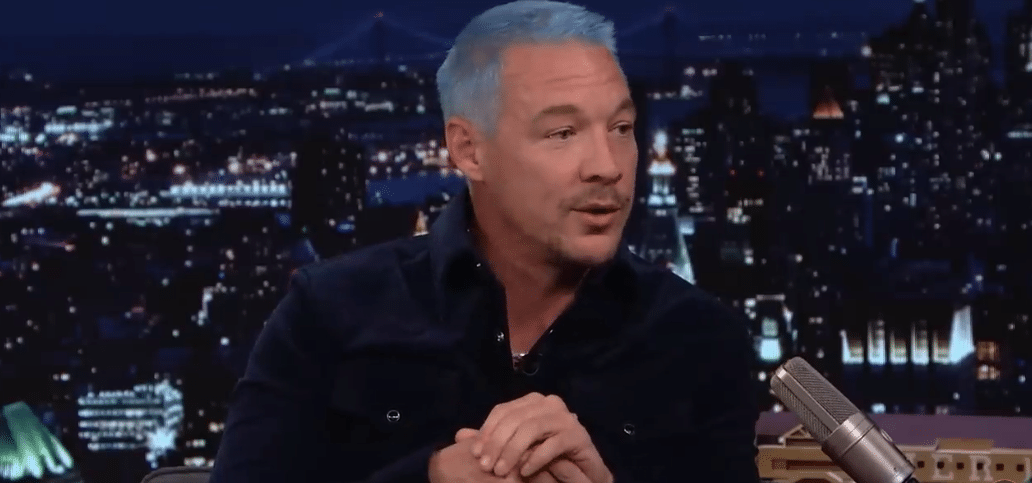

Diplo’s financial tale doesn’t start in a boardroom. It begins in the sort of places that smell like hot equipment and spilled beer—small clubs, sticky floors, a booth illuminated by the glow of a laptop, a crowd that moves as though it is on a single nervous system. Nowadays, the moniker “Diplo” is used indiscriminately, much like a logo. However, Thomas Wesley Pentz, the driving force behind it, established his brand the old-fashioned way: by performing everywhere and approaching every scene as though it were a possible export market.
$70 million, made popular by Celebrity Net Worth, is the headline figure that people keep repeating. For 2025, another recent estimate raises it to $75 million. Since celebrity net worth calculations are rarely audited, it’s possible that both are correct in general but incorrect in specifics.
| Field | Details |
|---|---|
| Stage Name | Diplo |
| Legal Name | Thomas Wesley Pentz |
| Born | November 10, 1978 |
| Birthplace | Tupelo, Mississippi, U.S. |
| Base/Origin (career) | Philadelphia (early scene), later global |
| Roles | DJ, producer, songwriter, label founder |
| Notable projects | Major Lazer, Jack Ü, Silk City, LSD |
| Founded | Mad Decent (record label, 2006); Heaps Decent (nonprofit, 2007) |
| Children | 3 |
| Net worth estimates (widely cited) | ~$70M (Celebrity Net Worth); ~$75M (some 2025 estimates) |
| Authentic reference link | https://diplo.com |
Public real estate notes, industry presumptions, and a great deal of confident rounding frequently make up this collage. However, when several sources circle the same neighborhood, it suggests a fortune that is substantial enough to feel real—$70M-ish, not $700M.
How Diplo gets there is a more telling question. Touring is the obvious solution. With festival slots, club runs, and headline appearances stacked across continents, Diplo has been a relentless traveler. DJ culture has made live performances the closest thing to guaranteed income in the music industry. His calendar seems to be an asset class unto itself, compounding value by being full. When you’re in demand all over the world, you never get paid once. Airports act as the intermediary office as they arrive in waves, sometimes several in a weekend.
The money isn’t just onstage, though. Diplo occupies that unique space where an individual can be hired as both the attraction and the architect and still receive payments. He moved between projects without having to rebuild his reputation each time, co-creating Major Lazer, collaborating with Skrillex as Jack Ü, and forming Silk City with Mark Ronson. From the outside, it appears more like portfolio strategy than a musician’s career, with various wagers and target markets all supporting the same main brand.
Additionally, Mad Decent, which was established in 2006, adds a business element that many DJs are never able to establish. Depending on how well it discovers scenes early and commercializes them later, a label can either be a money pit or a multiplier. Diplo’s preference for collision is reflected in Mad Decent’s identity, which is restless, international, and occasionally purposefully noisy. His monetize is one example of the kind of cultural churn labels you’ve seen if you’ve ever scrolled past a “genre” label that seems like it was created five minutes ago.
In 2007, Diplo also started Heaps Decent, a nonprofit that adds nuance to the typical stereotype of the “rich DJ.” Although philanthropy doesn’t always increase wealth, it can increase influence, and influence has its own benefits, such as connections, invitations, and credibility in settings where money from entertainment alone can seem insubstantial. Although the ecosystem’s financial significance is still unknown, it is significant in terms of reputation, and in the entertainment industry, reputations are valuable.
The story becomes subtly serious in the producer credits. Diplo worked across worlds that don’t naturally communicate with one another, helping to shape pop’s last two decades in addition to making songs. The money doesn’t always come in one big check when a producer works with international stars again. It manifests as long-tail streaming, negotiated points, royalties, and publishing—money that can continue to flow while the artist is sleeping, lounging on the beach, or, more realistically, on another plane.
Diplo isn’t built like a one-hit lottery winner, which lends credibility to his wealth. He is constructed like a machine that has learned to remain functional. His career geography, including his birth in Mississippi, his influence in Miami, and his ascent to prominence in Philadelphia, reads like a map of American sound traveling through various climates. Many DJs have a peak moment. It’s rarer than it seems that Diplo has survived multiple moments. Scenes shift. Audiences get older. Winners are rotated by streaming platforms. However, he continues to affix himself to the next popular nerve.
Beneath the glitzy figure, there’s a tension as well: maintaining this level of fame can be costly. Teams develop. Security becomes the norm. Houses are bought and sold. Even if the “net worth” figure is correct, it doesn’t reflect how erratic the cash flow can be given how much of it is dependent on ongoing activity and public scrutiny. It’s difficult to overlook how the contemporary music industry rewards musicians who persevere despite their bodies’ desires to stop.
Does Diplo have a $70 million worth? Perhaps. The $75 million rumor may also be accurate. The more realistic conclusion, however, is that Diplo’s wealth most likely stems from a combination of multiple steady sources of income, including touring, producing, publishing, brand leverage, and label equity, rather than from a single, fictitious paycheck. The headline is the number. The story is in the motion.
