
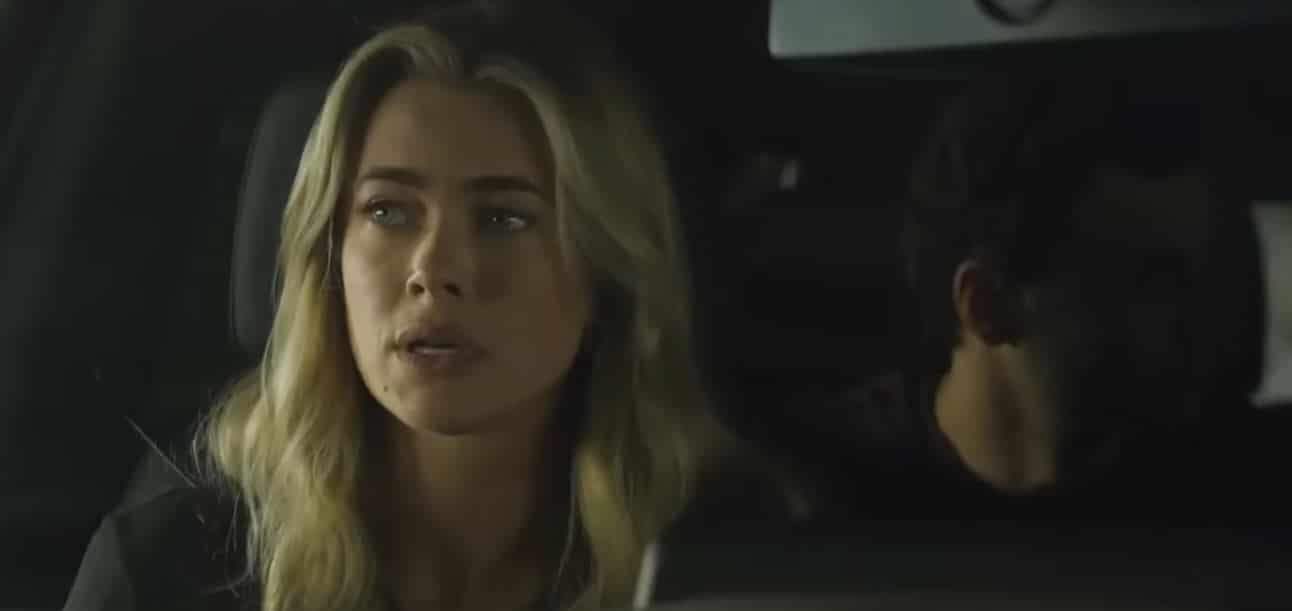

After watching The Hunting Party, the violence isn’t the first thing that comes to mind. It’s the quiet that occurs in between scenes.
Early on, Melissa Roxburgh portrays Bex Henderson, who stands by himself in a Wyoming field and looks at the concrete shell of a missile silo that conceals something much worse underneath it. The grass is dry and the wind blows slowly over it. Nothing takes place. Nevertheless, it seems like everything has already happened.
| Category | Details |
|---|---|
| Series Title | The Hunting Party |
| Creator | JJ Bailey |
| Main Star | Melissa Roxburgh |
| Genre | Crime Thriller / Procedural Drama |
| Original Network | NBC |
| Netflix Release | 2026 (Season 1 licensed) |
| Premise | FBI profiler tracks escaped serial killers after secret prison explosion |
| Seasons | 2 |
| Audience Score | ~82% (Rotten Tomatoes audience) |
| Critic Score | ~18% (Rotten Tomatoes critics) |
| Official Website | https://www.nbc.com |
The show opens with an explosion at “The Pit,” a covert prison where some of the most dangerous serial killers in the nation are released. The idea is one that might have been laughed out of a writer’s room a decade ago, but it now seems oddly in line with the current desire for conspiracy-tinged fiction. It’s a premise that feels both ridiculous and oddly plausible.
One gets the impression from watching the first episode that the creators are very skilled at what they do, but they also don’t really care if viewers find the seams noticeable.
There is no denying that the structure is procedural. A new murderer, a new hunt, and the same pattern of discovery, pursuit, and confrontation are presented in every episode. There’s a chance that this will seem repetitive to some viewers. According to its quick ascent in Netflix’s Top 10, some people appear to find solace in it.
It’s difficult to overlook the gap between audiences and critics.
Critics have been particularly critical, describing the show as predictable and generic. To be fair, there are times when the conversation seems hurried, almost like stand-ins for more in-depth material. However, viewers have reacted differently, appreciating the show’s unreserved simplicity.
The enduring popularity of procedural crime dramas is difficult to ignore. They simply wait in silence until they are needed again.
Despite the fact that the writing doesn’t always support her, Melissa Roxburgh bears the series’ emotional core. Her character suggests an unresolved past by moving through scenes with a mix of confidence and obvious damage. She pauses before going into a suspect’s house, and that moment tells more about her than any monologue could.
That hesitancy seems genuine.
Texture is added by the supporting cast, albeit occasionally unevenly. Josh McKenzie’s military officer has a sharper, colder energy that makes him seem like he just walked in from a different show, while Patrick Sabongui’s CIA agent exudes polished restraint. Whether this tonal imbalance is deliberate or just a result of network television pacing is still unknown.
The most interesting concept in the show is still the prison itself, or the Pit.
Stacked with glass cells inside a missile silo, its design is both aesthetically arresting and eerily unnerving. One gets the impression from watching flashbacks set there that the show may be more interested in the secrets of the prison than in the murderers. Perhaps the true force behind the series is that mystery, which lurks subtly in the background.
The show occasionally seems to be a rerun of previous hits.
The tone and structure are reminiscent of shows like The Blacklist and Criminal Minds. However, it appears that The Hunting Party is more concerned with atmosphere than with innovation. It makes no attempt to reimagine the genre. It just takes up space.
Its popularity might be explained by that decision.
The way people watch television has changed as a result of streaming. It is no longer necessary for every show to be revolutionary for viewers. They desire familiarity at times. predictability. A situation that develops without requiring a great deal of emotional risk.
Though it never fully recognizes it, the Hunting Party is aware of this instinct.
The show does, however, occasionally allude to something more profound.
Small details, like a killer talking in riddles that sound almost philosophical or a bex staring at a picture for too long, hint at goals that go beyond solving crimes once a week. It’s unclear if those goals will ever be completely achieved.
There is an odd realization when watching the show late at night with the next episode already queued up.
Perhaps The Hunting Party isn’t the best TV show.
Still, it’s really difficult to stop watching it.
