
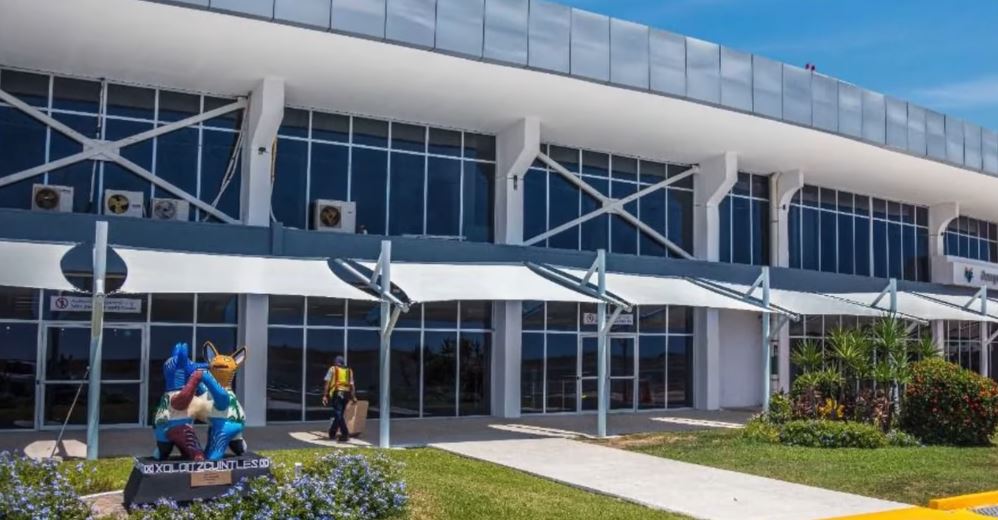

The running was the first thing people saw. Within Guadalajara International Airport, passengers who had been standing in silence in line only minutes before started to move quickly, dropping their bags in the middle of the line, and turning their heads repeatedly as though they were trying to find a noise that wasn’t there. The mood abruptly changed, but the fluorescent lighting stayed constant. The majority of people might not have even been aware of what was going on. All they knew was that something was amiss.
The news that Nemesio Oseguera Cervantes, popularly known as “El Mencho,” had been killed in a military operation earlier that day sparked the chaos. Long rumored and rarely verified, his passing appeared to set off an immediate and emotional chain reaction throughout Jalisco. Even in locations where he wasn’t physically present, there seems to have been a lasting impact from him.
| Category | Details |
|---|---|
| Airport Name | Guadalajara International Airport |
| Official Name | Miguel Hidalgo y Costilla International Airport |
| Location | Guadalajara, Jalisco, Mexico |
| Airport Code | GDL |
| Role | Third-busiest airport in Mexico |
| Major Incident | Panic and disruption following killing of cartel leader Nemesio Oseguera Cervantes |
| Airline Impact | Flights delayed, cancelled, or diverted |
| Government Response | National Guard and military deployed |
| Travel Advisory | Shelter-in-place warnings issued |
| Official Website | https://www.aeropuertosgap.com.mx |
The response at the airport was quick and very human. Typically composed and methodical, airport employees started guiding travelers behind check-in desks while making frantic hand gestures. Some squatted down, gripping their purses and backpacks, and watched the open terminal area as though it might suddenly turn dangerous. Although videos that are making the rounds online show enough panic to leave little doubt about the fear, it is still unclear if the gunmen actually entered the airport building itself. The air felt even thicker outside.
Access roads were lined with military vehicles, their dark shapes parked at strategic angles. Members of the National Guard stood guard near entrances, armed with rifles across their chests and dressed in tactical gear. The sound of helicopters slowly circling overhead added to the impression that something much bigger was happening outside the terminal’s walls.
Departure boards started to lose flights. Passengers of American Airlines, United, and Air Canada were left waiting in a state of uncertainty as a result of the cancellation or delay of their services. Some sat on the floor next to their bags, constantly scrolling through their phones and checking their news feeds for answers. Observing them, one gets the impression that contemporary travel, which depends so heavily on predictability, quickly becomes vulnerable when security fails.
This was a significant moment for Guadalajara. The airport has long served as more than just a hub for travel. It brings together migrant families, entrepreneurs seeking opportunities, and travelers captivated by Mexico’s vibrant culture. Even for those who were far away, witnessing its abrupt disruption made the situation feel personal.
The airport wasn’t the only place there was violence. Around the area, reports surfaced of gunfire, blocked highways, and burning cars. Even from some airport windows, smoke billowed up from far-off roads, and travelers pointed silently, trying to make sense of what they were seeing. It’s probable that a large portion of the damage was not a military tactic but rather a message. Calm was urged by government officials.
The operation that killed Oseguera Cervantes was confirmed by the Mexican defense ministry, which called it a significant win against organized crime. However, these kinds of victories frequently have unanticipated repercussions. Although short-term instability seems inevitable, investors seem to think that the long-term effects could strengthen government control.
Soon after, travel advisories were issued.
Citizens were advised by foreign governments to stay indoors or reevaluate their plans to visit Jalisco. Airlines changed their routes. Hotels were ready for cancellations. As a reminder of how intertwined everything has become, even major athletic events in the area were postponed.
Time flowed oddly in the airport. Over loudspeakers, announcements persisted, their soothing recorded voices contrasting with the tense atmosphere in the room. Little ones let out a soft cry. Adults muttered. Some tried to laugh nervously, as though humor could help them feel normal again. It didn’t. The crowds eventually started to thin out.
Some travelers completely canceled their plans and left. Others waited for flights to start up again. Employees cautiously made their way back to their stations, their faces showing more weariness than relief. Observing this, one gets the impression that airports, which are meant to represent mobility, turn into representations of vulnerability when that mobility ceases.
Technically, the airport is still operational. But after experiences like these, normal doesn’t come back right away. First, there’s always a pause.
