

Even with bright lights and camera flashes, the familiar late-winter chill permeated the air outside London’s Royal Festival Hall. One by one, guests emerged from black cars, halting momentarily as photographers called their names, their breath barely perceptible in the chilly air. There’s always a certain routine to awards season, but this year there was something a little different going on.
The ceremony took place inside with the polished efficiency that one would expect from the BAFTAs, but the atmosphere was unusually brittle. It’s possible that the room was subtly infused with the uncertainty surrounding this year’s film landscape, which includes fragmented audiences, streaming rivalries, and shifting celebrity hierarchies.
| Category | Details |
|---|---|
| Event Name | British Academy Film Awards |
| Edition | 79th BAFTA Film Awards |
| Date | February 22, 2026 |
| Location | Royal Festival Hall |
| Host | Alan Cumming |
| Best Film Winner | One Battle After Another |
| Best Actor Winner | Robert Aramayo (I Swear) |
| Best Actress Winner | Jessie Buckley (Hamnet) |
| BAFTA President Appearance | Prince William |
| Official Website | https://www.bafta.org |
One Battle After Another, the night’s biggest winner, took home six prizes, including Best Director and Best Film. It became increasingly apparent that the industry still valued traditional filmmaking ambition as viewers watched its creators repeatedly walk to the stage. Despite frequent forecasts of its demise, big, serious film has not vanished. It’s unclear, though, if viewers outside of the awards season are as concerned now.
However, the moment that everyone will remember came as a surprise.
There was a brief pause in the applause when Robert Aramayo’s name was announced as the winner of Best Actor, surpassing Timothée Chalamet and Leonardo DiCaprio. Though subtle, it was apparent. As he arrived at the microphone, Aramayo’s shoulders began to tighten slightly, and he appeared truly stunned. That hesitancy in the room appeared to be a reflection of something more profound—an industry facing its own preconceptions.
As this is happening, it seems like BAFTA voters were expressing their desire for reinvention.
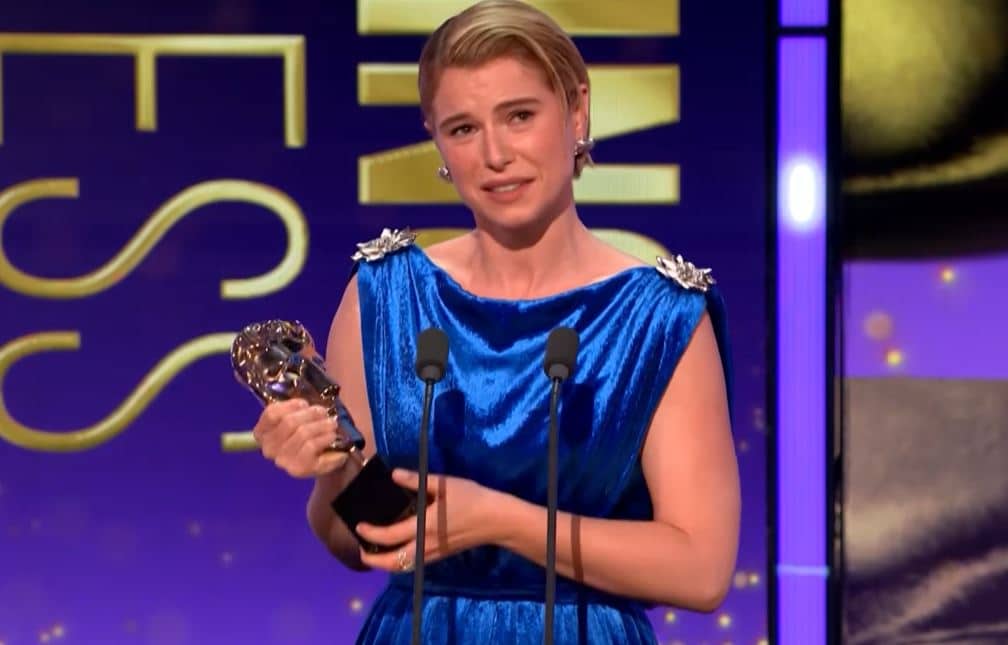
In the meantime, it seemed almost certain that Jessie Buckley would win Best Actress for Hamnet. For months, her performance had been steadily gaining momentum, and she exuded a serene assurance in her acceptance speech, as if she knew exactly where she belonged. Nevertheless, the momentum behind awards can be brittle. It appears that consistency is more important to film career investors—agents, studios, and financiers—than a single night.
Small moments showed the human side of the spectacle in other parts of the audience.
Together, Prince William and Catherine, Princess of Wales, brought a tradition that is becoming more and more uncommon in today’s entertainment culture. William seemed more reserved than usual as he talked briefly about recent developments in his personal life. It was difficult to ignore the contrast between the anxious excitement around him and the royal poise.
As usual, fashion had its own narrative.
Wearing a well-tailored tuxedo, Timothée Chalamet looked down at his phone for a portion of the evening. Nobody knew if he was checking his messages or just diverting his attention. Actors around him waited, whispered, and laughed, their faces changing slightly as envelopes were opened.
Tension was also present.
During the ceremony, I Swear was inspired by the life of Tourette syndrome campaigner John Davidson, who at one point yelled uncontrollable words. Alan Cumming, the host, gave a thoughtful response, reminding the audience of the condition’s realities. It was a grounding moment, but it was also uncomfortable. Awards shows frequently make perfection seem real. The real world isn’t cooperative.
That tension persisted.
The BAFTAs have always occupied a peculiar space that is simultaneously part industry signal and part celebration. Studios keep a close eye on the results and modify their marketing plans accordingly. Overnight, careers can either accelerate or stagnate. Film funding choices may be influenced for years to come by this year’s winners.
However, the night felt more subdued than anticipated as I left the Royal Festival Hall afterwards.
No defining scandals occurred. No dramatic altercations. Only conversations, laughter that echoed for a moment before fading, drifting into the chilly streets of London. There’s a feeling that something changed as the crowds thin out—not drastically, but quietly.
Seldom do award shows transform the world.
However, they occasionally alter the next person the world looks at.
