
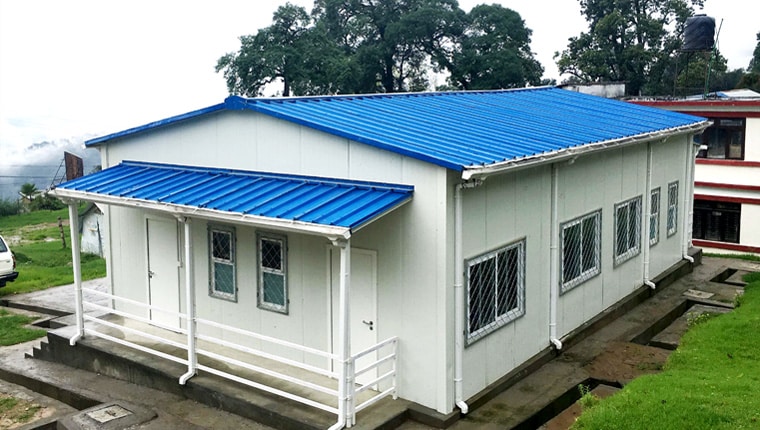

This story begins in a gravel‑strewn field outside a Midlands town where a pair of prefab modules sat half‑assembled, their steel frames stark against a grey February sky. That site was one of many I visited over the past few years while tracing the arc of prefabricated homes — from post‑war temporary shelters to contemporary residential builds that owners now intend to occupy for decades.
There’s an enduring misconception that prefab means “temporary” — the sort of thing you install and forget. It probably dates back to Britain’s post‑World War II prefab programme, where hastily imported Swedish kit homes were expected to last just 10 to 15 years but, in practice, outlived that estimate by decades in many cases.
In today’s housing market, the question homeowners ask most is a straightforward one: how long will my prefab home last? The short, factual answer is a remarkably broad range. At the modest end, some prefab systems — particularly light manufactured units or simpler panel builds — are said to last around 30 to 50 years with proper maintenance. At the other end, well‑engineered modular homes built to full residential codes and using premium materials can go 60, 80 years, and in some projections, well over 100.
This wide span reflects something fundamental about prefab construction: it isn’t one thing. There are tiny homes that are little more than sophisticated cabins, container‑based units that conform to industrial shipping standards, and bespoke modular houses designed by architects that meet the same rigorous building codes as site‑built dwellings. How long each lasts depends first on that identity.
I remember standing in a garden in rural Worcestershire beside a crisp white modular home installed just six years earlier. The owner, a retired engineer, ran his fingers along the exterior and said, without pride or apology, that he expects to live there for the rest of his life — and beyond that, for his grandchildren to inherit it. That confidence isn’t blind optimism; it’s rooted in the steel frame’s corrosion resistance and the factory‑controlled precision that went into every joint. In controlled environments, components aren’t battered by rain, wind, or sun before they’re fitted, and that matters.
Shorter‑lived prefab structures often use lighter materials, timber framing, or simpler assembly methods, and these can indeed begin to show wear in the range of three or four decades. But that isn’t unique to prefabs — even some traditional builds can falter in that timeframe if maintenance lags or the original materials are substandard.
As you move into higher tiers of prefab housing, the differences become more striking: factories employ tighter quality control, insulation and weather sealing exceed minimum standards, and materials such as hot‑dip galvanized steel resist rust and moisture far better than untreated equivalents. It’s these precisions that take prefab beyond the stereotype of “quick builds” and align them with long‑term residential expectations.
Where the rubber meets the road, though, is not just good engineering but care over time. Like any house, a prefab’s lifespan is tied to routine maintenance. Sealants that keep out water need inspection. Joints subjected to temperature swings may need touch‑ups. Roofs and drainage systems require seasonal checks. Every decade, a conscientious owner may find themselves replacing cladding or upgrading insulation — not because the underlying structure is failing, but because these updates extend useful life. Regular attention, in fact, can push a home comfortably into the upper tiers of its theoretical lifespan.
That said, environment plays its part too. Buildings in coastal or high‑humidity zones will face different stresses than those inland. Freeze–thaw cycles can threaten seals and foundations. Even in the UK’s relatively temperate climate, moisture management is a recurring theme among prefab owners I spoke to.
I once paused in a quiet lane in Essex, where a row of 1970s timber‑prefab houses still stood, their painted façades faded but structures solid. Neighbours shrugged at my curiosity, many having forgotten these homes were even built off‑site. That quiet longevity — the absence of drama — says something valuable about durability. Modern prefabs aren’t flamboyant; they endure. And many professionals I met argue they can rival traditional builds when executed well.
Yet not every prefab is destined for a century. The type of home you choose, the quality of its materials, the weather it faces, the seriousness of its maintenance regime — each factor bends that lifespan curve. Prefab doesn’t promise immortality. It promises predictability, built quality, and potential longevity if you treat it as your life’s investment rather than a temporary shelter.
In the end, the question isn’t just how long prefab homes last but what it feels like to live under their roofs as decades accumulate — a story told not in years stamped on paper but in quiet mornings, changing seasons, and the steady rhythm of everyday life.
