


Screenplay FATALISM Published, Sharing a Thousand-Year Epic of Fate and Obsession
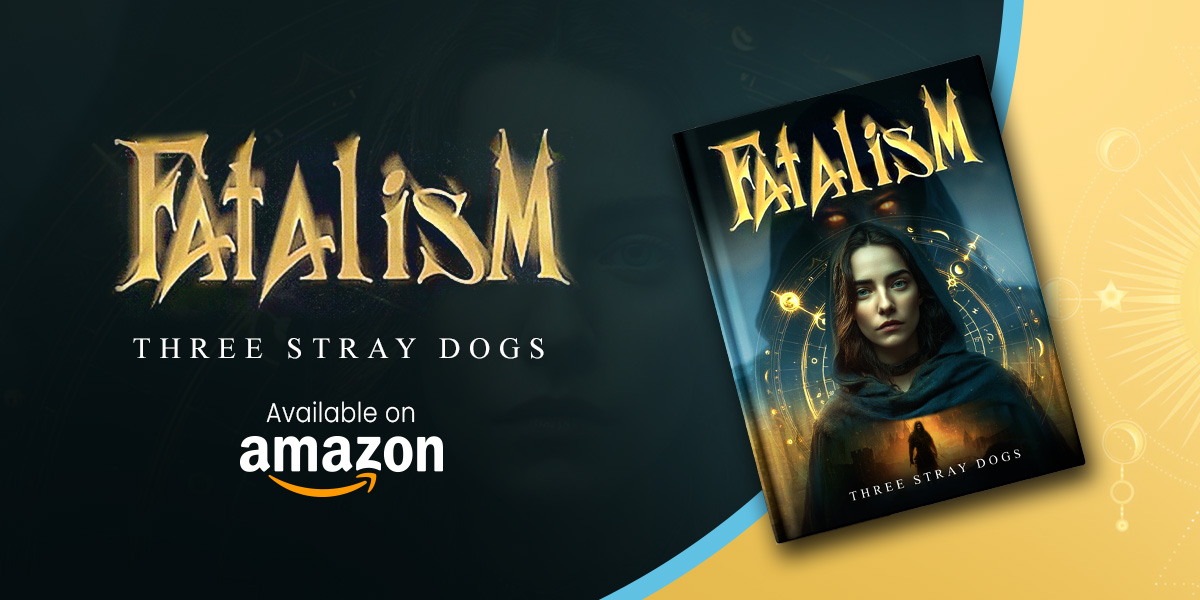
In an underground cavern in Northern Europe in the year AD 1005, an aged priest named Father Timothy is being tortured by a warlord called Ahrman — and the secret he refuses to give up drives the entire engine of FATALISM, a published screenplay from THREE DOGS PRODUCTIONS and writers Marcello Intraligi, Francesco Giampietro and Wayne Shepherd, announced on 27th January 2026.
The screenplay opens a millennium ago, establishing a brutal context in an underground cavern where the aged Father Timothy is interrogated and tortured by the ruthless, enigmatic figure known as The Warlord Ahrman. The intensity of this confrontation centers on a secret so potent that it must be hidden. A secret Ahrman is obsessed with extracting, and one Father Timothy is sworn to protect for a thousand years.That secret spans a thousand years.
Still unspoken when the scene ends.
The screenplay — an unusual format for publication, and the right one for a work that thinks in images — opens in that Dark Ages cavern before leaping forward to the ruins of King Galen’s Castle, where three modern characters named Katrine, Nicholas and Ronim stumble into consequences neither they nor the audience can immediately read. The connection between the two timelines crystallises when Katrine, who carries a distinctive bird-wing birthmark, discovers a canister containing a gold ring — the precise artifact Father Timothy concealed a thousand years before.
That is not coincidence. Nothing in FATALISM is.
The birthmark, the ring, the ruin — all of it suggests that these three people were not assembled by chance but drawn into a pattern set in motion during the Dark Ages by a pact between a priest and a warlord. The screenplay’s central philosophical question sits exactly there: are these characters making choices, or completing a design laid down before any of them existed? Destiny versus free will is a well-worn literary territory, but the specific machinery Intraligi, Giampietro and Shepherd have built to dramatise it — a thousand-year-old secret, a buried artefact, a birthmark as a living signature — gives the question concrete dramatic stakes rather than abstract weight.
The name Ahrman is worth a moment’s attention. It echoes Ahriman, the figure of darkness and chaos in Zoroastrian theology — a force defined precisely by its compulsion to corrupt and extract. Whether the naming is deliberate or coincidental, the resonance fits a character whose obsession has apparently persisted across ten centuries.
Published screenplays occupy a specific literary niche. Quentin Tarantino, Charlie Kaufman and Aaron Sorkin have all put scripts into print, and the best of those publications work because a screenplay is a different reading experience from a novel — faster, more visual, built around white space and collision rather than interiority. FATALISM, described by its creators as a polished cinematic text, is asking readers to engage with professional screenwriting as a literary form, following the structural logic that holds its two time periods in productive tension.
The three-writer credit is itself unusual. Screenplay collaboration is common in Hollywood — but three-way shared credits tend to produce either very clean structural divisions or very complicated rewrites. FATALISM does not disclose which writers handled which elements, but the ambition of the project — a Dark Ages opening, a modern thriller thread, a philosophical framework connecting them — suggests the collaboration was substantive rather than incidental.
The project joins a recent wave of historical thrillers that take medieval Europe seriously as a setting: The Northman, The Green Knight and the ongoing appetite for Dark Ages material on both screens and shelves have established an audience that is neither niche nor casual. FATALISM’s specific territory — Northern Europe, AD 1005, spiritual endurance under violent interrogation — is underexplored compared to the overworked Roman and Viking periods that dominate the genre.
FATALISM is now available.
Whether the secret Father Timothy protects in that opening cavern justifies the thousand-year weight the screenplay places upon it is the question every reader will arrive at by the final page. The answer, presumably, was worth the wait.
