

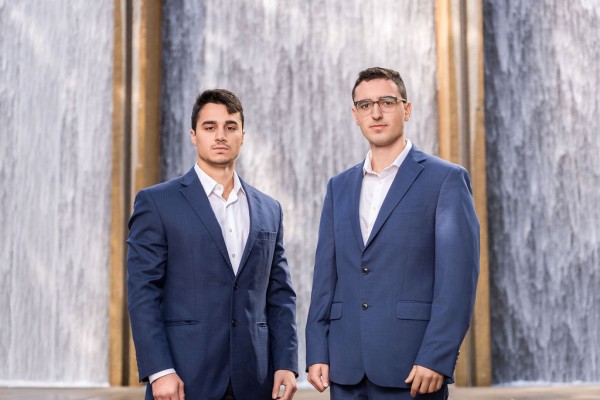
Three hundred investment bankers work out of Houston’s Post Oak district for The Post Oak Group, advising on cross-border M&A and capital raises that a previous generation of clients assumed required a Manhattan address.
None of them are in New York. That was a deliberate choice.
Alex Treistman, Managing Partner of the Capital Markets practice, draws the distinction plainly. “The expansion of digital communications and global transportation has fundamentally altered how capital moves,” he noted. The claim carries weight coming from a firm that has built a 300-person platform without a single office on the island that once defined investment banking geography.
The Post Oak Group operates a fully integrated platform. Capital advisory and mergers and acquisitions sit under one roof. Its professionals span advisory, execution, research, operations and support functions. The leadership team brings more than 250 years of combined experience across capital markets and M&A. That depth, paired with a partner-led execution model, allows the firm to compete for mandates that Goldman Sachs, Lazard and Evercore once considered exclusively their territory.
Houston built its identity on energy. Everyone knows that part. What gets less attention is what came next. The city’s business base diversified substantially over the past two decades. Proximity to founder-owned companies, access to international trade corridors and a dramatically lower cost structure than New York or San Francisco created conditions well-suited to an advisory firm with cross-border ambitions. Senior bankers who once commuted between Manhattan and client sites in Texas increasingly ask why the commute runs in only one direction.
The structural argument for geographic flexibility rests on infrastructure. Virtual roadshows, global data rooms and real-time collaboration tools let advisory teams engage buyers and investors across regions without physical proximity to a financial district. Deals that once required a New York presence close from Houston now. The friction that geography once created has largely dissolved.
That dissolution matters most in the middle market and private company segment, where The Post Oak Group operates most actively. Its clients include founder-owned businesses, private companies, institutional investors and financial sponsors. Mandates cover growth capital raises, recapitalisations, buy-side and sell-side M&A, and cross-border strategic transactions. Combining capital advisory and M&A under a single partner-led platform covers the full client lifecycle. Initial capital formation through liquidity events and transformational transactions. Few boutiques offer that range without routing every senior decision through a managing director four time zones away.
The Post Oak Group’s rise reflects a broader structural change. Houston, Miami, Dallas and Austin are each attracting senior bankers building scaled platforms outside traditional financial centres. The cost of operating outside New York or London has fallen substantially. The pool of clients that prefer regional advisors with genuine sector expertise has grown. Legacy Wall Street institutions and newer advisory platforms now compete for the same mandates. Clients select on execution quality and senior access, not postcode.
Industry observers note that the partner-led model The Post Oak Group employs mirrors structural elements of bulge-bracket firms while maintaining the responsiveness of a more focused advisory practice. Its capital advisory business works closely with private equity firms, family offices and strategic investors. The M&A practice runs competitive processes across multiple industries. The combination has allowed the firm to position itself, by its own characterisation, as one of the fastest-growing investment banks globally.
Treistman’s second observation completes the argument his firm embodies: “Investor universes are no longer constrained by geography, and advisory firms no longer need to be concentrated in a single financial district to compete at the highest level.”
Three hundred professionals. More than 250 years of combined experience. No Manhattan office. The mandate, as Treistman suggests, goes to the firm that understands the business and delivers the execution. Houston, it turns out, is large enough for both.
