
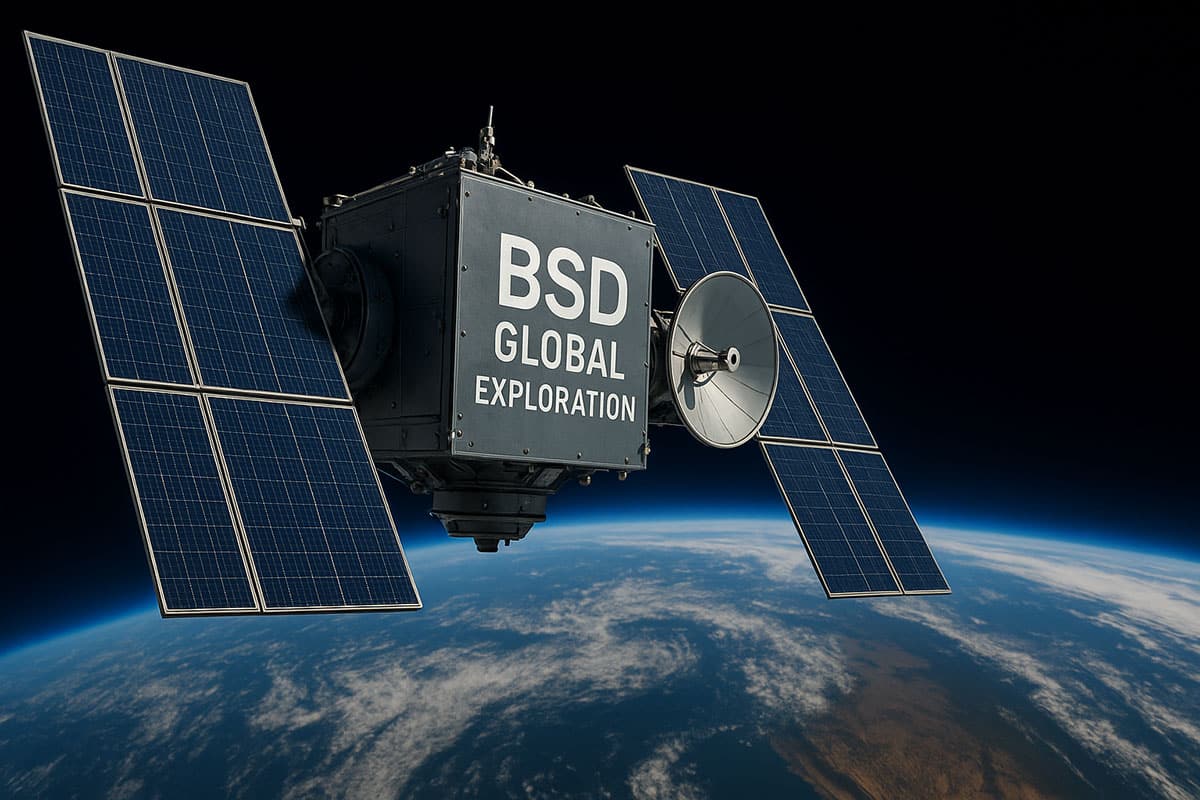

In a discovery that could reshape scientific understanding of the Caribbean’s geology, researchers have identified what appears to be the Dominican Republic’s first major subsurface hydrocarbon system. The finding—powered by a new generation of remote-detection technology—suggests that the island’s geological history may be far more complex than previously thought.
The breakthrough comes from BSD Global Exploration, a company that has spent years developing deep-penetration detection tools capable of scanning several kilometers beneath the Earth’s surface. By pairing this proprietary technology with traditional 3D seismic mapping, the team uncovered large, well-defined structures containing signatures consistent with oil and gas deposits.
For geophysicist Paul McColgan, who evaluated the seismic data, the target stands out. “It’s one of the best-defined structures I’ve seen in my 25 years in the hydrocarbon industry,” he says. Though no drill has yet touched the site, the estimated volume—possibly hundreds of millions of barrels and BTUs—has captured the attention of both scientists and policymakers.
Peering Below the “Basement”
One of the most surprising findings emerged from beneath what geologists had long assumed to be crystalline basement rock—a layer typically considered the geological end of the line for resource exploration. But enhanced imaging revealed something unexpected: additional subsurface structures below the basement itself.
These deeper formations suggest that the island may host a multilayered reservoir system, challenging decades of regional geological mapping. “It hints at an entirely different tectono-stratigraphic story,” says one researcher familiar with the analysis.
A Technology Designed for More Than Oil
BSD’s detection system works by transmitting specialized signals into the Earth and analyzing the reflected responses through advanced algorithms. The company says the method can identify elemental signatures across the periodic table—from hydrocarbons and rare-earth metals to fresh aquifers—at depths of up to 26,000 feet (about 8,000 meters).
This capability has already produced surprising scientific side benefits. In 2021, at the request of the Dominican Republic’s government research team, BSD used its technology to locate the burial site of Enriquillo, a 16th-century Taíno leader and national hero whose resting place had eluded historians for five centuries. The survey pinpointed remains believed to belong to Enriquillo and his wife, offering an unexpected intersection between geology, archaeology, and cultural heritage.
A Visionary Team Changing the World’s Search for Resources
BSD’s executive team — Sami Benhamou, Isaac Salama, and Patrick Preece — expressed gratitude and optimism for what this breakthrough represents for both science and humanity:
An Expanding Global Footprint
BSD reports that similar surveys have confirmed natural deposits of lithium, gold, and hydrocarbons in several countries. The company is currently working with Dominican authorities to obtain exploration and drilling permits—a key step toward validating the new findings.
If drilling confirms the presence of substantial hydrocarbons, the discovery would represent one of the most important geological breakthroughs in the Dominican Republic’s modern history, opening the door to new research, new industries, and a fresh scientific understanding of the Caribbean basin.
For now, the discovery serves as an enticing scientific question: what else lies hidden beneath the region’s long-assumed basement rock?
