
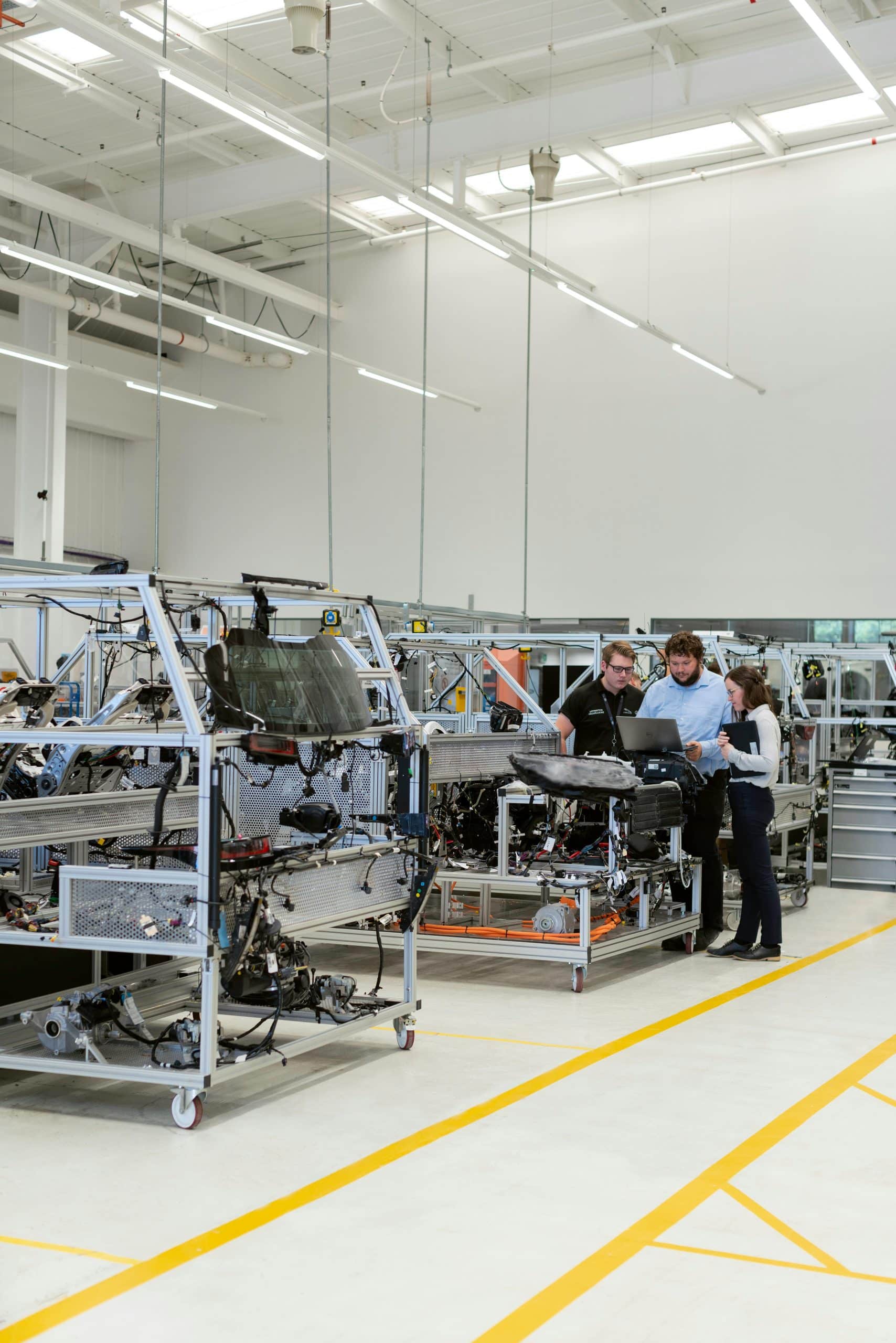

The automotive sector is undergoing rapid transformation. Manufacturing methods, materials, and design processes are evolving to meet new demands for efficiency, sustainability, and performance. Companies that adapt to these changes are gaining an edge in a highly competitive market. From smarter digital tools to innovative material processing, manufacturers are embracing shifts that directly affect how vehicles are built.
In this article, we explore five major trends that are reshaping automotive parts manufacturing. Each section highlights an area where innovation is unlocking greater flexibility, precision, and efficiency. Topics such as plastic machining services and automotive prototyping are central to this progress, as they allow manufacturers to build and test parts with speed and accuracy.
The Rise of Lightweight Materials in Automotive Design
Automakers are increasingly replacing steel with lightweight materials such as high-strength aluminum alloys, magnesium, and carbon fiber composites to reduce vehicle weight without compromising structural integrity. Aluminum alloys like 6061-T6 and 7075-T73 are commonly used for suspension components, engine mounts, and chassis parts due to their high strength-to-weight ratio and machinability. Magnesium alloys, while more difficult to machine, are applied in steering components and transmission housings. Carbon fiber-reinforced plastics are reserved for body panels and interior structural elements in high-performance and electric vehicles to maximize stiffness and reduce mass.
The shift to lightweight materials also affects design and testing. Engineers use finite element analysis (FEA) to simulate stress, vibration, and crash performance for each material combination, ensuring compliance with safety standards while minimizing weight. By integrating material properties with machining capabilities and assembly techniques, automotive manufacturers can deliver durable, high-performance components that meet both efficiency targets and customer expectations.
Digital Tools Reshaping Automotive Prototyping
Digital technologies are transforming automotive prototyping by significantly accelerating the development cycle. Tools such as computer-aided design (CAD), finite element simulation, and rapid tooling allow engineers to move from concept to functional prototype with unprecedented speed and precision. This capability enables multiple design iterations to be tested virtually and physically before committing to mass production.
Prototyping with digital tools provides engineers the ability to evaluate performance, identify defects, and ensure compliance with safety standards early in the design process. Components ranging from brake systems and electronics housings to structural brackets can be produced in test form and validated under real-world conditions. By integrating simulation data with rapid manufacturing techniques, manufacturers can optimize material usage, improve dimensional accuracy, and reduce costly rework, making the prototyping phase both faster and more reliable.
Automation and Smart Manufacturing Processes
The automotive manufacturing sector is also being transformed by automation at a high rate. Modern production strategies have turned to the application of robotics, intelligent sensors, and AI-based systems. These technologies enhance consistency, minimize human error and efficiency in the whole production line. Automated systems can also help manufacturers to achieve increased demand without compromising quality by working around the clock.
This is especially the case with the integration of automation and plastic machining services. Robotic handling systems process machining at higher speeds but with finer tolerances, a requirement of safety-critical automotive components. This integration is known to assist not only metal-based components but also high-performance plastic components that are applicable in the interiors, electronics and lightweight assemblies.
This is enhanced by automation, which links design and manufacturing together. When combined with the automotive prototyping, the automated processes provide a seamless flow between the testing and the large-scale production. This saves lead time, costs, and manufacturers can introduce new designs in the market with the shortest lead time.
Sustainability Driving Material and Process Choices
Sustainability has become a critical factor in automotive design and manufacturing, shaping both material selection and production processes. Increasing regulatory requirements and consumer demand for greener solutions are driving manufacturers to adopt recyclable metals, biodegradable polymers, and eco-friendly composites. These materials reduce environmental impact without compromising mechanical performance or safety standards.
Plastic machining services play a central role in this transition. Advanced CNC and additive manufacturing techniques enable precise fabrication of environmentally friendly plastics, allowing lightweight components to be produced with the same dimensional accuracy and durability as conventional materials. Similarly, rapid prototyping minimizes waste by validating designs before full-scale production, reducing excess material use and rework. By integrating sustainable materials with optimized machining and prototyping processes, automotive manufacturers can deliver durable, lightweight parts while significantly lowering their environmental footprint.
Customization as a Driver of Market Differentiation
Modern automotive consumers increasingly expect vehicles tailored to their individual preferences, making customization a key differentiator in a competitive market. Manufacturers are focusing on flexible configurations, including dashboard layouts, seating options, and performance-tuned components. Achieving this level of personalization requires production systems that can handle small batches efficiently without compromising quality. Advanced plastic machining services play a critical role, enabling precise fabrication of custom parts at lower cost while maintaining tight tolerances and repeatability.
Automotive prototyping further supports this trend by allowing engineers to rapidly test variations in geometry, materials, and finishes before committing to large-scale production. Early validation ensures that each customized component meets both functional and aesthetic standards, minimizing errors and reducing material waste. By combining flexible machining capabilities with fast prototyping, manufacturers can respond quickly to evolving customer demands, strengthen brand loyalty, and differentiate themselves in an increasingly crowded automotive market.
Conclusion
The automotive parts manufacturing industry is evolving through innovations in materials, processes, and design practices. Lightweight solutions from plastic machining services, rapid prototyping, and automation are improving efficiency, reducing risks, and streamlining production, while sustainability and customization shape future demands. By balancing performance, cost efficiency, and innovation, manufacturers can thrive in a fast-changing market and deliver vehicles ready for tomorrow’s challenges.
