
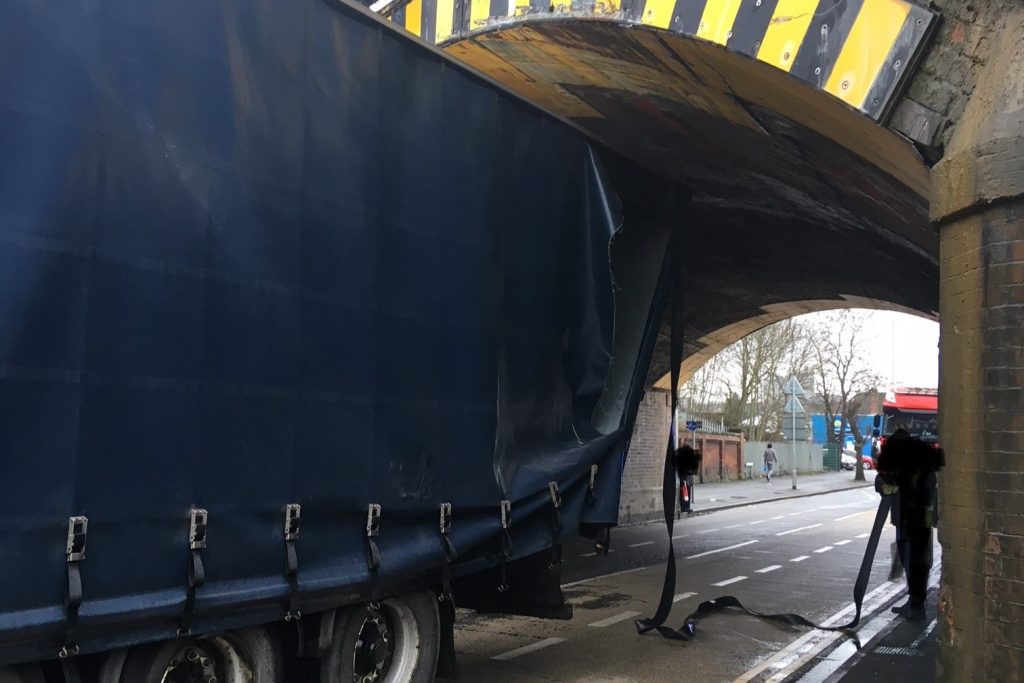

Bridge collisions have become a significant cause of disruptions in the UK rail network.
- Network Rail reports over 1,500 incidents of heavy goods vehicles striking railway bridges within a year.
- These strikes resulted in over 100 days of delays for rail passengers, costing the industry around £20 million.
- Specific locations, such as Stuntney Road in Ely, are repeatedly affected, highlighting persistent safety issues.
- Efforts are underway to address these problems, but challenges remain as bridge strikes occur every six hours.
In the past year, bridge strikes have emerged as a prominent issue within the UK’s rail network. According to new statistics from Network Rail, over 1,532 incidents involving heavy goods vehicles (HGVs) colliding with railway bridges were recorded from April 2023 to March 2024. This staggering figure equates to roughly one incident every six hours, illustrating the pervasive nature of the problem.
The impact of these incidents has been substantial, leading to over 100 days—precisely 150,000 minutes—of delays for rail passengers. This has incurred an estimated cost of £20 million to the rail industry, stemming from necessary delays, cancellations, and repair works. Network Rail’s ongoing ‘Wise Up, Size Up’ campaign aims to mitigate these costs by urging haulage operators and drivers to exercise increased caution on the roads.
Specific bridges appear to be recurrent targets for these strikes. Stuntney Road in Ely, referred to as ‘Britain’s most bashed bridge’, suffered 18 strikes in the past year alone. Other frequently struck locations include Stonea Road in Stonea and Lower Downs Road in Wimbledon, both recording 17 strikes. These repeated incidents not only jeopardise the structural integrity of the bridges but also pose significant safety risks to both road and rail users.
Following each strike, thorough inspections are mandatory to ensure the safety of the infrastructure. This process can cause substantial disruptions to both rail and road traffic, affecting local communities significantly. In an effort to combat these challenges, Network Rail collaborates with various industry stakeholders. A slight downward trend in the frequency of bridge strikes has been noticed over the past two years, with a 4% decrease recorded in the last 12 months.
Notably, some positive trends have emerged at the local level. Stonea, despite being a frequent site for strikes, experienced an 11% reduction in incidents over the previous year. Furthermore, the delay minutes for rail passengers at this site dropped significantly, from 100 minutes in the 2022/23 period to just 35 minutes in the past year. This development is attributed to efforts like engineering upgrades, including recent repairs in Cambridgeshire, where new protective beams and revised road signage were installed.
Despite these efforts, challenges remain, with a bridge strike still occurring every six hours. Network Rail is actively urging drivers and operators to be vigilant and properly plan routes, highlighting the importance of knowing vehicle heights and adhering to road signage. They continue to recover repair and delay costs from responsible parties.
The National Highways senior structures advisor highlights that, although bridge strikes are less common on roads, their impact is nonetheless disruptive. The Bridge Strike Prevention Group, in conjunction with other transport authorities, continues to promote measures to alleviate these occurrences, particularly during Road Safety Awareness Week.
Efforts to mitigate bridge strikes are showing signs of progress, but persistent challenges require continued vigilance and cooperation.

