
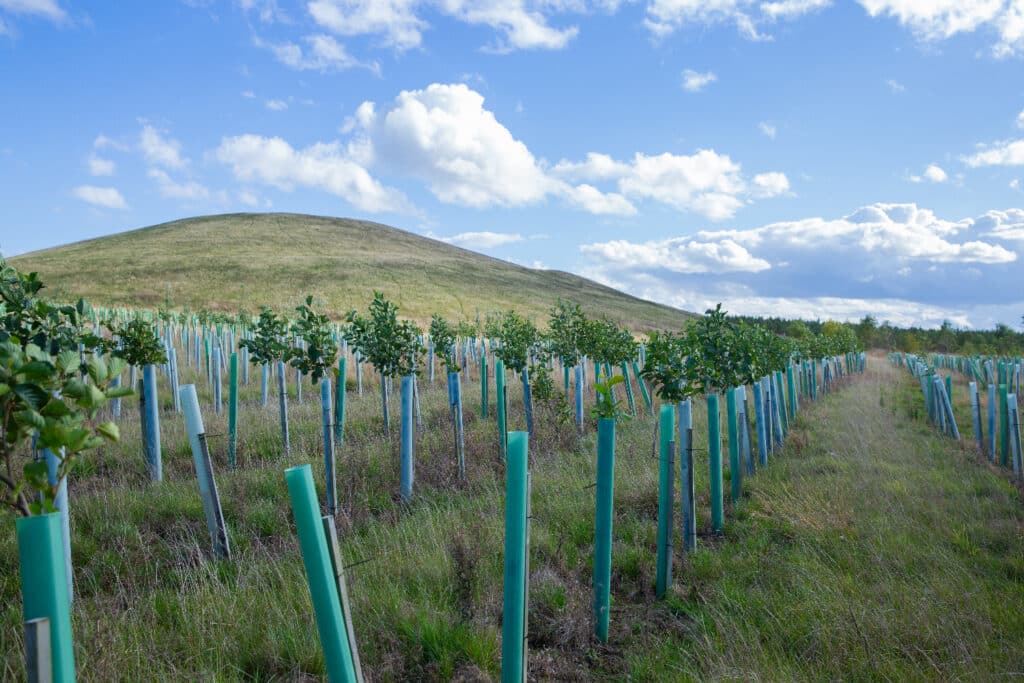

In a bold environmental step, Atom bank has acquired 25 acres of broadleaf woodland in Northumberland.
- The woodland purchase aids Atom bank’s commitment to becoming climate positive by 2035.
- Direct ownership allows for effective environmental impact assessment, bypassing remote carbon credits.
- The trees will offset 7,000 tonnes of carbon, matching the bank’s operational emissions since 2014.
- Atom bank continues to cut carbon intensity in lending, enhancing its climate strategy.
Atom bank’s recent acquisition of 25 acres of newly planted broadleaf woodland in Northumberland marks a significant move in its journey to become a climate-positive bank by 2035. This strategic purchase reflects Atom’s commitment to environmental sustainability, allowing the bank to directly evaluate its ecological impact without relying on remote carbon credit instruments.
The woodland, expected to sequester 7,000 tonnes of carbon over its lifetime, aligns with Atom’s aim to balance its operational emissions, which have averaged between 500 and 700 tonnes annually since the bank’s inception in 2014. By owning this woodland, Atom aims to set a new standard for banks in managing their carbon footprints.
Atom’s broader environmental strategy involves reducing the carbon intensity of its lending activities and investing in natural capital projects. This includes plans to acquire or finance an additional 100 hectares of land within the current financial year. Notably, the woodland does not qualify for biodiversity credits under the England Woodland Creation scheme, although the UK government supports net habitat gains through an emerging credits programme for developers.
In tandem with its land acquisitions, Atom is exploring opportunities to generate biodiversity net gain credits. These credits could support housing developments while fostering new habitats, thereby creating a balance between development and environmental conservation. Atom’s progress is evident in its carbon reporting, with a total reported carbon impact of 658.44 tonnes of CO2 equivalent last year, marking a 2.2% reduction from the previous year amid a 600% rise in operating profit.
Atom’s CEO, Mark Mullen, emphasised the bank’s dual focus on business success and environmental responsibility, stating, “This is an important step as we target becoming climate positive by 2035, which means we will take more carbon out of the atmosphere through our lending and investment choices than we are responsible for emitting.” Ed Twiddy, the director of ESG at Atom, articulated the significant challenge of balancing carbon emissions from their financing operations, highlighting the need for innovation and leadership within the banking sector.
Atom bank’s strategic actions underscore a forward-thinking approach to integrating environmental responsibility with financial growth.

