
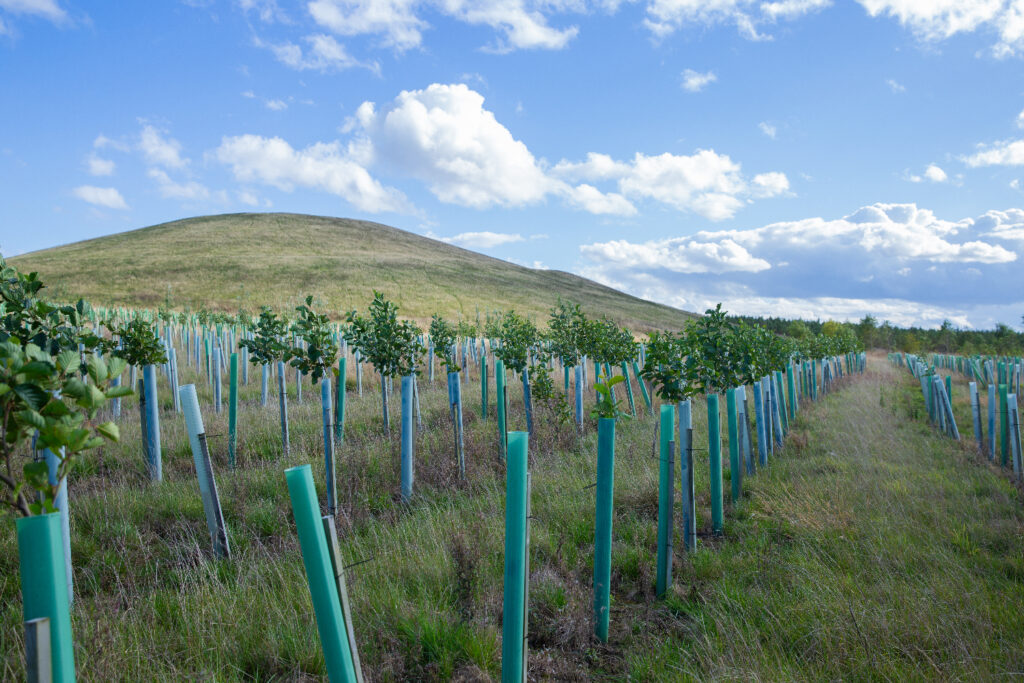

Atom Bank has acquired 25 acres of woodland in Northumberland to enhance its climate efforts, aiming to be climate positive by 2035.
- The woodland will potentially offset 7,000 tonnes of carbon, reflecting the bank’s emissions since 2014.
- This initiative allows Atom Bank better control over its environmental impact compared to remote carbon credits.
- The bank plans an extending investment strategy in natural capital, targeting an additional 100 hectares this year.
- Atom Bank’s commitment aligns with reducing the carbon intensity of their lending and operating emissions.
Atom Bank has taken a significant step towards environmental responsibility by purchasing 25 acres of newly planted broadleaf woodland in Northumberland. This move is part of the bank’s broader strategy to become climate positive by 2035. By directly owning this woodland, Atom Bank can closely monitor its impact on the environment, which offers a more practical alternative to relying solely on carbon credits.
The woodland is anticipated to sequester approximately 7,000 tonnes of carbon over its lifetime, effectively matching the operational emissions Atom Bank has generated since its inception in 2014. This strategic acquisition marks a turning point in how the bank addresses its carbon footprint, showcasing a commitment to meaningful environmental change.
Historically, Atom Bank’s operational emissions have ranged between 500 and 700 tonnes annually, excluding financed emissions. The bank plans to further expand its natural capital projects by acquiring or lending on an additional 100 hectares of land in the current financial year. This expansion reflects the bank’s dedication to reducing the carbon intensity of its lending portfolio.
The newly acquired woodland is registered under the England Woodland Creation Scheme. This registration means the woodland is not counted for biodiversity credits, aligning with governmental support for net habitat gains. Atom Bank is exploring opportunities to develop biodiversity net gain credits, which could facilitate housing developments while simultaneously encouraging the creation of new habitats.
Atom Bank has reported a carbon impact of 658.44 tCO2e in the previous financial year, a slight reduction from the year before, alongside a significant increase in their operating profit. The bank’s approach includes measuring financed emissions from lending activities, with plans to report these figures in the upcoming financial year reports.
Chief Executive Mark Mullen highlighted the bank’s decision to invest in the woodland as a choice that reflects their understanding of environmental responsibility. The effort is not just about reducing emissions but is a broader educational message to encourage smarter choices in corporate partnerships. Mullen expressed that the health of the planet is crucial for future generations, urging other businesses to take similar action.
Ed Twiddy, Director of ESG at Atom Bank, emphasised that this initiative is part of Atom’s future-focused strategy to blend profitability with environmental stewardship. Twiddy noted the bank’s accountability for emissions related to its operations and those it finances, further outlining the significance of the bank’s business model adjustments to prioritise sustainability.
Atom Bank’s woodland acquisition exemplifies its strategic move towards sustainable banking, setting a precedent for corporate environmental responsibility.

